Choosing a manufacturer
Moving Clothing Production to a New Manufacturer
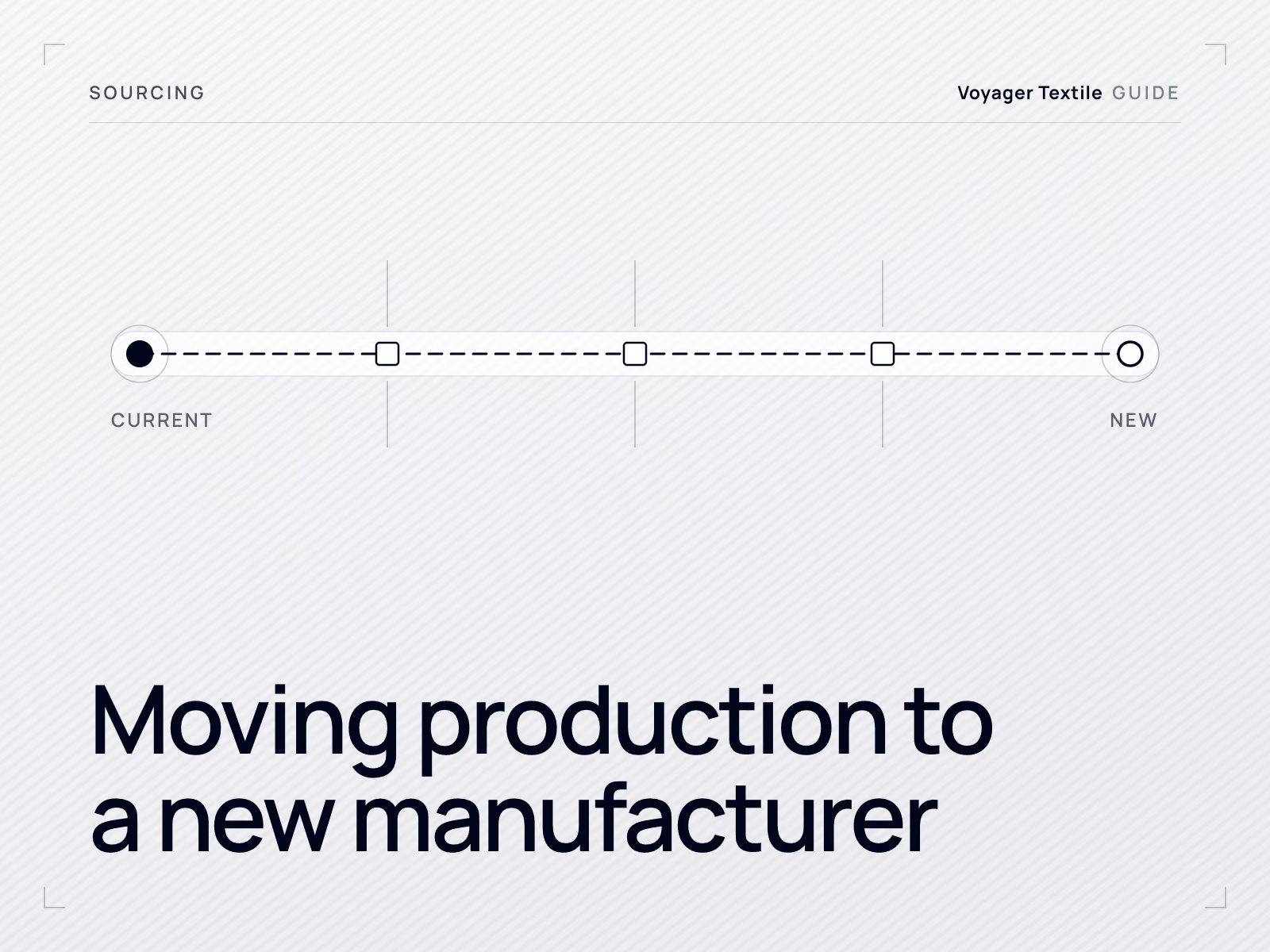
Moving a style is a re-development, not a copy. The specification, the sealed sample and the colour standards transfer; the pattern interpretation, the fabric source, the trim supply and the machine settings do not. Treating the move as development with a very good brief produces a far better result than treating it as a handover.
Contents
- What transfers, and what does not
- Assemble the transfer package before you approach anyone
- Why the same specification produces a different garment
- Run a gap analysis before sampling
- Sample against the old garment, not the document alone
- Phase the move
- What you own, and what you may not
- A realistic timeline
- Questions buyers ask
Brands move production for good reasons: capacity, price, service, quality, or because a factory stopped being a fit. Moving it across a border changes more than the address, the garment's customs origin is determined by where the work happens, as set out in country of origin for clothing. Whether the reason is a genuine pattern or one bad quarter is worth establishing before anything else, and that is a separate exercise covered in managing supplier performance. The move itself is straightforward to plan and easy to underestimate, because the product looks finished. What is actually being transferred is a set of decisions, and how much of that set exists in writing determines whether the first delivery from the new supplier matches the last one from the old.
What transfers, and what does not
| Item | Transfers | Note |
|---|---|---|
| The specification or tech pack | Yes, if you hold a current version | The key document |
| The graded measurement chart | Yes | Without it, the new factory grades from scratch |
| The sealed approved sample | Yes, if you kept a counter sample | The physical reference that settles arguments |
| Artwork and digitised embroidery files | Yes, if you hold them | Often held only by the previous supplier or its decorator |
| Colour standards and approved lab dips | Yes, if retained | A Pantone number is not a substitute |
| The pattern | Only if ownership was agreed | Frequently ambiguous, and it matters a great deal |
| The block the pattern was built from | Rarely | Belongs to the factory in many arrangements |
| The fabric article | Sometimes | Depends on whether the mill sells to the new factory |
| The yarn and finishing recipe | No | A mill production record, not a property of the cloth |
| Trim suppliers | Sometimes | Nominating them is what makes this transferable |
| Machine settings, seam and stitch choices | No | Rebuilt by the new factory for its own equipment |
Assemble the transfer package before you approach anyone
The quality of the package determines the quality of the quotations you receive, and it also tells you honestly how transferable the product currently is. Gaps found now are cheaper than gaps found at sampling.
What a strong transfer package contains
- The current specification or tech pack, with a version and a date
- The graded measurement chart with tolerances, and the base size stated
- A sealed reference garment, unwashed, ideally with a second copy retained
- Fabric specification: structure, composition, weight, finish, and the mill and article number if you know them
- Approved colour standards, and the lab dips if you have them
- The bill of materials, with trim specifications and suppliers where nominated
- Artwork files, including digitised embroidery files at the sizes used
- Label artwork and the care and composition content, checked against the actual fabric
- Packing specification, including carton marking
- Any test results and the testing requirements the product has to meet
- The inspection standard and defect classification used previously
- Production history: recurring issues, points that always drift, and anything the previous factory compensated for
Why the same specification produces a different garment
This is the part buyers are least prepared for. Two competent factories working from the same tech pack will produce garments that differ, and none of the differences is necessarily a fault.
- Fabric source. A different mill, a different yarn lot or a different finishing route produces cloth that meets the specification and does not feel identical.
- Pattern interpretation. A pattern rebuilt from a measurement chart is not the old pattern. Where the chart is silent, the new pattern maker makes a decision, and those decisions are what create fit.
- Grading. If only a base size chart transferred, the size range is regraded, and the extremes are where the difference shows.
- Seam and stitch choices. Machine availability and factory practice differ. A seam finished one way at the old supplier may be finished another way here.
- Trim sourcing. A rib, a zip or a cord bought from a different supplier can meet the same description and behave differently.
- Colour. A new dyeing at a new dye house against the same standard lands within tolerance, not on top of the previous delivery.
- Equipment and pressing. Finishing has a visible effect on appearance, and it is rarely specified in any document.
The mechanism behind several of these is the same one that makes bulk differ from a sample, described in why bulk production differs from the approved sample.
Run a gap analysis before sampling
Give the new factory the package and ask a specific question: what is missing, what is ambiguous, and what would you have to decide yourself. Doing that before a supplier is under pressure, rather than during a transfer, is what turns an alternative into a contingency, see supplier risk management. A serious manufacturer will return a list. That list is the real state of your documentation, and closing it before sampling removes many of the rounds a transfer often costs.
Expect the answers to cluster around fabric detail, tolerances, the attachment ratio for ribs, seam finishing and anything decided verbally in the past. Those are the same gaps that appear in an RFQ that is missing information.
Sample against the old garment, not the document alone
The transfer sample has an unusual job: it must satisfy the specification and match a garment your customers already know. Measure the new sample and the sealed reference side by side, point by point, and record both sets of numbers rather than only the deviations.
Then decide deliberately which differences matter. Some will be improvements, some will be invisible to a customer, and some will be the reason people notice the change. Approving a transfer sample without that comparison is how a brand discovers the difference through returns.
Phase the move
- Move one style first, ideally a high-volume one that exercises the specification properly rather than the simplest product you have.
- Overlap deliberately. Keeping the outgoing supplier for one more order buys time and removes the pressure that causes shortcuts.
- Do not move an entire range in one season. Each style carries its own undocumented knowledge, and discovering that across ten products at once is unmanageable.
- Leave the outgoing relationship intact. Suppliers talk, and you may need a repeat order from them during the transition.
- Plan for a longer first order. Development plus a fabric lead time plus bulk is the realistic path, not bulk alone.
What you own, and what you may not
Ownership questions surface at exactly this moment, and many of them have the same answer: it depends on what was agreed. Patterns developed for your product may or may not be transferable, and a factory is not obliged to hand over a block it built at its own cost. Digitised embroidery files are often held by a decorator rather than by either party. What to settle, and when, is set out in design ownership.
None of this is unreasonable, and all of it is easier to settle at the start of a relationship than at the end. If you are setting up a new supplier now, agree pattern ownership and file custody in the order terms, and keep a copy of every approved file yourself. Packing instructions transfer with everything else, and what they need to contain is set out in pack-out specification. The wider ownership question is covered in the private label section.
A realistic timeline
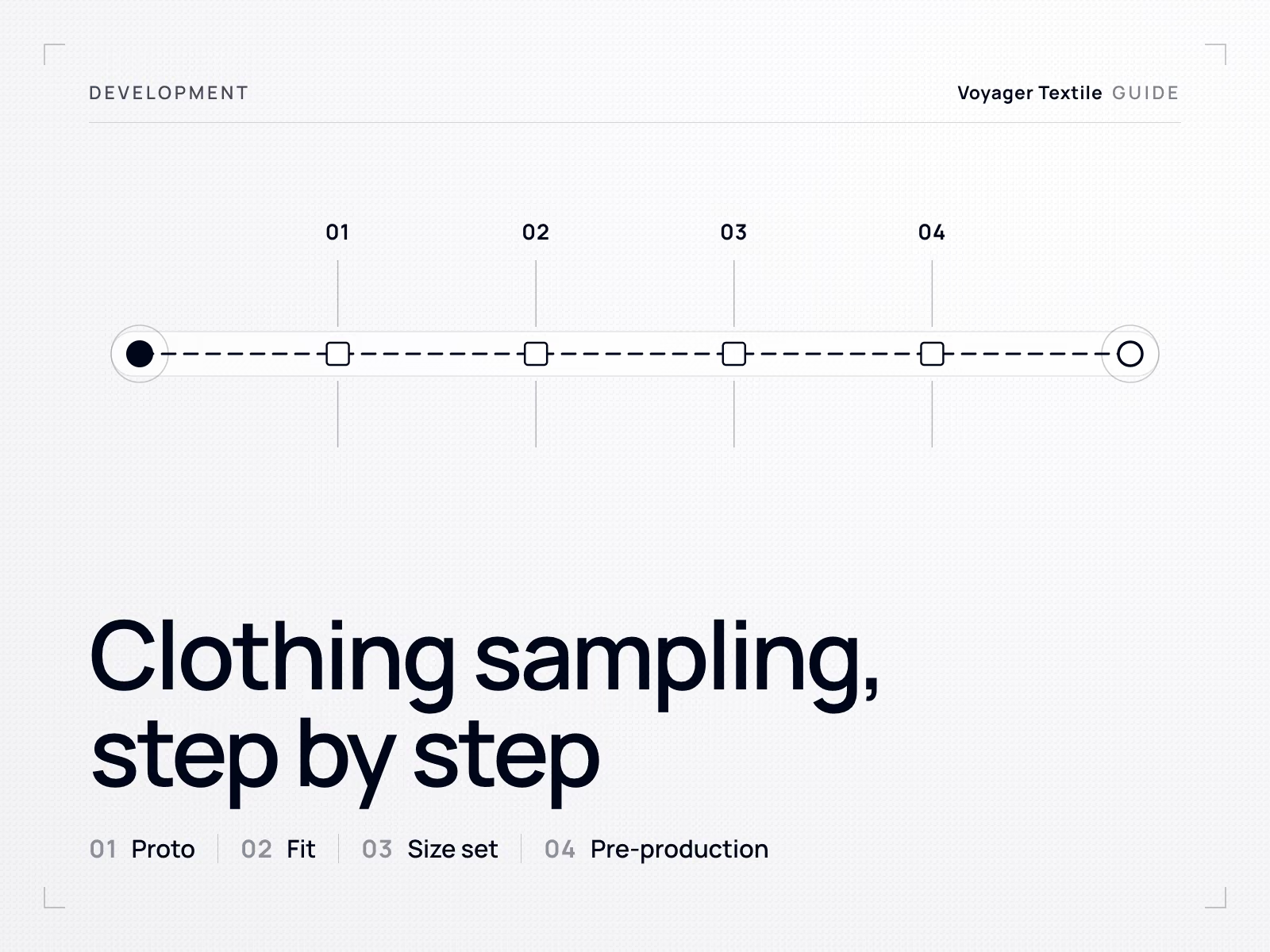
Treat a transfer as a development project with a very strong brief. Specification review and gap analysis first, then fabric sourcing and colour approval, then a sample compared against the sealed reference, then usually one revision, then a pre-production sample, then bulk. Bulk production at Voyager Textile typically takes 4 to 5 weeks after sample approval, and everything before it depends on fabric availability and how complete the package was.
Buyers who plan for that sequence transfer successfully. Buyers who plan for bulk lead time alone arrive at their season without stock.
Questions buyers ask
Can a new factory produce exactly the same garment?
Very close, not identical. Fabric source, pattern interpretation, trim supply, colour dyeing and finishing all change, and each contributes a small difference. The realistic objective is a garment your customer does not notice has changed, which is achieved by comparing samples against the sealed reference rather than against the document alone.
What is the most important thing to keep before moving?
A sealed, unwashed reference garment, together with the current specification and the graded measurement chart. Physical evidence plus a document is what makes a transfer measurable; either one alone leaves too much to interpretation.
Do we own the patterns from our previous factory?
It depends entirely on what was agreed, and it is frequently unstated. Ask, in writing, before the relationship ends. Where patterns do not transfer, the new factory rebuilds them from the measurement chart, which is workable but means the fit has to be re-approved rather than assumed.
Should we tell the new factory who produced the style before?
You do not have to name them, and you should share the technical history: recurring issues, measurements that always drift, fabric behaviour and anything previously compensated for. That information shortens development more than any other input.
How long does a transfer take?
Plan for a full development cycle rather than a production slot: specification review, fabric sourcing and colour approval, a comparison sample, usually one revision, a pre-production sample, then bulk. Fabric availability is normally the longest single element.
Should we move all our styles at once?
No. Move one meaningful style first, keep the outgoing supplier available for at least one more order, and expand once the first transfer has been through a full cycle including a delivery your customers have received.
Moving an existing style to a new manufacturing partner?
Send the specification, the graded chart and a reference garment. We will return a gap analysis before quoting, so you know what is missing from the package before it costs you a sampling round.
Request a transfer review