Quantities, cost and timing
What Determines the Cost of an Apparel Sample?
A sample is not one unit taken out of a bulk run. It is the first physical execution of a product that does not exist yet, and most of the work involved happens once per specification rather than once per garment. Bulk production spreads that work across the whole order. A sample cannot.
Contents
- Why a sample is not one unit of bulk production
- Work that happens once, and work that repeats
- Before the first sample can be sewn
- Materials and colour
- Decoration, trims and labels
- Where a sample is made
- Revisions and what a change reopens
- Sample fees and what varies commercially
- Why the bulk price can still move
- What to prepare, and what not to skip
- Questions buyers ask
A sample carries development work that is spread over many units in bulk production: patterns, material sourcing, construction trials and revisions.
Why a sample is not one unit of bulk production
A custom apparel sample can require much of the same development and setup work that an entire order requires, such as the pattern, the sourcing, the artwork preparation and the machine setup, but that work is divided across one or a few pieces instead of across hundreds or thousands. That is the whole answer in a sentence. Everything below is the detail behind it.
A quoted bulk unit price already has the benefits of quantity built into it. Fabric is bought in a production quantity rather than a few metres. Cutting happens from a lay of many plies rather than one. Sewing operations are split across a line where each person repeats one task. Decoration runs after a single setup. Packing is standardised. Take that price and multiply by one, and you have priced a unit that enjoys all of those advantages while producing a garment that has none of them.
The same work, a different denominator
The setup block is identical on both sides. What differs is how many garments it is divided across. This is a schematic of the principle only, it is not a cost ratio, and no relationship between sample and bulk price is implied.
Work that happens once, and work that repeats
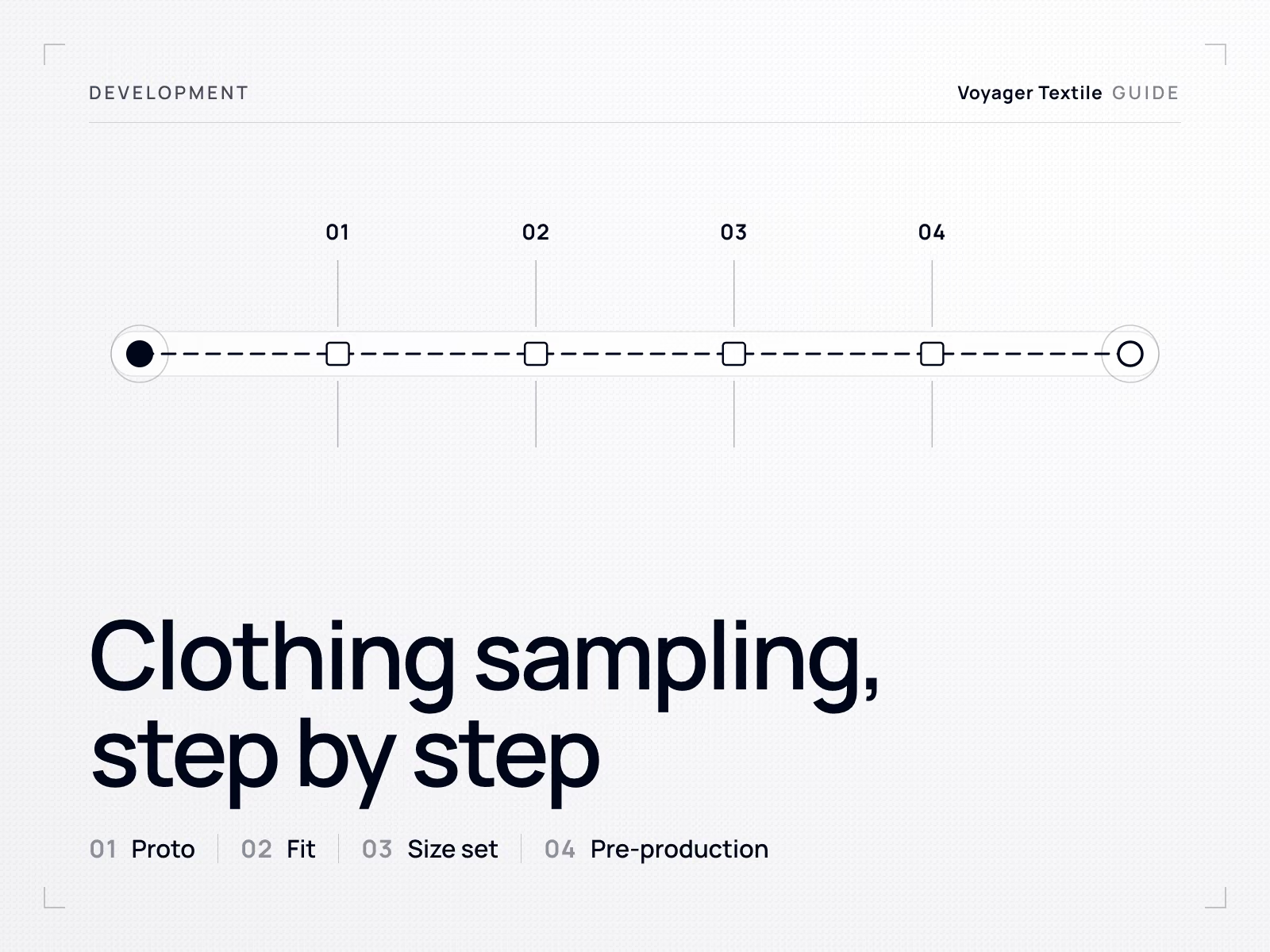
It helps to separate the two kinds of effort in a garment programme. One kind is done once for a specification, no matter how many pieces follow. The other is repeated for every piece made. Bulk production is mostly the second kind; a first sample is mostly the first.
Two kinds of effort
Done once per specification
- Reading the specification and resolving what is missing or contradictory
- Creating or modifying the pattern, and working out how the garment is constructed
- Sourcing fabric and trims, including anything with a supplier minimum
- Developing colour: specifying it, dyeing a lab dip, adjusting, approving
- Preparing artwork: separation, digitising, panel mapping
- Setting up decoration: screens or transfers, machine setup, a test run
- Cutting a single garment, by hand rather than from a lay
- Sewing the sample, usually whole-garment rather than by operation
- Fitting, review, written comments and the revision that follows
Repeated per garment
- Cutting each piece from a multi-ply lay
- Each sewing operation on a balanced line
- Running decoration once the setup exists
- Trimming, pressing and finishing
- Folding, bagging and packing
How a factory books those costs internally varies, and no two costing systems are identical. The point is not the accounting. It is that the left-hand column exists whether you order one piece or ten thousand, and most of it has to be done before the first garment can be sewn.
Before the first sample can be sewn
Buyers sometimes picture sampling as cutting one garment and sewing it. The sewing is often the shortest part. Much of the elapsed time and much of the skilled effort sit before a machine is switched on.
What a first sample actually involves
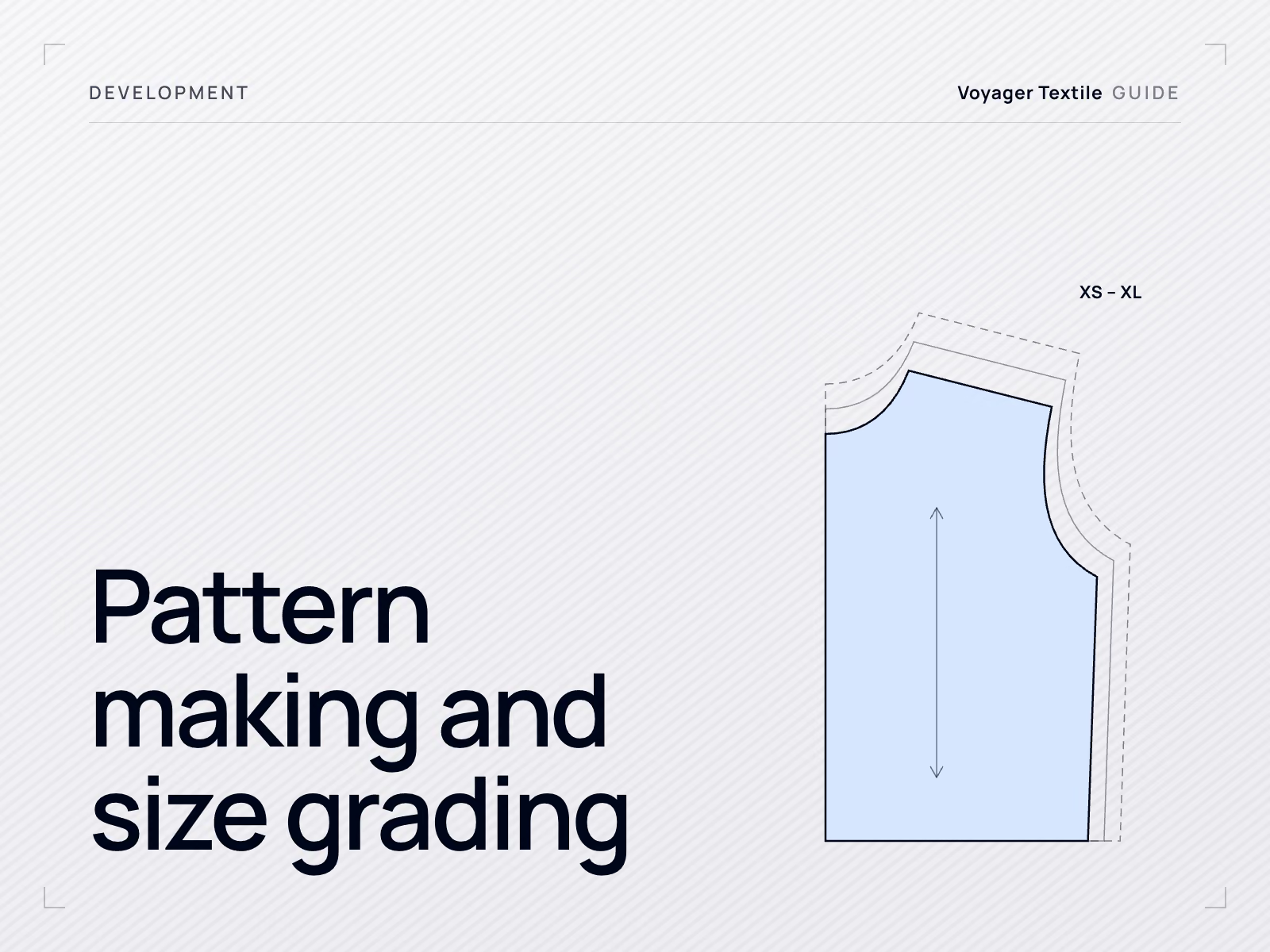
The pattern is often the largest single item when the silhouette is new. A new fitted garment needs a pattern developed from the measurements, with construction decisions made along the way: how the sleeve is set, how the neckline is finished, where the seam allowances sit. Existing blocks reduce that work when the new product is close to something already made, which is one reason a variation on a garment a factory already produces develops faster than a genuinely new silhouette. Pattern making and grading covers how that work is done.
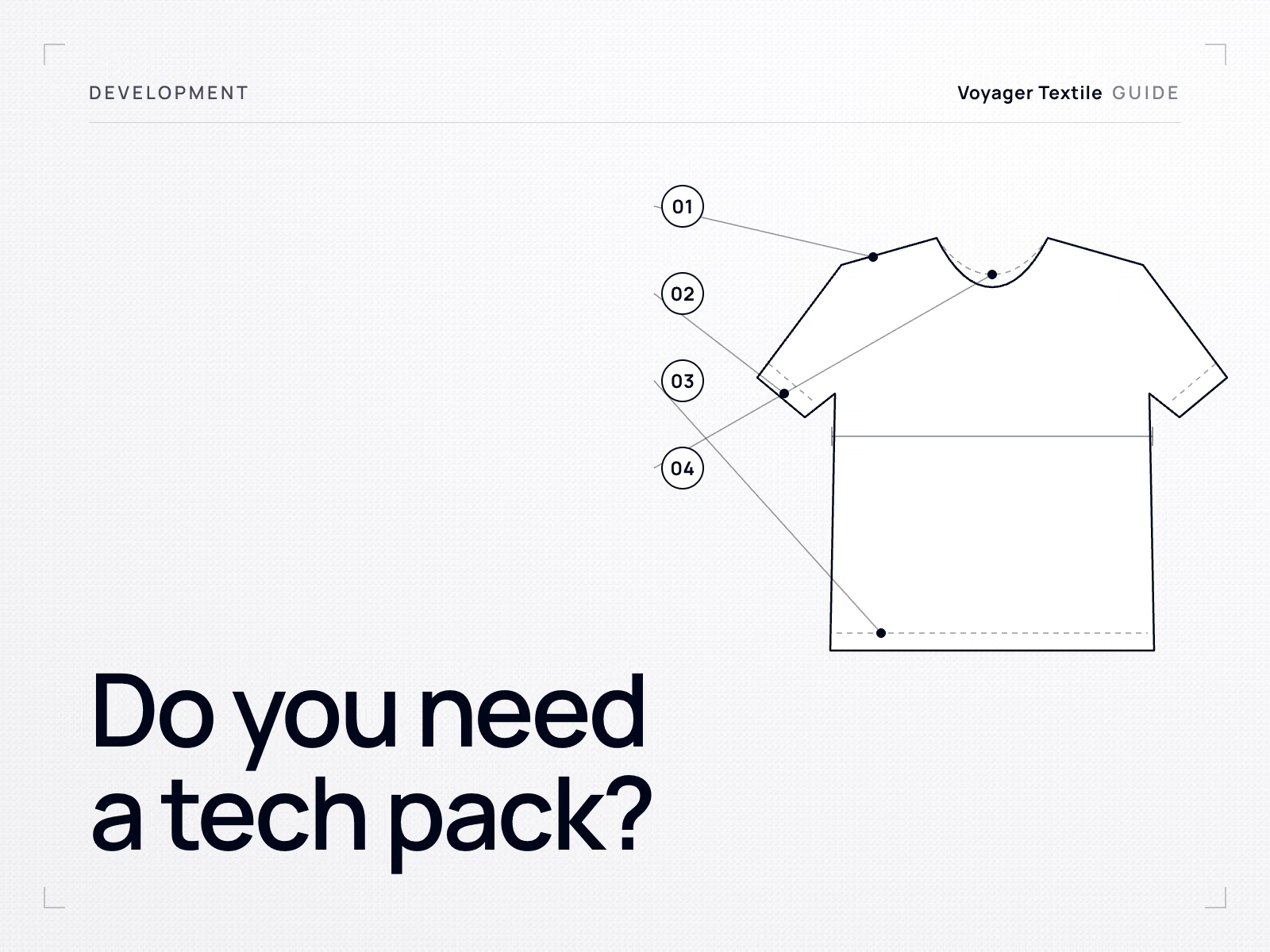
A complete technical package genuinely reduces development effort, because it removes the questions the factory would otherwise have to ask, guess at, or discover in a revision. What it does not do is remove sampling. A specification describes intent; a sample proves physical execution, and no document tells you how a particular fabric behaves in a particular seam. See what a tech pack contains.
A reference garment works the same way. Sending one removes a great deal of ambiguity about proportion, construction and intent, and it is often the fastest way to start. It does not remove the pattern work, the measurement decisions, the material matching or the fit validation, because the reference is an example rather than a specification. Manufacturing from a reference garment explains what it can and cannot replace, including where copying someone else's product is not acceptable.
Materials and colour
Material is where sample economics vary most between two projects that look similar on paper. The difference is not the fabric's price. It is whether the fabric already exists.
| Material route | What sampling involves | What it means later |
|---|---|---|
| Fabric already available in the required quality and colour | Cut from stock, sewn, reviewed | Fastest and least development effort, provided the bulk quality is genuinely the same fabric |
| Available quality, colour still to be developed | Sample may be made in an existing colour while the lab dip runs separately | Fit and construction can be judged early, colour approved on its own |
| Quality itself has to be developed: custom knit or weave, unusual blend, special finish | Mill development before there is any fabric to cut | Longest and most involved, and the sample cannot start until the fabric exists |
Where a custom material is involved, minimum quantities become the real constraint. Yarn, dyeing and specialised finishing all have practical minimums, partly because setting a machine up takes the same time whether it then runs a small quantity or a large one, and partly because dyeing and finishing equipment runs in batches of a certain size. Those minimums are set by each supplier and each process, so they are worth asking about at the start rather than assuming. The same logic underlies order minimums generally, covered in the MOQ guide.
Sample fabric and bulk fabric
Two workflows exist and both are used. A proto or early fit sample may deliberately be made in an available fabric of similar weight so that construction and measurements can be judged without waiting weeks for the intended material. Alternatively, the programme may require the exact bulk-intent fabric before anything is approved, which costs more time and sometimes more money but removes a category of surprise.
Neither is universally correct. The substitution is safe when the decision being made does not depend on the material, for example panel layout, pocket construction or general proportion. It is not safe when it does: drape, stretch, recovery, weight and how a seam behaves are all fabric properties. What is never safe is judging a fabric-dependent question on a substitute and calling it approved. The pre-production sample exists precisely because bulk materials have to be confirmed physically before production.
Why colour iterates
An exact colour is developed rather than selected. A dye recipe is trialled on your actual fabric, producing a lab dip that is assessed against the standard under controlled light, and adjusted if it is off. Fibre matters here: the same reference is not equally achievable on cotton, on polyester and on a blend, so a second or third round is a normal part of colour development rather than a sign that something went wrong. Pantone colour matching covers how colour is specified and approved.
This is also why colour development is a cost a buyer often does not see itemised in a quotation. It is real work done on your specific material, and it happens before there is anything to dye in bulk.
Decoration, trims and labels
Decoration is where the sample-versus-bulk logic is most visible, because the preparation is almost entirely fixed and almost entirely independent of quantity. Which method suits which job is covered in printing against embroidery; what matters here is only that the setup does not become smaller because you are decorating one garment.
- Screen printing. Artwork is separated into colours, screens are made and registered, ink is mixed to the colour and a test print is pulled and cured before anything correct comes off the press. That sequence happens once for the design, not once per garment.
- Embroidery. The logo is digitised: a skilled operator decides stitch types, direction, density, underlay and sequence for the specific fabric and the specific size. A sew-out is then run on the real material to check how it behaves. See artwork files, embroidery placement and size and why embroidery puckers.
- Transfers and heat-applied decoration. Artwork preparation, a produced transfer and a test application to confirm the press settings on that fabric.
- Sublimation. Artwork is mapped onto the garment panels themselves, printed, pressed and only then cut and sewn, so a sample requires the full panel preparation. All-over sublimation explains why the artwork and the pattern are one job.
A useful consequence: because the setup is the expensive part and much of it survives, a design already digitised or separated for one order needs far less preparation the next time, even where screens have to be remade. Development effort is spent once and then reused, which is a real argument for settling artwork before sampling rather than during it.
Trims and labels on a sample
Custom trims have their own development problem. A bespoke zipper, a moulded button, a woven label, a custom drawcord, a rubber patch or a printed hangtag is a manufactured product in its own right, made by a supplier with its own minimum quantity and its own setup. Producing a handful for one sample is often the awkward part rather than the expensive part, and it is a common reason a fully branded sample takes longer than a plain one.
Which is why development frequently proceeds in the right order rather than all at once: fit and construction settled first, full branding added once the garment itself is agreed. Whether a particular programme needs a fully branded sample depends on what the sample is for. Labels and packaging covers the label set, and pack-out specification covers what retail packaging involves if it has to be sampled too. A sample packed exactly as it will ship needs its own materials, and that is a separate request rather than an automatic inclusion.
Where a sample is made
In most apparel factories, development samples are not made on the bulk line. They are made in a sample or development section, where pattern makers and sample tailors work whole garments under a supervisor rather than repeating one operation. This is common practice across the industry, and there are good reasons for it: a bulk line is balanced around repetition, and putting one experimental garment through it would stop the line for everyone else.
The consequence is that a sample is made by more experienced people, more slowly, with more decisions taken per garment. That is not inefficiency, it is what a first execution needs. It is also the reason the same garment costs less to make on the twentieth piece than on the first, and much less on the two-thousandth.
Revisions and what a change reopens
A planned sample round and a round caused by a specification change are different things, and treating them as the same leads to a common misunderstanding in development. A programme that expects a proto, a revision and a pre-production sample is running normally. A programme where the fabric, the fit and the artwork all change between rounds is not revising, it is redeveloping.
Not every change costs the same. Changing a button colour is not the same kind of event as changing the fabric and the silhouette, and it is worth knowing which is which before sending comments.
What a change reopens
Which development work a change reopens depends on what changed. The judgement is risk based: the question is whether the change affects something already validated physically.
| Change | What it reopens | What is usually enough |
|---|---|---|
| Logo text corrected, same size and position | Artwork preparation, and the decoration setup for that design | A revised strike-off or sew-out, if the garment is otherwise approved |
| Print colour changed | Ink mixing and a test print | A strike-off on the approved fabric |
| Embroidery made larger, or moved to a different position | Digitising, and how the design behaves on that part of the garment | A sew-out, and a garment check if the new position sits over a seam or a stretchy panel |
| Trim changed for an equivalent item | Sourcing, and the operation that attaches it if it differs | Physical trim approval, sometimes a partial sample |
| Fabric changed | Sourcing, colour, fit, and how the garment washes and wears | A new garment sample: fit and behaviour are fabric properties |
| Fit or silhouette changed | Pattern, sewing, and the graded measurements across sizes | A new garment sample, and a size set if grading is affected |
When a full resample can be avoided
Where the garment itself is already approved and the change does not touch fit or construction, a focused approval is often the right instrument: a lab dip for a colour, a strike-off for a print, a sew-out for embroidery, a physical trim for a component. These validate the thing that changed without rebuilding the thing that did not.
The frame that matters is not how to avoid sample fees. It is to use the least expensive approval that still controls the relevant risk. A strike-off is cheaper than a garment; a garment is far cheaper than a rejected bulk order. Skipping a validation that a change genuinely requires is the expensive option, however it looks at the time.
Changes after approval
Once a sample is approved it becomes the reference the order is produced and inspected against. Changing something afterwards does not just alter a document. Depending on what changed, it can reopen sourcing, the pattern, the artwork, the decoration setup and the approval itself, and it may do so after fabric has already been booked. That is why locking decisions progressively, element by element, is worth more than keeping everything open.
Worth separating from all of the above: what a development charge buys is work, not automatically the rights in what that work produces. Who ends up owning or controlling the pattern, the digitising and the specification is a different agreement, covered in design ownership.
Sample fees and what varies commercially
How a manufacturer charges for development is a commercial policy, not an industry rule, and assuming there is a standard rule is a persistent misconception in sourcing. There is no standard that says sample fees are refundable, and none that says they are not.
- Some manufacturers credit the full sample charge against a subsequent bulk order.
- Some credit part of it.
- Some credit it only above a certain order quantity or value.
- Some do not credit it at all, and treat development as separately paid work.
All four exist. None of them is more legitimate than the others, and a supplier is not being difficult by using one rather than another. Ask directly, at the start: what the charge covers, how many rounds are included, what a further round costs, whether any part is credited and on what condition. Get the answer in writing before development begins, and the question never becomes an argument.
| Artefact | What it proves | What it does not prove |
|---|---|---|
| Fabric swatch or hanger | What the material physically is | The colour on your order, or anything about the garment |
| Lab dip | A dye recipe on your actual fabric | How the fabric prints, sews or fits |
| Strike-off | How a print reproduces on your fabric | Placement or proportion on a finished garment |
| Sew-out | How a digitised design embroiders on your fabric | How it sits on the garment panel |
| Stock or existing sample | The supplier's quality and workmanship | Your product, which has not been made yet |
| Custom development sample | Your specification, physically executed | That bulk will be identical without controls |
Sample cost and shipping cost
These are separate lines and should be quoted separately. What it costs to develop and make a sample has nothing to do with what it costs to get it to you, and international courier delivery is normally charged on its own. Depending on the destination, a sample shipment can also involve customs handling and import charges that are outside the manufacturer's control. Ask how delivery is handled at the same time as you ask about the fee.
Why the bulk price can still move
Buyers reasonably want the final price before committing to development, and a preliminary quotation is usually possible from a good brief. What a preliminary quote cannot do is price things that have not been determined yet, because some of them are only resolved by making the garment.
- How much fabric the garment actually consumes, once the pattern exists and a marker can be made. See fabric consumption.
- How many sewing operations the construction really needs, and how difficult they are on that material.
- Whether the decoration works as drawn, or needs a different method or size.
- Which trims are actually used, after the alternatives have been seen physically.
- What finishing and packing the product requires.
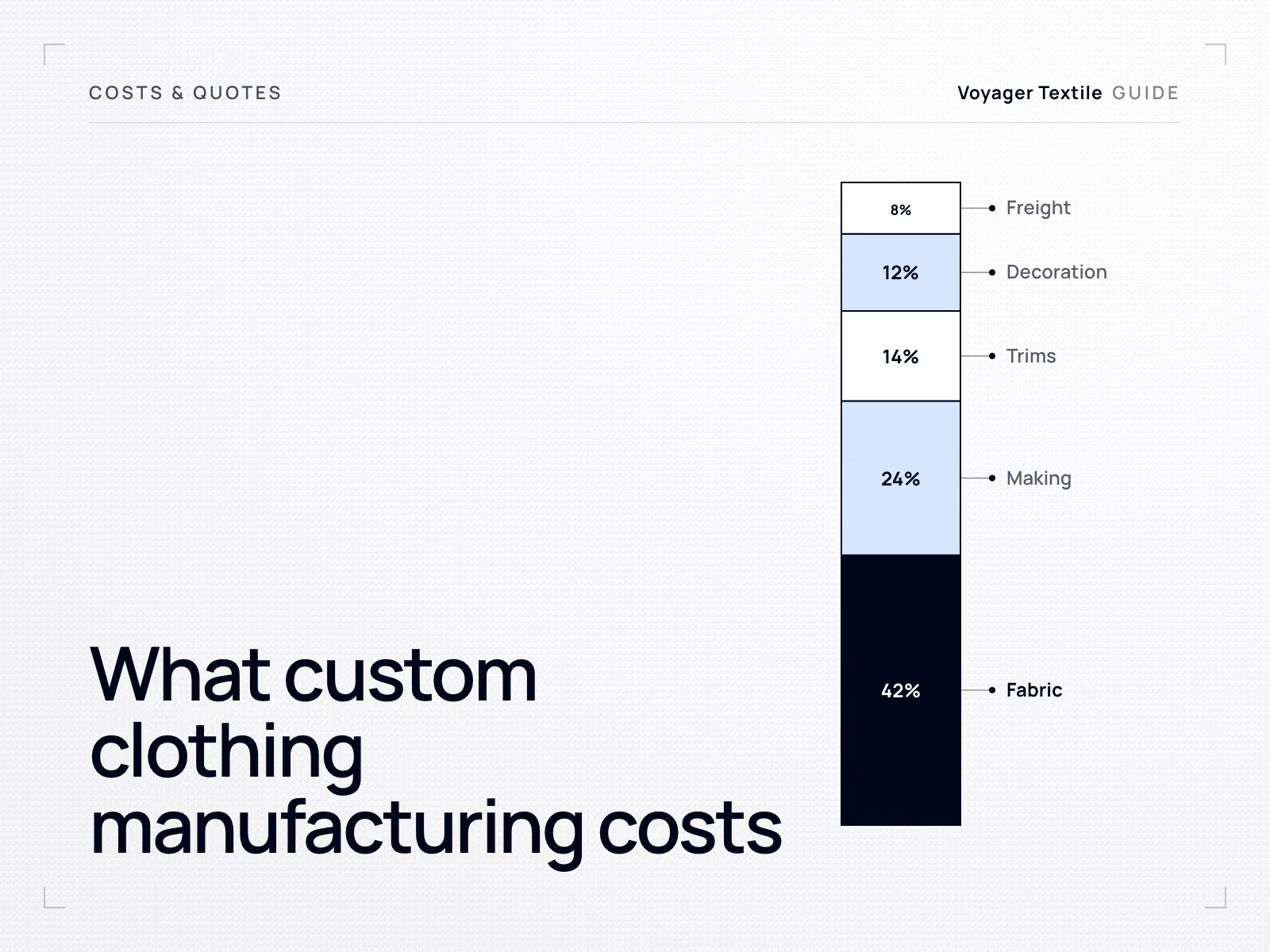
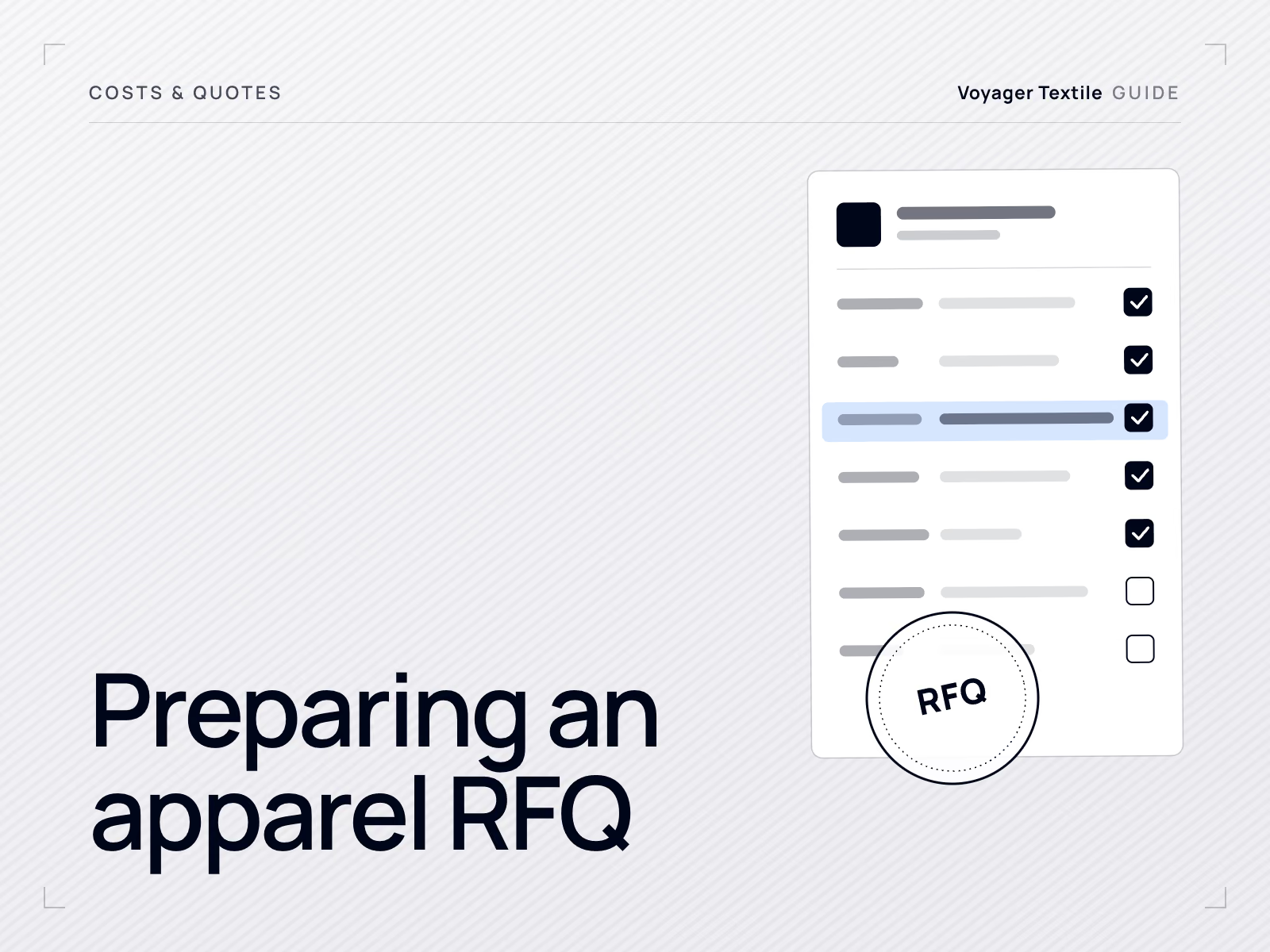
If the approved specification ends up materially different from the one that was quoted, for example a heavier fabric, an extra pocket, a more complex seam, a larger embroidery, a second print position or a custom zipper, then the bulk costing has to be updated. That is not a price changing arbitrarily. The product changed, and the price follows the specification. The way to keep the two aligned is a precise brief at the start; how to write an RFQ covers what to include, and what drives unit cost covers how the bulk quotation is built.
What to prepare, and what not to skip
Most avoidable sampling cost comes from the same place: development work started before the decisions it depends on were made. The fix is unglamorous and it works.
Before requesting a custom sample
Sample specific. The full commercial brief belongs in the RFQ; this is what development itself needs.
- State what the sample is meant to validate: construction, fit, colour, decoration, or final pre-production approval.
- Send the product reference or tech pack, including construction details and how the garment should be built.
- Specify the material: composition, weight, knit or weave, and any finish. See fabric weight.
- Give the measurements and the size to be sampled, with the points of measure defined. See size charts for production.
- Send final artwork in a usable format, with the decoration method, size and position stated.
- Say which trims and labels are required at this stage, and which can follow.
- State the intended bulk quantity and size range, so development decisions are made for the right scale.
- Say whether the sample must be made in bulk-intent fabric, or whether a substitute is acceptable for this round.
- Give the target market, since fit expectations differ by market.
One last point worth making plainly. An approved sample is a production reference, not a guarantee that every piece will be identical to it. Bulk still depends on controlled materials, a clear specification and inspection against the approved standard, as set out in quality control. Development buys you a reliable reference. Production discipline is what turns it into a reliable order.
Questions buyers ask
Why does a clothing sample cost more per piece than bulk production?
Because a custom sample requires pattern work, sourcing, artwork preparation and machine setup that is divided across one or a few pieces, while bulk production divides most of that same work across the whole order quantity and gains efficiency from repetition in cutting, sewing and decoration.
What does a sample fee actually cover?
It generally covers development work rather than one garment's materials: reading and resolving the specification, pattern creation or modification, sourcing, artwork and decoration preparation, single-piece cutting and sewing by an experienced maker, and the review that follows. What any individual factory includes varies, so ask what the charge covers before development starts.
Is a sample fee refundable or credited against a bulk order?
That is a commercial policy rather than an industry rule, and all the variants exist: full credit, partial credit, credit only above a certain order size, and no credit. There is no standard practice to appeal to, so agree it in writing before development begins.
Can the bulk unit price simply be multiplied by one to price a sample?
No. A bulk unit price already includes the benefits of quantity: material bought in production volume, cutting from a multi-ply lay, a balanced sewing line, decoration run after one setup, and standardised packing. A single development sample has none of those benefits and carries the setup work that the bulk price spreads out.
Does every revision require a new garment sample?
No. It depends on what changed. A colour, print or embroidery change on an otherwise approved garment can often be validated with a lab dip, strike-off or sew-out. A change to the fabric, the fit or the construction generally does need a new garment, because those affect how the product behaves physically.
Why are custom fabric, dyeing and decoration expensive at sample stage?
Because each involves development work and a machine setup that is the same regardless of how little is being produced. A custom colour needs a dye recipe trialled and approved on your fabric; a print needs separation, screens and a test; embroidery needs digitising and a sew-out. None of that becomes smaller because only one garment is being made.
Can a supplier send a free sample?
Often, if it is an existing one: a stock garment, a previous production piece or a fabric swatch. Those already exist and are useful for judging quality and materials. A custom sample made to your own specification is development work and is normally charged.
Why can the bulk quotation change after sampling?
Because development resolves things a preliminary quote had to estimate: actual fabric consumption, real operation count, decoration feasibility, final trims, finishing and packing. If the approved specification ends up materially different from the one quoted, the costing is updated to match the product that will actually be made.
What should I provide before requesting a sample?
State what the sample is meant to validate, then send the tech pack or reference, the material specification, the measurements and size to be sampled, final artwork with method and placement, which trims and labels are needed at this stage, the intended bulk quantity and the target market.
Tell us what the sample has to prove
Send your specification or a reference garment together with what you need the sample to validate, and we will tell you what development it requires, what we would need from you first, and what can be settled with a focused approval instead.
Request sample development