Uniform, medical and workwear
Shirt Manufacturing Process: Collars, Cuffs, Plackets and Fusing in Woven Shirts
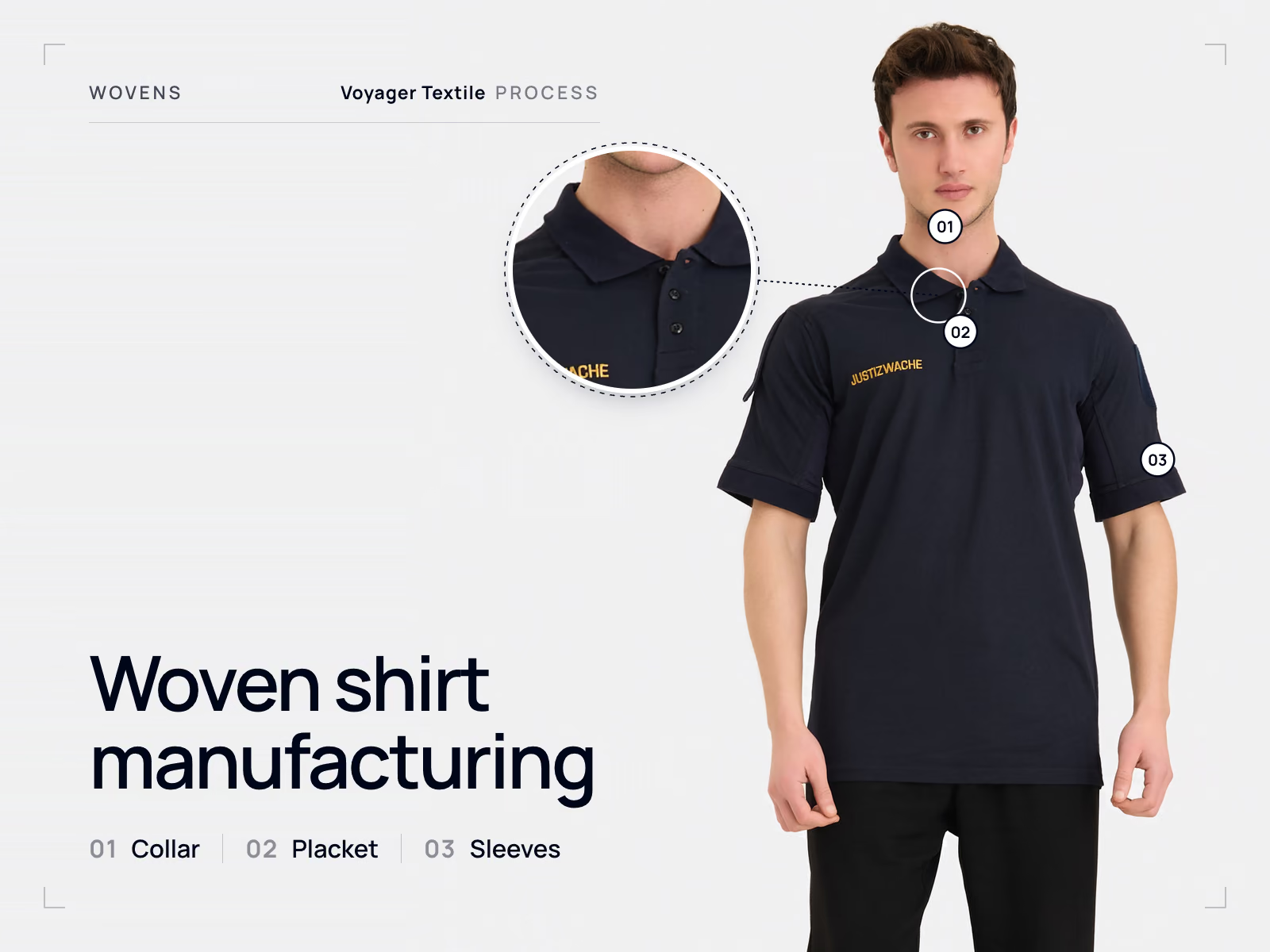
A woven shirt is judged at the collar, the cuffs and the front placket, and all three depend on fusible interlining bonded correctly to the shirting. The body is cut from a non-stretch cloth, so fit comes from the pattern alone, and side seams are usually felled. Work shirts and overshirts use the same construction in heavier cloth.
Contents
- Shirting fabrics for woven shirts, work shirts and overshirts
- Collar construction: leaf, stand and interlining
- Fusing: the step that decides whether a collar survives the wash
- Cuffs and sleeve plackets
- Front plackets, yokes and pockets
- Seams and stitches in a woven shirt
- Buttons and buttonholes
- Pressing and finishing
- Sizing and grading woven shirts
- Decoration on woven shirting
- Work shirts and overshirts
- Tests a buyer can specify for shirts
- Minimums, sampling and lead time
- Buyer questions
A shirt looks simple and contains more small components than most garments: a collar in two or three parts, a stand, two cuffs, sleeve plackets, a front placket, a yoke and often a pocket. Each of those parts is cut, fused, sewn, turned and pressed before the body is assembled. The quality a buyer sees at arm's length is decided in those sub-assemblies.
Woven shirt production sequence
Shirting fabrics for woven shirts, work shirts and overshirts
Poplin and other plain weaves are the usual shirting for corporate and private-label shirts, in cotton or polyester-cotton blends. Oxford, chambray and twill give a heavier, more casual character. Work shirts move towards polyester-cotton twill because it holds colour and size under frequent washing, and overshirts use bottom-weight cloths.
| Cloth | Typical use | Indicative weight | Consideration |
|---|---|---|---|
| Poplin and shirting weights | Corporate and private-label shirts | Around 110 to 160 g/m² | Check opacity in white and pale colours |
| Polyester-cotton twill | Work shirts and heavier overshirts | Around 195 to 300 g/m² for workwear twills | Keeps colour and size under hot washing; the lighter end suits shirts |
| Cotton chino twill | Overshirts and shirt jackets | Around 250 to 300 g/m² | More body than shirting; seams show, so finish them cleanly |
| Canvas and denim | Overshirts | Around 8 to 12 oz, roughly 270 to 410 g/m² | Check dye rubbing on raw indigo against light clothing |
How twill and gabardine differ, and how their weights are quoted, is set out on the twill and gabardine fabric page.
Collar construction: leaf, stand and interlining
A classic shirt collar has two parts: the collar leaf, which folds over, and the stand, which sits around the neck and carries the top button. Each part has an upper and an under ply, and at least one ply is fused so the collar holds its roll and its points. The collar is sewn right sides together, trimmed, turned, pressed and top-stitched before it is joined to the stand, and the stand is then set to the neckline.
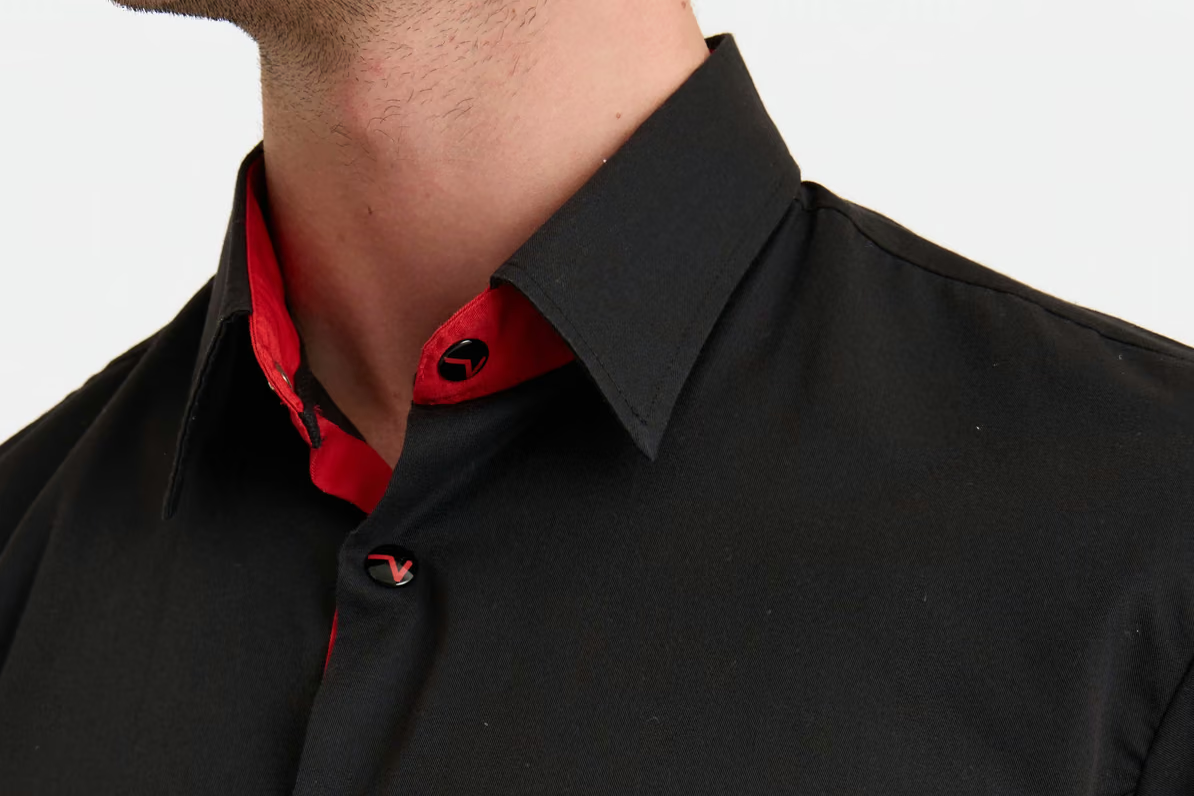
- Collar styles. Point, spread and button-down collars on a separate stand; a band or mandarin collar with no leaf; a one-piece camp collar, common on short-sleeve work shirts, where leaf and stand are cut as one.
- Stand choices. A separate stand gives a sharper fit at the neck; a cut-on stand is simpler and softer. Which one a style uses is a design decision stated in the tech pack.
- Interlining placement. Fused to the upper collar or the under collar, with or without a separate interlining in the stand. The choice changes stiffness and how the collar ages in the wash.
- Collar points. Point length and spread are measurements on the specification, and point symmetry is checked at inspection. Removable collar stays belong to dress shirts, not to work shirts.
- Top-stitching. The distance from the edge is stated, commonly as a fraction of a centimetre or inch, because it is visible on every garment.
Fusing: the step that decides whether a collar survives the wash
Fusing bonds an interlining with a heat-activated adhesive to the back of the shirting under controlled temperature, time and pressure. When those three match the interlining and the cloth, the collar, cuffs and placket move as one layer. When they do not, the bond fails in places after washing and the part bubbles. The cause and the washed-sample check are explained in linings, facings and interlinings.
In the trade, fusing is done on continuous or flatbed fusing presses, with woven or non-woven interlinings in several weights. The interlining type, its weight and the fusing parameters for each component are technical options confirmed per project at the quotation stage, and the buyer's part is to name the weight and hand wanted and to approve a washed, fused sample before bulk.
Cuffs and sleeve plackets
A barrel cuff with one or two buttons is the standard on woven shirts; a convertible cuff takes either a button or a cufflink; a double or French cuff belongs to formal shirts. The cuff is built like a small collar: fused, sewn, turned, top-stitched and then set to the gathered or pleated sleeve end.
The sleeve opening above the cuff is finished with a placket. A tower placket, the pointed sleeve placket, is neater and usually carries a small button; a continuous bound placket is flatter and faster to sew. Short-sleeve work shirts replace all of this with a turned hem, which is one reason they are the more practical choice for a laundered programme.
Front plackets, yokes and pockets
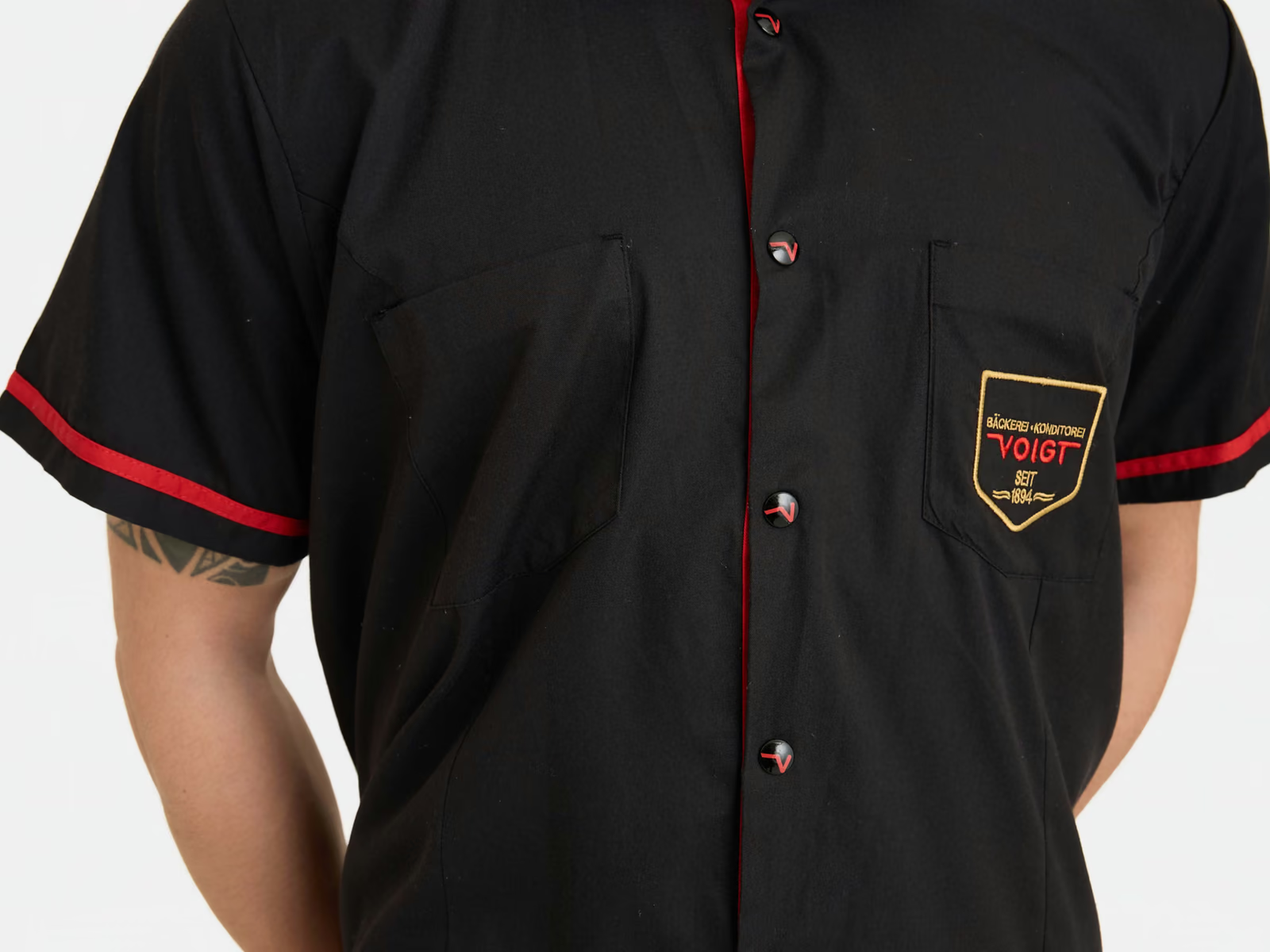
- Applied placket. A separate strip on the buttonhole side, fused and top-stitched; a common front.
- Folded or French front. No visible placket, the edge is turned and fused; cleaner, and less forgiving of uneven fusing.
- Concealed placket. Buttons hidden under a fly, used where exposed buttons are unwanted, for example on some service and food-sector garments.
- Yoke. The shoulder piece across the back, cut as one or two plies. A two-ply yoke encloses the shoulder seams and gives a clean inside; a split yoke cut on the bias is a detail of more formal shirts.
- Back pleats and loops. A box pleat or two side pleats below the yoke add movement; a locker loop is a small detail to state or omit.
- Pockets. A chest patch pocket, with or without a flap and pen division, and on work shirts sometimes a sleeve pocket. Patch pocket setting is a lapped seam, as described in pocket construction.
Seams and stitches in a woven shirt
Collars, cuffs and plackets are sewn with a 301 lockstitch, because accuracy on those parts matters more than stretch. Side seams and sleeve seams on shirts are typically felled seams (LS 2.04.06 in the ISO 4916 classes), sewn with a two- or three-needle 401 chainstitch so no raw edge remains, and the plain shirt hem is an edge-finishing construction, EF 6.02.01. The stitch types are explained in garment stitch types and the seam classes in seam types and seam classes.
Stitch density is a specification item, stated as stitches per centimetre or per inch for each operation, since it changes both strength and appearance. On light, tightly woven shirting, too dense a stitch or the wrong needle and thread pulls the seam into waves; that failure is described in seam puckering.
Buttons and buttonholes
Buttonholes are sewn and cut on a buttonhole machine after assembly, and buttons are sewn at positions marked from the pattern. Shirt buttons are sized in lignes (1 ligne is about 0.635 mm); front buttons commonly sit around 14L to 18L, with smaller buttons on cuffs, collar points and sleeve plackets. Button spacing, the top button position on the stand and the direction of the buttonholes are written into the specification. Buttons are a bought component with their own colour, size and supplier line, as covered in trims and components.
Pressing and finishing
Collars, cuffs and plackets are pressed as components before assembly, which is where their shape is set. The finished shirt is pressed, buttoned and folded around a back board or collar support, or packed hanging, depending on the buyer's packing instruction. Folding and bagging options are set out in folding and polybagging.
Sizing and grading woven shirts
Dress and corporate shirts are often sized by collar circumference with a sleeve length; work and private-label shirts are usually sized S to 3XL or wider. Because the cloth does not stretch, every size depends on the graded pattern. The points of measure that matter most are collar length, chest, waist, hem width, across back at the yoke, sleeve length, cuff circumference and body length from the high point shoulder.
Voyager Textile makes and grades patterns in Gerber AccuMark in its own factory in Türkiye. Measurement charts, grading rules and tolerances are explained in pattern making and size grading and size charts for production.
Decoration on woven shirting
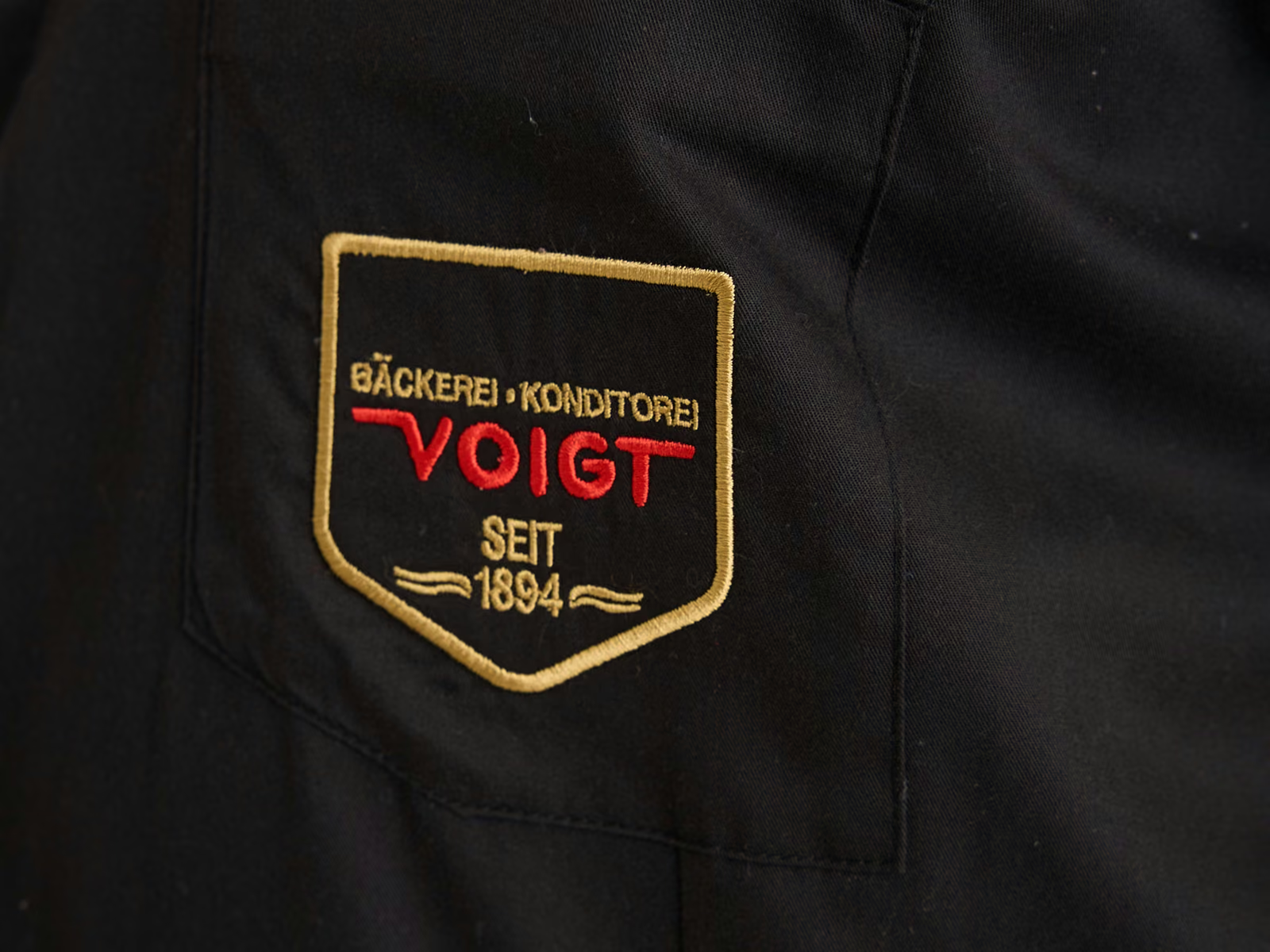
Embroidery is the usual branding on shirts, worked in-house on the flat chest or sleeve panel before assembly. Light shirting needs backing matched to the stitch count, or the logo puckers the cloth around it; see embroidery puckering. Transfer printing also runs in-house, sublimation only suits polyester shirting, and screen printing is coordinated with partner facilities.
Work shirts and overshirts
Work shirts are woven shirts in the programme colours of the trousers and jackets they are worn with. They usually carry a chest pocket, sometimes a sleeve pocket, a camp or classic collar and short or long sleeves, with felled seams and bartacks at pocket corners. Fabric and construction are confirmed per project at the quotation stage. The wider programme is on the private label workwear page, and corporate shirts sit on the corporate clothing page.
An overshirt, or shirt jacket, is cut like a shirt from a heavier cloth and worn as a light outer layer. It is usually unlined, so every inside seam is on show and is felled, bound or cleanly overlocked. Chest patch pockets with flaps, a button or press-stud placket and an interlined shirt collar are the usual details.
Tests a buyer can specify for shirts
| Test | Standard | What it shows |
|---|---|---|
| Dimensional change after washing | ISO 6330 wash procedure, ISO 5077 measurement | Whether the shirt keeps its size and collar length |
| Colourfastness to washing | ISO 105-C06 | Colour loss and staining of other garments |
| Colourfastness to rubbing | ISO 105-X12 | Dye rubbing on dark shades and denim |
| Seam slippage | ISO 13936 | Seams opening on light or open weaves |
| Industrial laundering | ISO 15797 | Work shirts going to an industrial laundry |
| Fused-part wash check | Washed sample on the care instruction | Bubbling or delamination of collar, cuffs and placket |
These are requirements a buyer names in the order, not conformity claims by the factory. How to plan them is covered in wash testing before bulk production.
Minimums, sampling and lead time
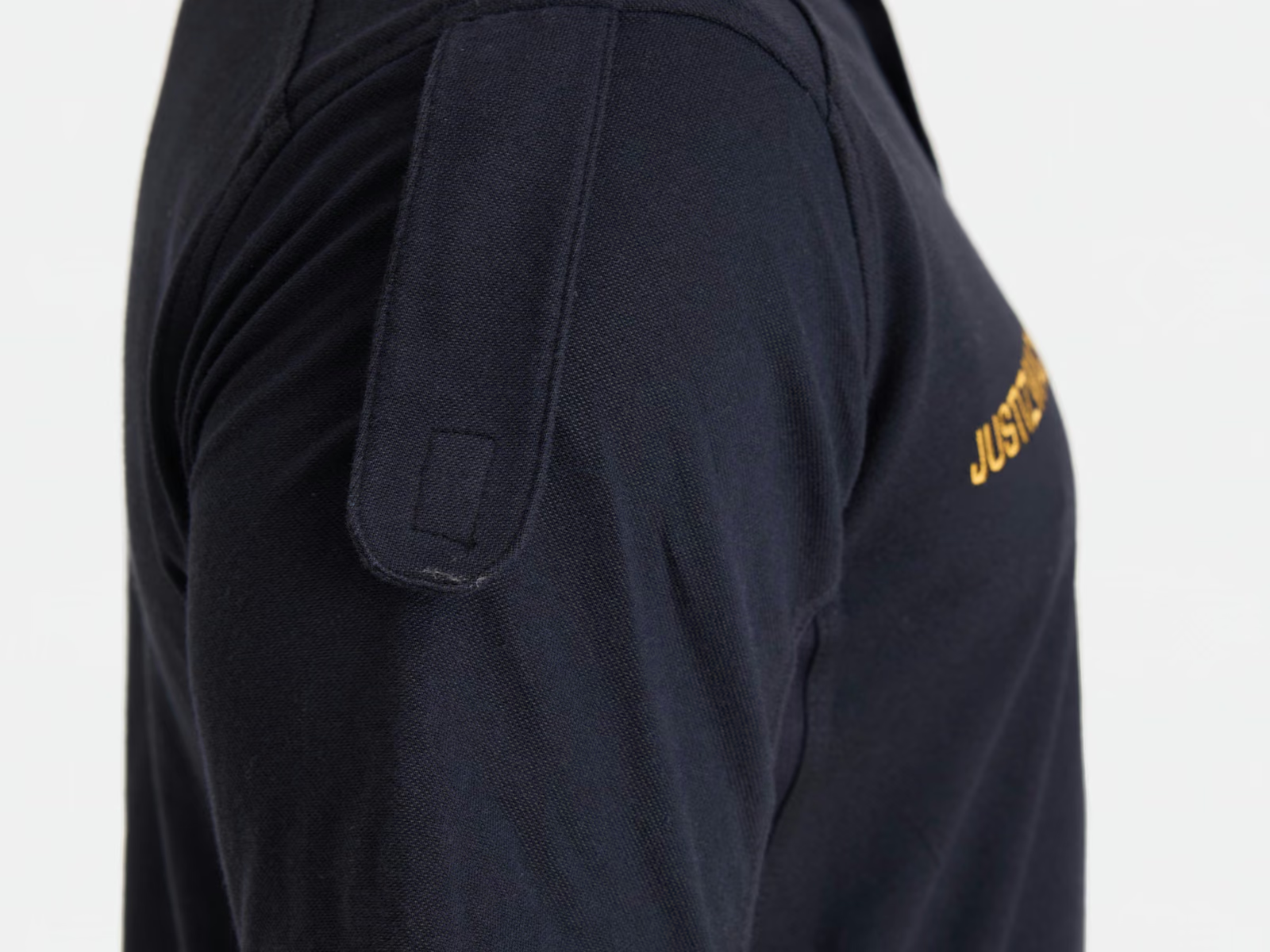
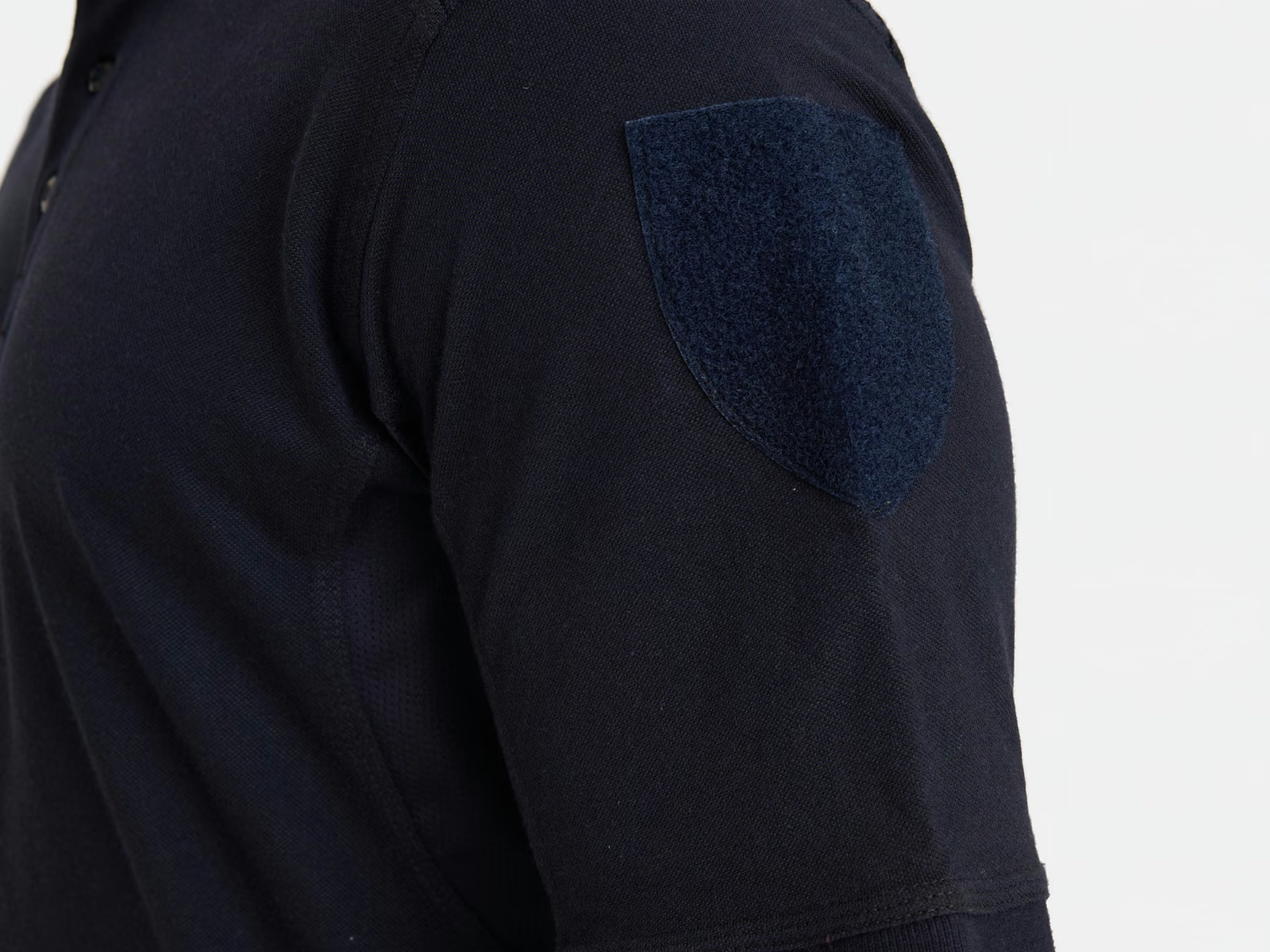
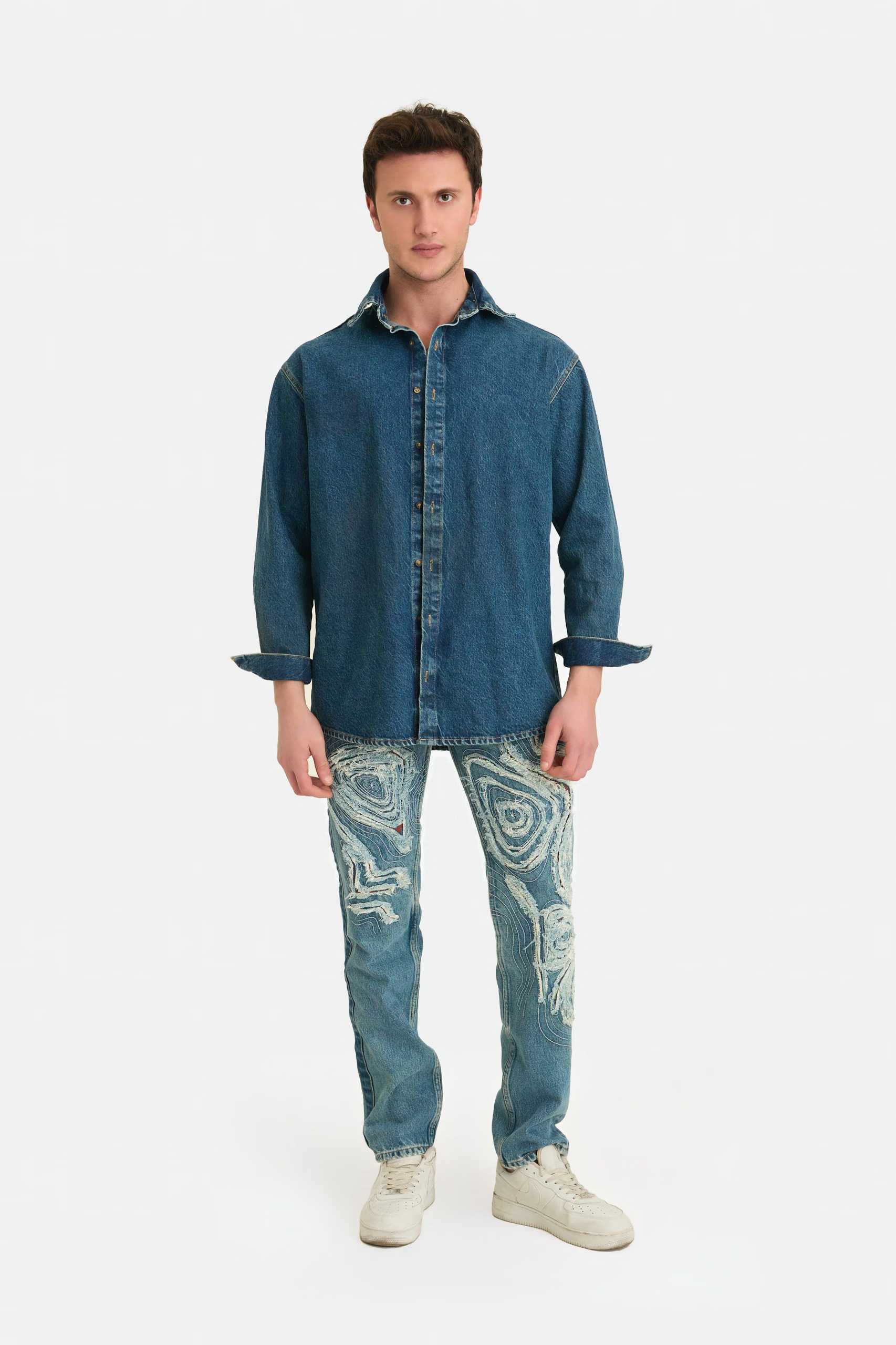
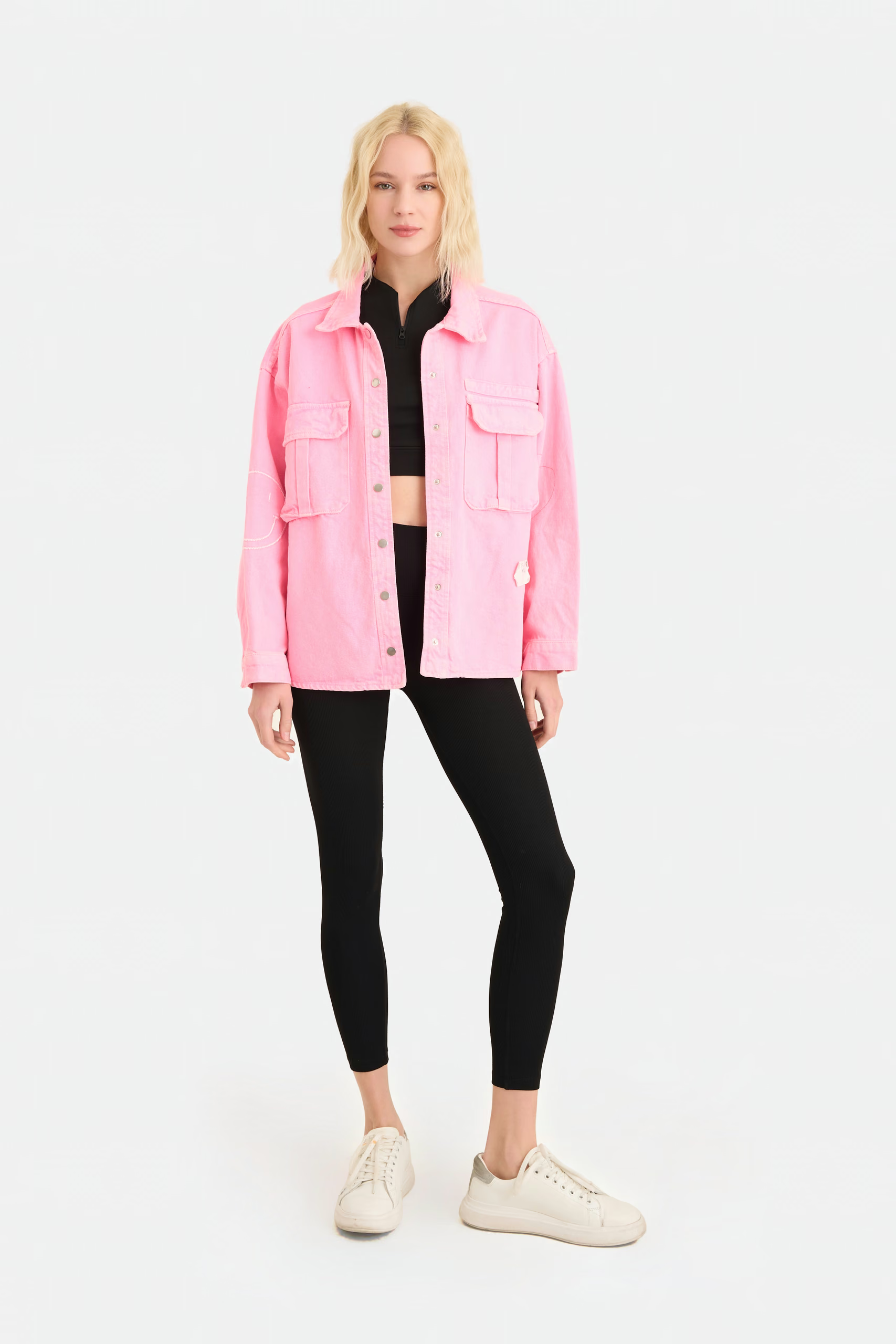
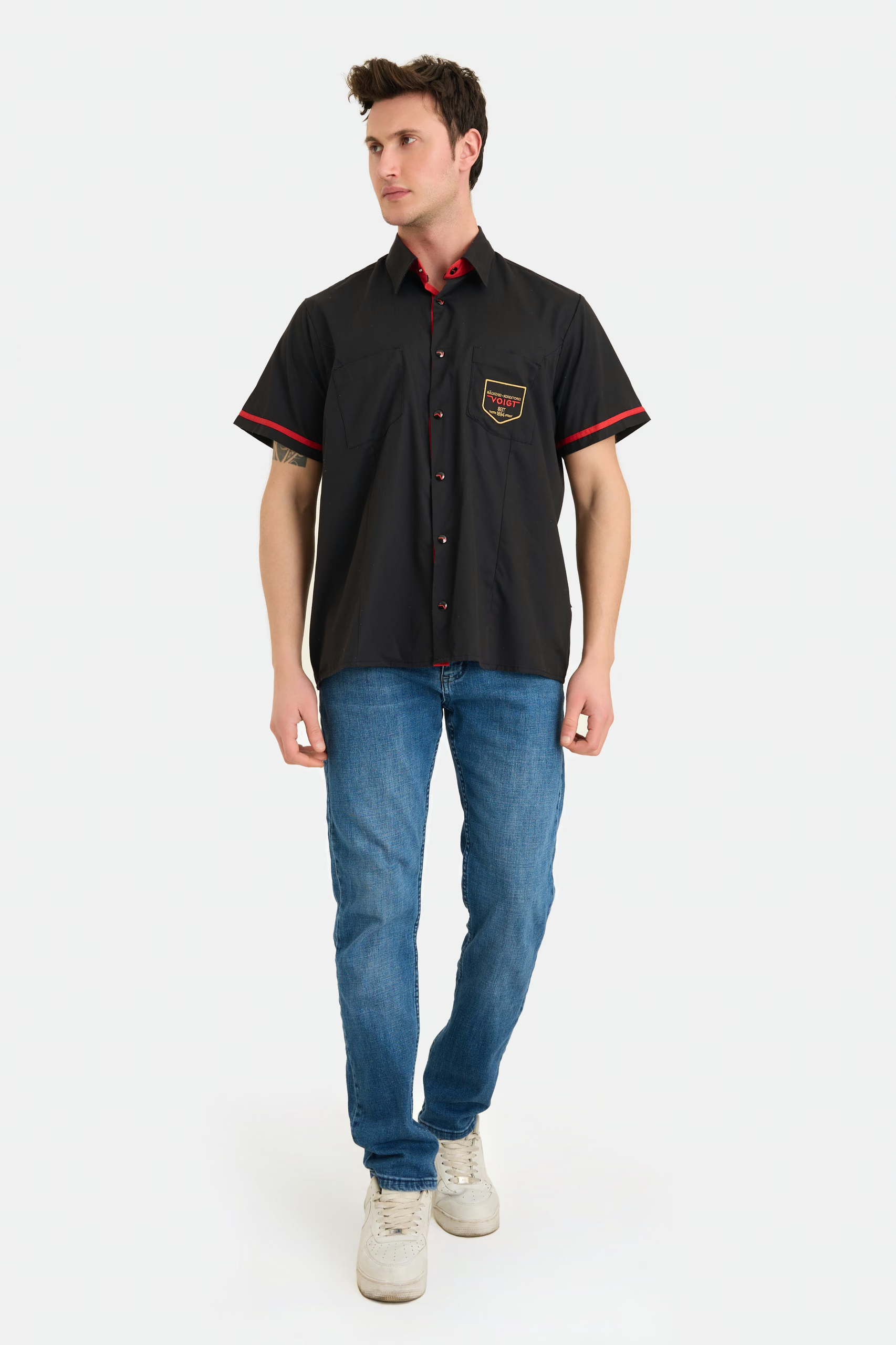
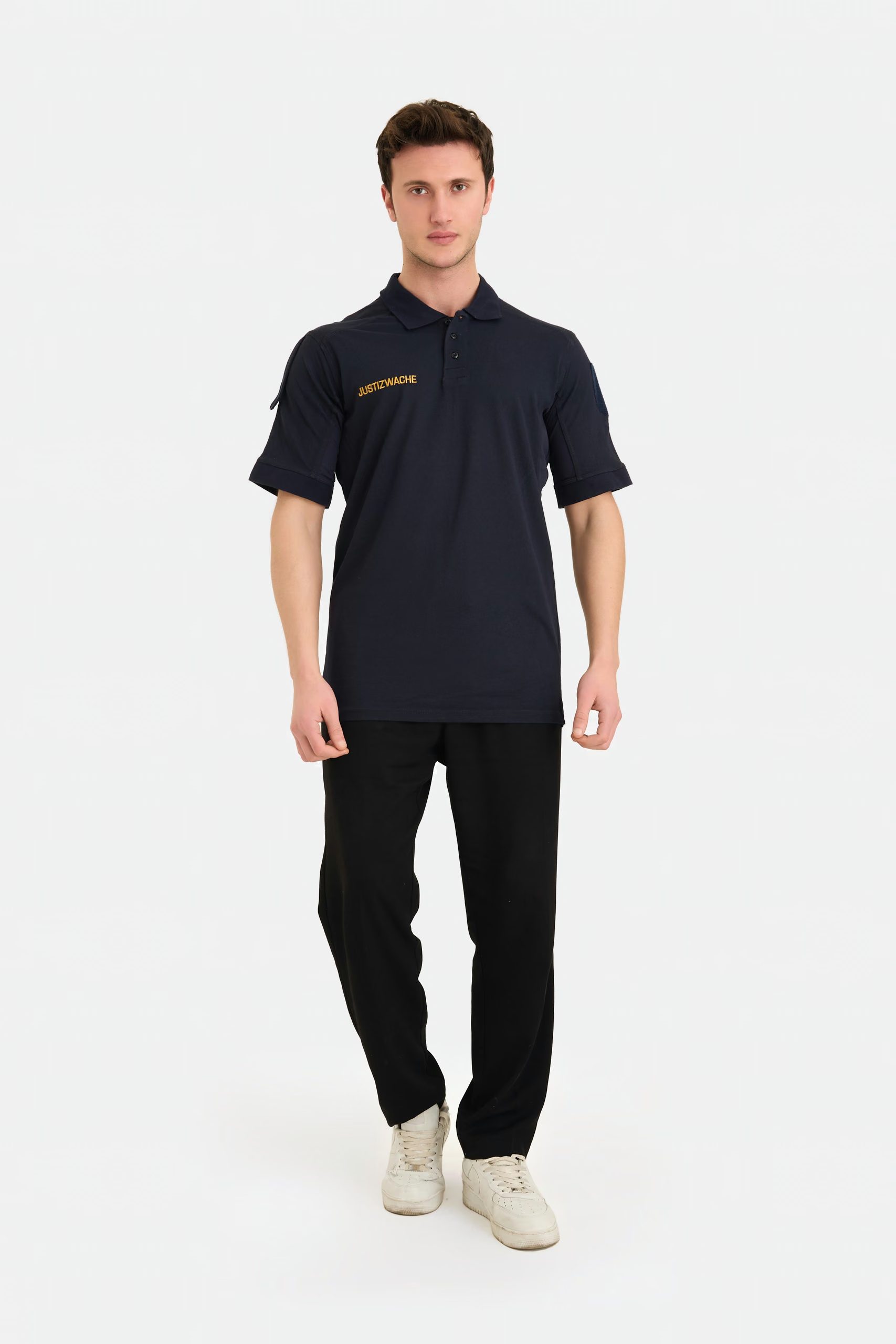
The minimum is 300 pieces per colour and per style, and sizes can be split within the 300. A sample takes 5 to 7 business days, and bulk production takes 4 to 5 weeks after sample approval. The catalogue shows two shirts and two overshirts made previously to customer specification; they are references, not stock.
Before you send a shirt RFQ
- Fabric: weave, composition and target weight, or your own fabric
- Collar style, stand type and point measurements
- Which parts are fused, with interlining weight
- Cuff type, sleeve placket and sleeve length, or short sleeves
- Front placket type, button size and spacing
- Yoke, back pleats and pockets
- Seam construction and stitch density
- Size range, measurement chart and tolerances
- Embroidery or print artwork and position
- Care instruction, laundering regime and required tests
- Packing: folded or hanging, per size or per employee
Shirt and overshirt references produced by Voyager Textile
Woven shirts and overshirts produced to customer specification. Nothing shown is stock.
Buyer questions
How is a shirt collar made?
A shirt collar is made from a collar leaf and a stand, each with an upper and under ply. One ply is fused with interlining, the leaf is sewn, trimmed, turned, pressed and top-stitched, then joined to the stand, which is set to the neckline.
What is fusing in shirt manufacturing?
Fusing in shirt manufacturing bonds a heat-activated interlining to the back of the collar, cuffs and placket under set temperature, time and pressure. It gives those parts their shape. If the parameters do not suit the cloth, the parts bubble after washing.
Why does a shirt collar bubble after washing?
A shirt collar bubbles when the fusible interlining bond fails in places, so the layers stop moving together. It comes from a mismatch between interlining, shirting and fusing conditions, and a washed, fused sample finds it before bulk.
What seams are used on woven shirts?
Woven shirts usually have felled side and sleeve seams (LS 2.04.06) sewn with a two- or three-needle 401 chainstitch, 301 lockstitch on collars, cuffs and plackets, and an edge-finished hem (EF 6.02.01).
What is the difference between a shirt and an overshirt?
A shirt is cut from shirting such as poplin, around 110 to 160 g/m². An overshirt uses the same construction in heavier twill, canvas or denim and is worn as a light outer layer, usually unlined with finished inside seams.
What is the minimum order for custom shirts?
The minimum order for custom shirts at Voyager Textile is 300 pieces per colour and per style, with sizes split within the 300. A sample takes 5 to 7 business days; bulk takes 4 to 5 weeks after sample approval.
Ordering this garment from Voyager Textile
- Every garment is made to order, to your own design.
- The minimum order is 300 pieces per colour and per style. Sizes can be split inside the 300, and a custom Pantone colour carries the same minimum of 300 pieces. Polyester-based fabrics are assessed separately.
- A sample takes 5–7 business days. Bulk production takes 4–5 weeks after sample approval; development, sampling and shipping are additional.
- Cutting, sewing, embroidery, transfer printing and sublimation printing are done in our own factory in Türkiye. Screen printing and garment washing are coordinated with partner facilities.
Quantities, timing and any open point are confirmed per project at the quotation stage, once we have your specification or tech pack.
Request a quoteProducing work, corporate or private-label shirts?
Send the collar and cuff style, the fabric and the size range. We sample the shirt before bulk and keep the approved sample, pattern and colour standard on file for repeat orders.
Send a shirt brief