Fabric and colour
Knitted vs Woven Garments: What Buyers Should Know Before Production
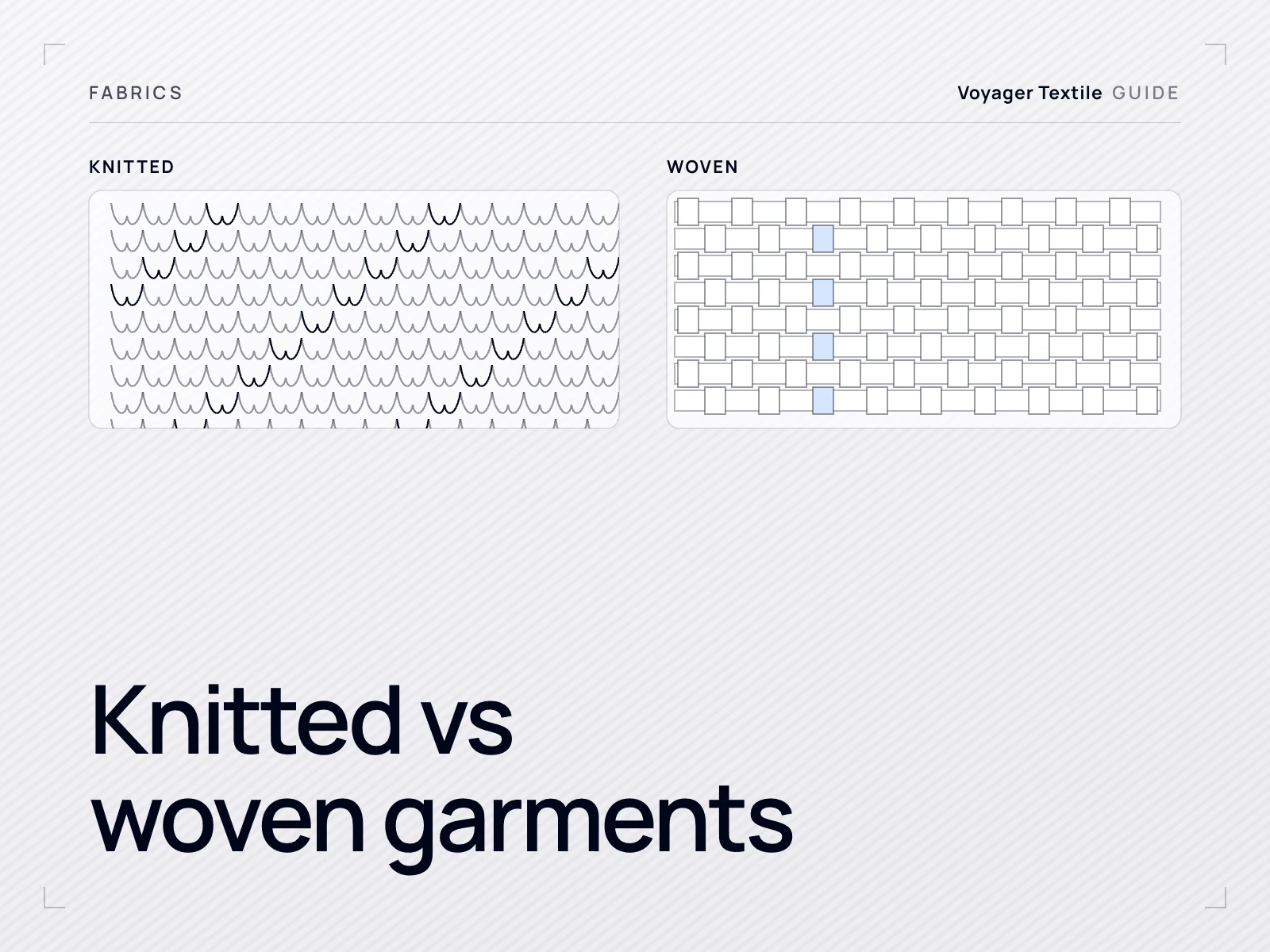
Knitted fabric is made by looping yarn, so it stretches. Woven fabric is made by interlacing yarns at right angles, so it is stable and needs ease built into the pattern. That single difference changes the pattern, the machinery, the seams, the fit and often the factory.
Contents
- The structural difference
- Practical comparison
- Why it changes the pattern
- Why it can change the factory
- Common knit structures worth knowing
- Common woven constructions worth knowing
- Effects buyers notice after production
- Decoration behaves differently on each
- Cost is not a simple ranking
- Mixed constructions
- Questions buyers ask
Many apparel buyers do not need to know how fabric is made. They do need to know which of the two families their product belongs to, because it determines how the garment is patterned, sewn and finished, and how it will behave when worn and washed.
The structural difference
A knitted fabric is built from interlocking loops of yarn. The loops move, so the fabric stretches and recovers, and it drapes softly. A woven fabric is built from two sets of yarns interlaced at right angles. That structure resists movement, so the fabric is stable, holds a shape and does not stretch unless elastane is added.
Everything else follows from this. Stretch means a knitted garment can fit closely without needing extra room to move. Stability means a woven garment must have that room designed into the pattern.
Practical comparison
| Knitted | Woven | |
|---|---|---|
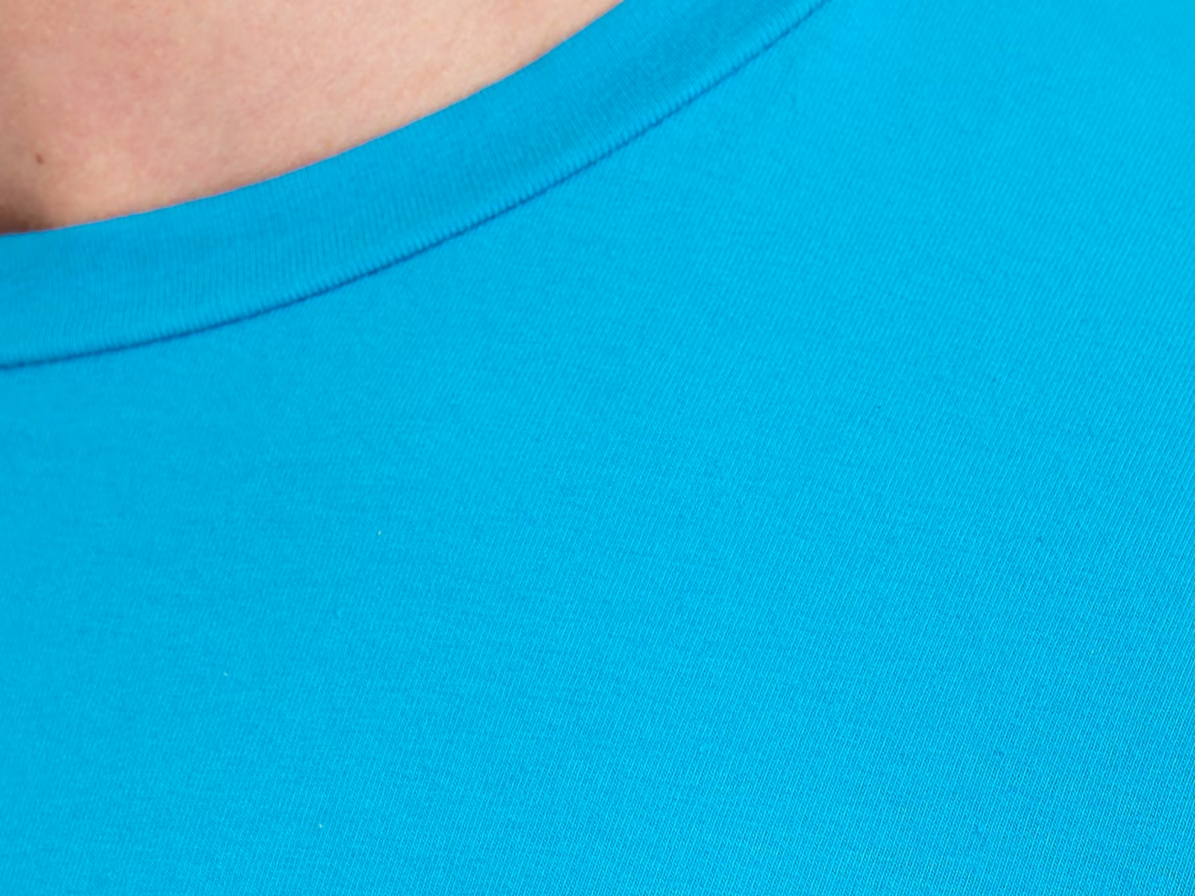
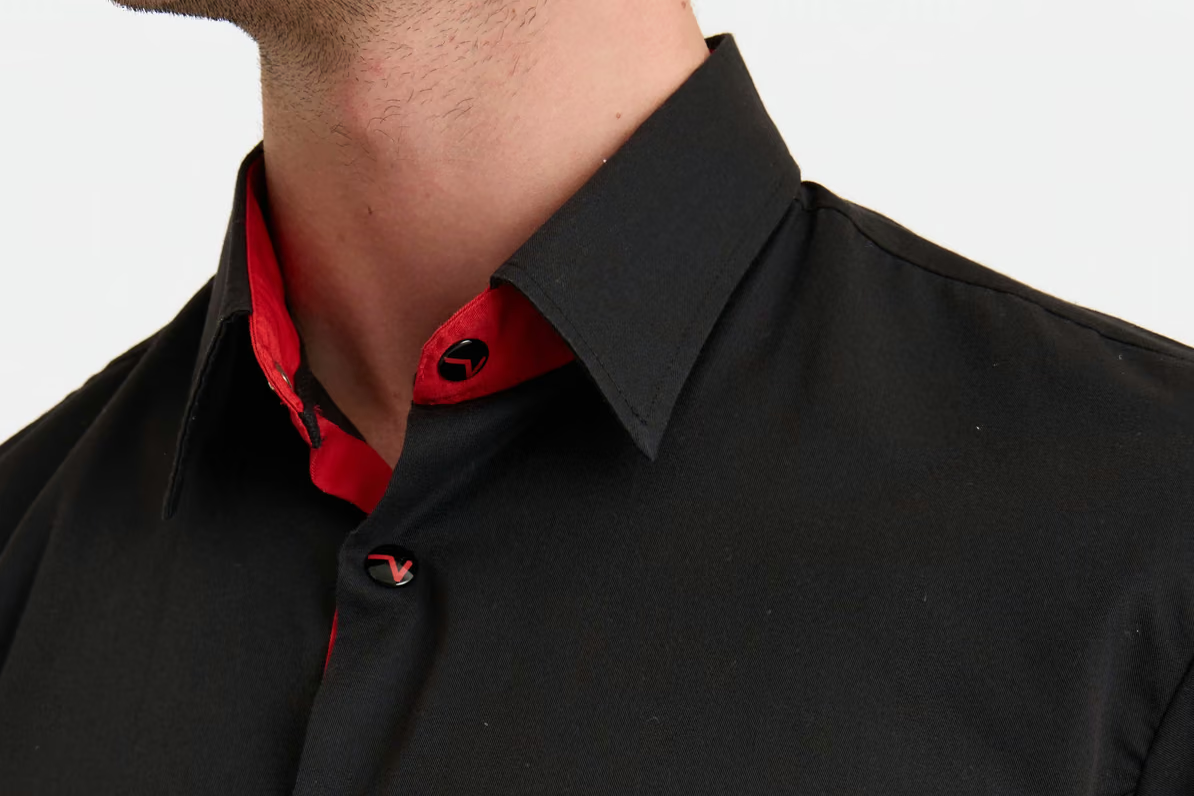
| Typical products | T-shirts, polos, hoodies, sweatshirts, joggers, leggings, sportswear | Shirts, jackets, trousers, aprons, workwear, bags, home textiles |
| Stretch | Inherent, from the loop structure | Minimal unless elastane is added |
| Fit approach | Can fit close to the body without added ease | Needs ease built in so the wearer can move |
| Drape | Soft, follows the body | More structured, holds its shape |
| Edges | Do not fray, but can curl at the edge | Fray, so seams need finishing or overlocking |
| Sewing | Overlock and coverstitch machines, stretch seams | Lockstitch, seam finishing, often interlining and pressing |
| Shrinkage risk | Higher, and relaxation matters before cutting | Generally lower, but depends on fibre and finish |
| Weight unit | Usually quoted in GSM | Quoted in GSM or in ounces per square yard |
Why it changes the pattern
A pattern for a knitted garment can be cut close to body measurements because the fabric moves with the wearer. The same pattern in a woven fabric would be unwearable: no stretch means the wearer cannot raise an arm or sit down comfortably.
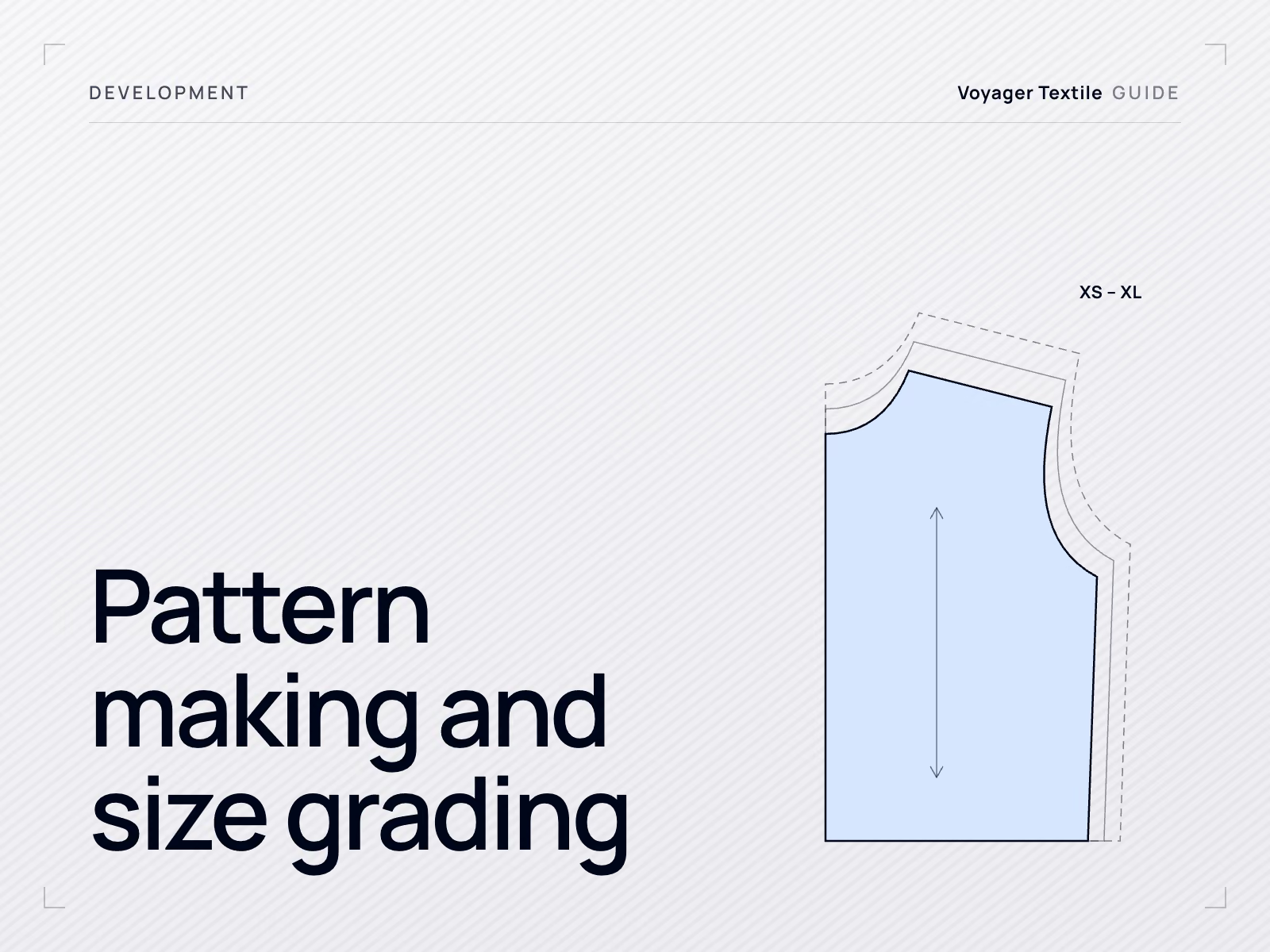
So a woven version of a jersey style is a new development, not a fabric substitution. It needs its own pattern, its own fit sample and often different construction at the armhole, neck and cuff. Buyers who ask for the same style in a woven fabric are usually asking for a second product. See pattern making and grading.
Why it can change the factory
Knitted and woven production use different machinery and different skills. Jersey and fleece production relies on overlock and coverstitch machines and on handling fabric that moves under the needle. Woven outerwear relies on lockstitch construction, interlinings, zips, linings and pressing.
Many factories do both, but few do both equally well. When you enquire, ask specifically how often the factory produces your construction rather than whether it can. This is one of the checks in the supplier vetting guide.
Common knit structures worth knowing
- [Single jersey](/fabrics/single-jersey). The standard t-shirt fabric: smooth face, looped back, light to medium weight.
- [Piqué](/fabrics/pique). Textured surface used for polo shirts, more structured than single jersey and less prone to showing marks.
- Fleece and loopback terry. Sweatshirt fabrics. Fleece is brushed on the inside for warmth and softness; loopback keeps the loops unbrushed and is lighter and more breathable.
- Rib. Elastic structure used for cuffs, collars and hems, and sometimes for whole garments.
- Interlock. Denser, smoother on both faces, more stable than single jersey.
- Performance knits. Polyester-based structures for sportswear, often with elastane and moisture-management finishes.
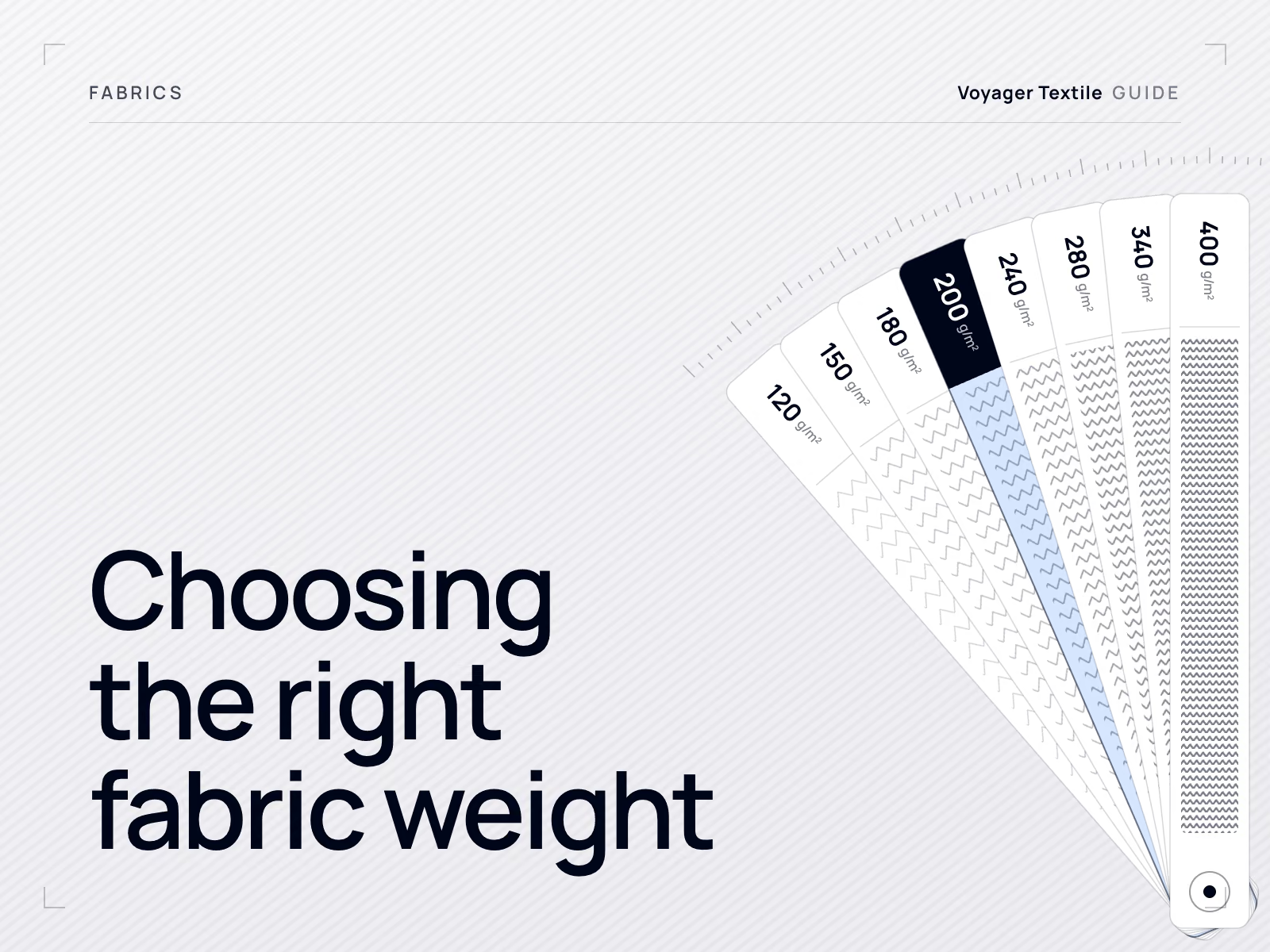
Fabric weight within any of these structures is a separate decision, covered in the GSM guide.
Common woven constructions worth knowing
- Plain weave. The simplest interlacing, used for shirting, poplin and lightweight fabrics.
- [Twill](/fabrics/twill-and-gabardine). A diagonal structure, more drapeable and abrasion resistant, used for chinos, workwear and jackets.
- Canvas and drill. Heavier, densely woven fabrics for aprons, bags and hard-wearing workwear.
- Ripstop and technical wovens. Reinforced or coated fabrics for outerwear and performance use.
Effects buyers notice after production
- Shrinkage. Knits generally move more in washing. Fabric is relaxed before cutting and shrinkage should be tested, particularly where fit is close.
- Spirality. A twisting effect in some circular-knitted garments, where side seams appear to rotate after washing. It is a fabric and finishing issue, so raise it during fabric selection.
- Edge curl. Single jersey curls at raw edges, which affects how hems and necklines are constructed.
- Seam pucker. More visible on lightweight wovens, and controlled through needle, thread and machine settings.
- Fraying. Woven seam allowances must be finished, which is part of the cost of a woven garment.
Decoration behaves differently on each
Prints on knitted fabric must tolerate stretch: a print that cracks when the fabric extends is a common failure on tight-fitting knits. Woven fabrics are stable, so prints hold their shape, but the surface texture of a heavy twill or canvas affects fine detail.
Embroidery works well on both, with backing chosen for the fabric: light knits need support to avoid distortion, and dense wovens need a needle and stabiliser suited to the weight. See the decoration comparison and the artwork guide.
Cost is not a simple ranking
Neither family is inherently cheaper. A basic jersey tee is one of the cheapest garments to produce because it has few operations. A lined woven jacket is one of the most expensive because it has many. But a heavyweight fleece hoodie can cost more than a simple woven apron.
Cost follows fabric price, fabric consumption and the number of sewing operations, as set out in the cost guide.
Mixed constructions
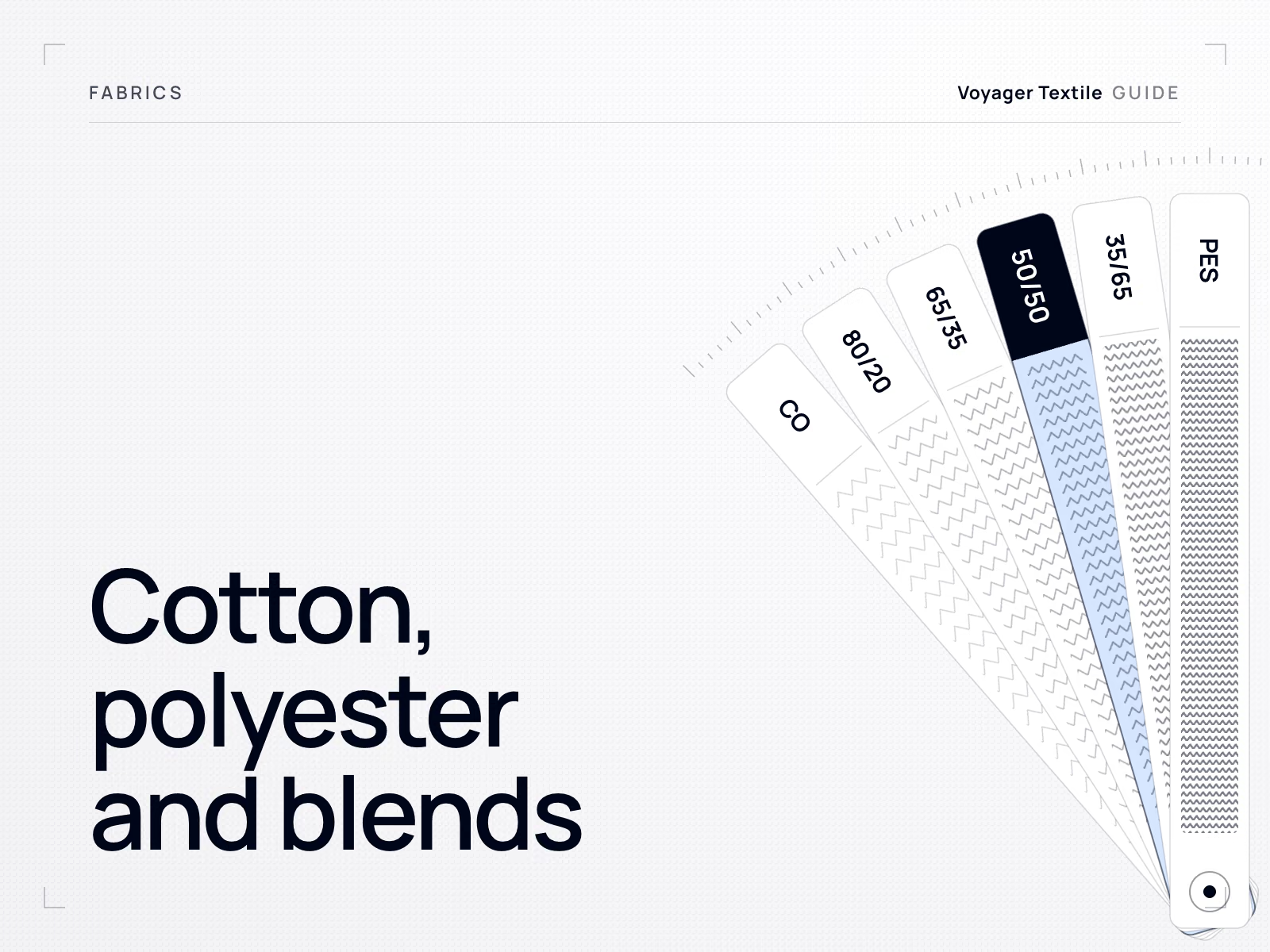
Many garments combine both: a knitted body with woven pockets, a woven jacket with rib cuffs and collar, or a jersey hoodie with a woven drawcord and label. Combinations are entirely normal, and the practical requirement is that the two fabrics behave compatibly in washing and are approved in colour together, since matching colour across different fabrics is never exact.
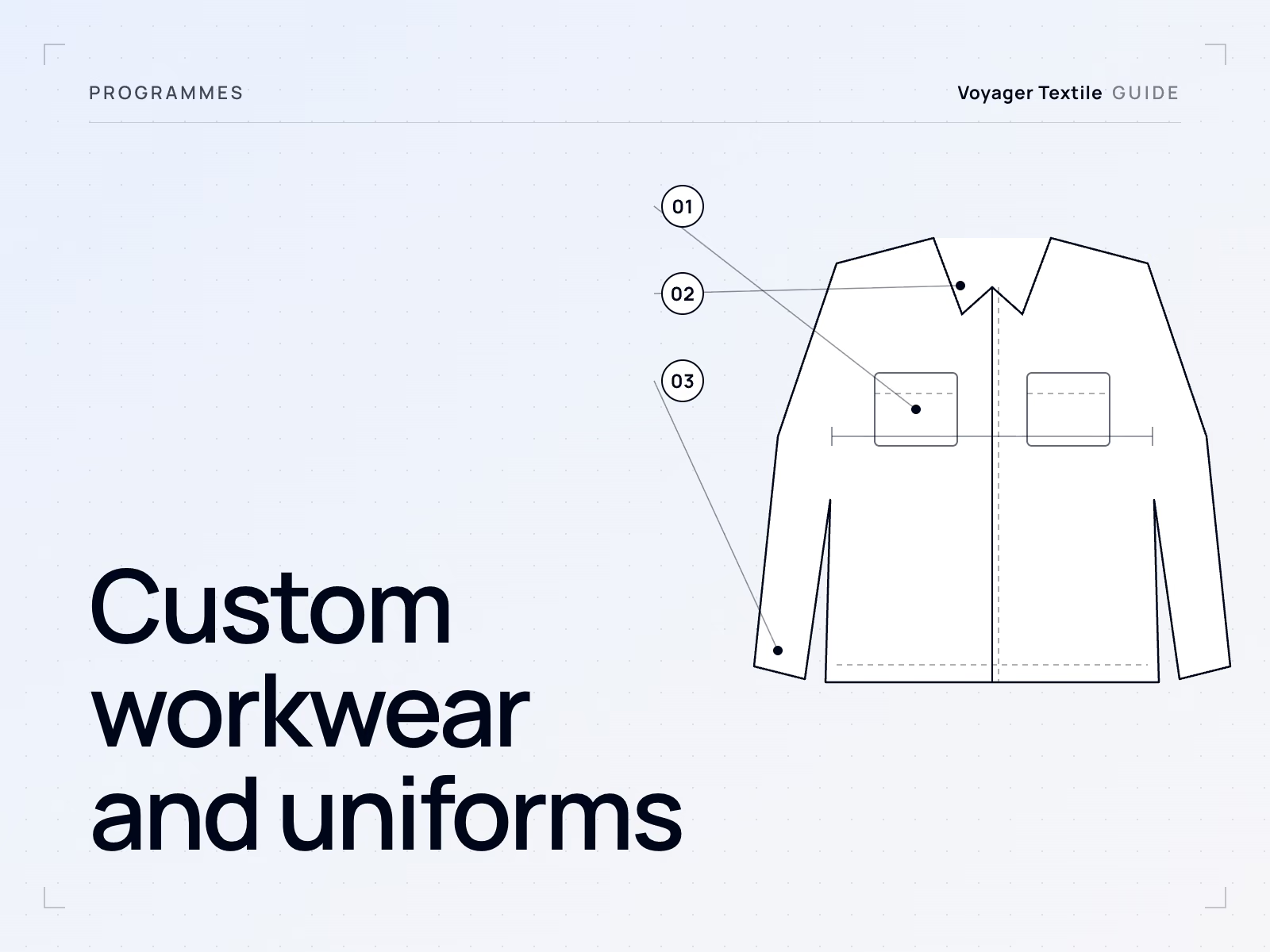
Voyager Textile produces both families, from jersey and fleece tops to woven outerwear, aprons, uniforms and home textiles. The reference catalogue is organised by what the article physically is, which makes the range easy to see.
Questions buyers ask
What is the difference between knitted and woven fabric?
Knitted fabric is made from interlocking loops of yarn, so it stretches and drapes softly. Woven fabric is made from yarns interlaced at right angles, so it is stable, holds its shape and does not stretch unless elastane is added.
Is a t-shirt knitted or woven?
Knitted. T-shirts, polos, hoodies, sweatshirts, joggers and leggings are all knitted garments. Shirts, chinos, jackets, aprons and most workwear are woven.
Can the same pattern be used for a knitted and a woven version?
No. A woven version needs ease built into the pattern so the wearer can move, and usually different construction at the armhole, neck and cuffs. Treat it as a new development with its own fit sample.
Which is more durable?
It depends on the fabric rather than the family. A dense woven twill resists abrasion better than a light jersey, but a well-made heavy knit outperforms a thin plain weave. For workwear, specify performance requirements and test them rather than choosing by category.
Why do my t-shirt side seams twist after washing?
That is spirality, a twisting effect that can occur in circular-knitted garments and is related to yarn and fabric finishing. Raise it at fabric selection stage, since it is much easier to prevent through fabric choice than to correct in sewing.
Do knitted garments shrink more?
Generally yes, which is why fabric is relaxed before cutting and why shrinkage should be tested when fit is close. Agree whether the measurement chart applies before or after washing so inspection and customer experience match.
Tell us what the garment has to do
Describe the product and its use and we will propose the construction, fabric family and weight that suit it, then sample it before anything goes into bulk.
Discuss a product