Uniform, medical and workwear
Apron Manufacturing Process
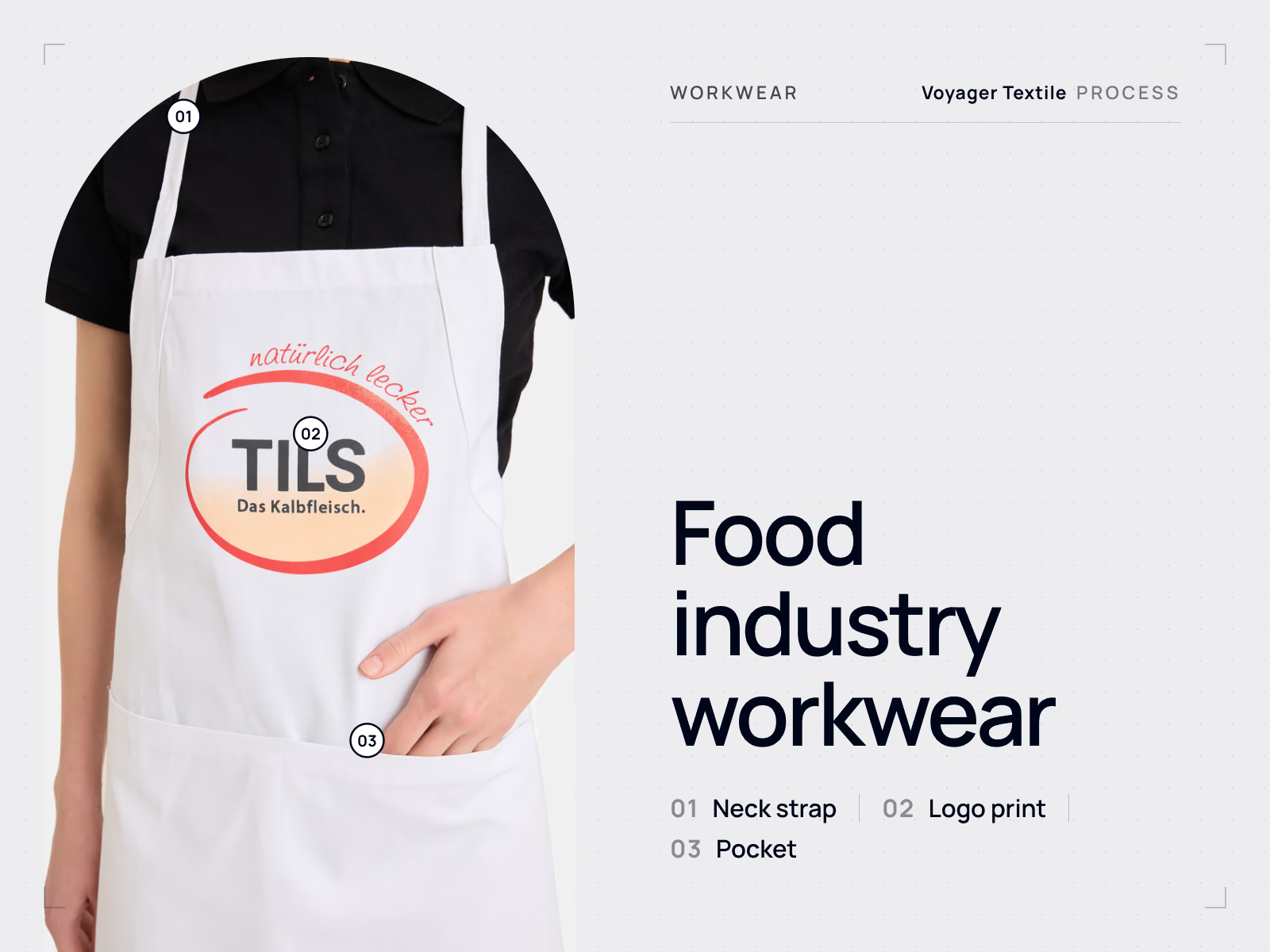
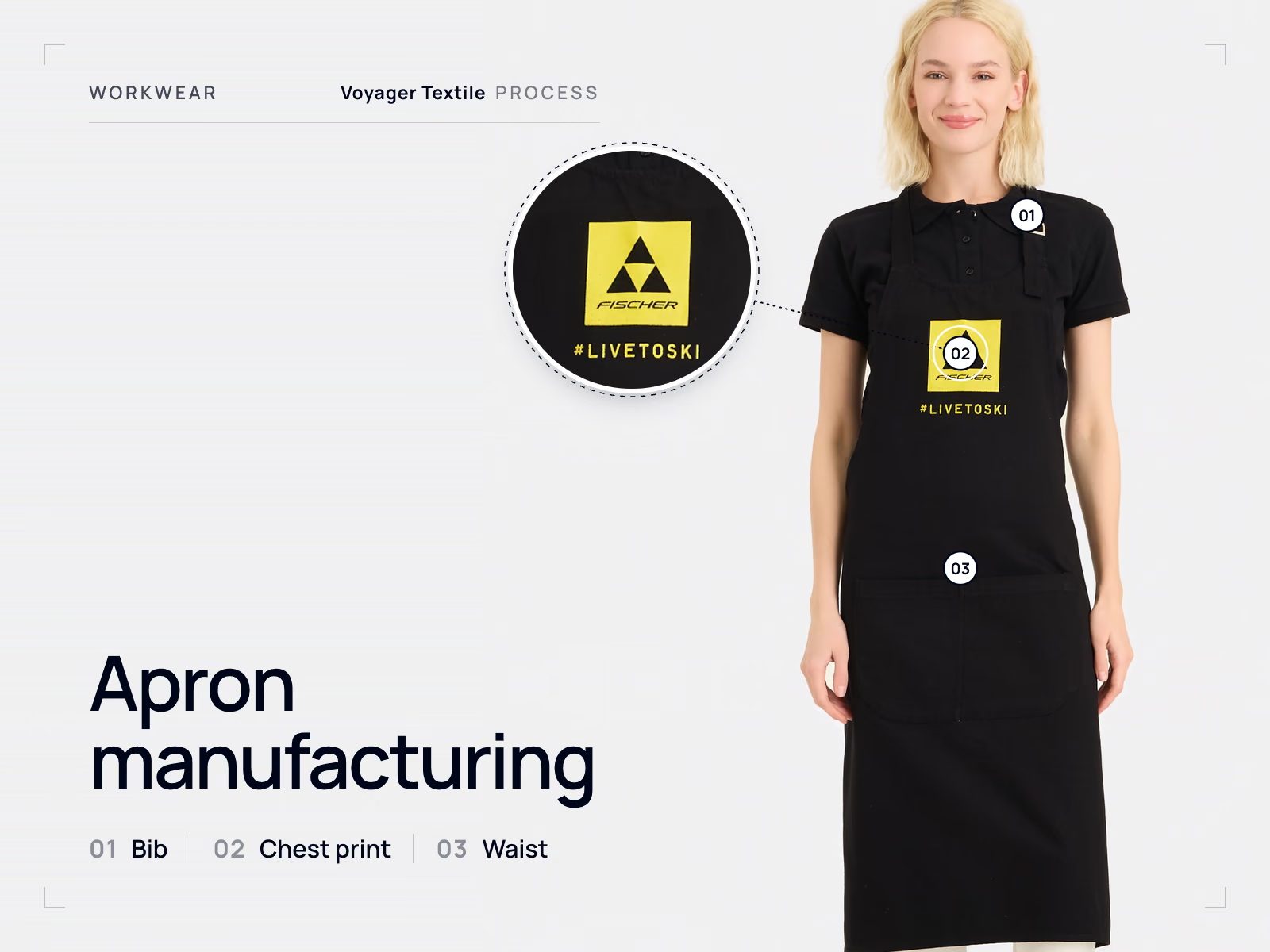
An apron is a simple flat garment where much of the engineering sits in three places: the straps and their attachment, the pockets and their reinforcement, and the fabric weight. Get those right and the garment lasts for years of commercial washing. Get them wrong and it fails at the neck strap within months.
Contents
Aprons are frequently treated as a low-value add-on to a uniform programme, and then they are the item that gets replaced first. The failure is usually the same: a neck strap pulling out of a single row of stitching, or a pocket corner tearing under the weight of what staff actually carry. Both are specification problems rather than manufacturing accidents.
Apron production sequence
Apron types, and what changes between them
| Type | Construction | Typical use |
|---|---|---|
| Bib apron | Full body with a chest bib, neck strap and waist ties | Kitchen, café, retail and general hospitality |
| Cross-back apron | Straps cross over the back and attach at the waist instead of a neck loop | Long shifts where neck loading is a complaint |
| Waist apron | Waist to knee or mid-thigh, ties only | Front of house, bar service, market and event use |
| Short server apron | Waist apron with divided pockets | Table service, where the pocket layout is the whole product |
| Tabard | Over-the-head garment with side fastening | Cleaning, care and food handling roles |
The cross-back deserves a note. It removes the load from the neck, which is a common comfort complaint on bib aprons worn through a full shift, and it need not cost more to make. It does need its own pattern, because the strap geometry has to suit a range of body sizes without adjustment.
Fabric and weight
Aprons are usually woven, and the weight decides both the character and the working life. Canvas and duck are commonly specified in ounces per square yard rather than in grams per square metre. One ounce per square yard is about 33.9 g/m², so an 8 oz canvas is roughly 271 g/m² and a 12 oz canvas roughly 407 g/m².
| Fabric | Typical composition | Indicative weight | Character | Consideration |
|---|---|---|---|---|
| Cotton canvas or duck | 100% cotton | Around 8 to 12 oz, roughly 270 to 410 g/m² | Structured, hard-wearing, ages visibly | Cotton shrinks; wash-test before setting measurements |
| Cotton twill | 100% cotton | Around 240 to 300 g/m² | Softer than canvas, drapes better, still robust | A good compromise for front-of-house aprons |
| Polyester and cotton twill | Commonly 65/35 style blends | Around 195 to 300 g/m² | Holds colour and dimensions under hot washing | The usual choice where aprons are industrially laundered |
| Denim | Cotton, sometimes with a little elastane | Around 8 to 12 oz | Distinctive appearance, ages with character | Check for dye rubbing onto light clothing on raw indigo |
| Poplin and lighter wovens | Cotton or blends | Around 120 to 180 g/m² | Light, cool, cheap | Suits short-term promotional use rather than daily service |
Straps, ties and hardware
This is where aprons succeed or fail, and it is usually under-specified.
- Neck strap type. A fixed loop is cheapest. An adjustable strap with a metal slider fits a range of staff and is worth the small extra cost in a shared-uniform environment. A cross-back removes the neck load entirely.
- Attachment. Every strap anchor should be reinforced, normally with a bartack or a box stitch rather than a single row of stitching. This is the difference between an apron that lasts two years and one that fails in three months.
- Tie length. Longer than most buyers expect. Many staff prefer to bring the ties round and tie them at the front, which needs noticeably more length than tying at the back. Specify the finished tie length rather than accepting a default.
- Tie width and finish. Wider ties distribute load and are more comfortable; folded and stitched ties last longer than raw-edge ones.
- Hardware. Sliders, D-rings, rivets and grommets are components with their own lead times, and their finish is visible branding. Specify material and colour, and confirm that metal hardware is appropriate for the environment.
Pockets
Pocket layout is the functional heart of a service apron, and it should be designed around what staff actually carry rather than copied from a catalogue.
- Divisions. A single wide pocket divided by vertical stitching into sections for a notepad, a card machine or pens. State the division positions as measurements.
- Depth and placement. Deep enough that items do not fall out when the wearer bends, positioned so they are reachable with the apron tied.
- Reinforcement. A bartack at each top corner of every pocket opening. On heavy canvas this is non-negotiable.
- Pen slots. Narrow divisions sized for a pen, usually on the bib or the upper pocket edge.
- Hidden or internal pockets. Useful for personal items, and worth specifying separately from the working pockets.
Construction and hemming
The apron body is a flat panel, so construction is mostly edge finishing, and the quality shows in how straight those edges are. All four edges are normally double-folded and stitched, which encloses the raw edge and gives the apron its weight at the border.
- The body, pockets, straps and ties are cut, with grain kept straight so the apron hangs square.
- Decoration is applied to the flat body panel before anything is attached, since a bib apron is at its easiest to print or embroider at this stage.
- Pockets are constructed, hemmed at the opening and attached with reinforcement at the corners.
- The body edges are hemmed, usually with a double fold.
- Straps and ties are made, then attached with bartacks or box stitching at each anchor point.
- Hardware is fitted where used: sliders on adjustable straps, D-rings, rivets or grommets.
- The apron is trimmed, pressed, measured and inspected.
Decoration on aprons
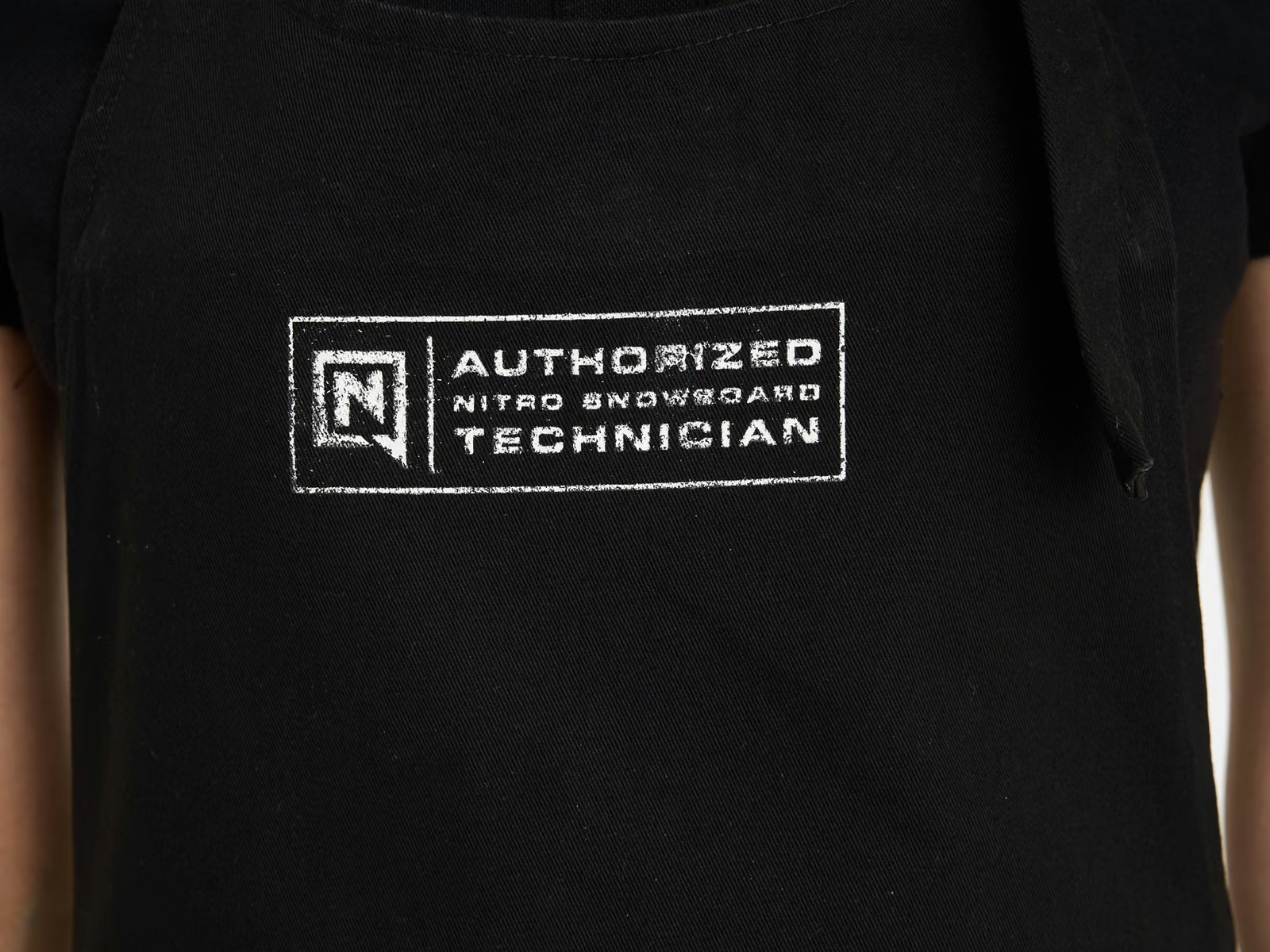
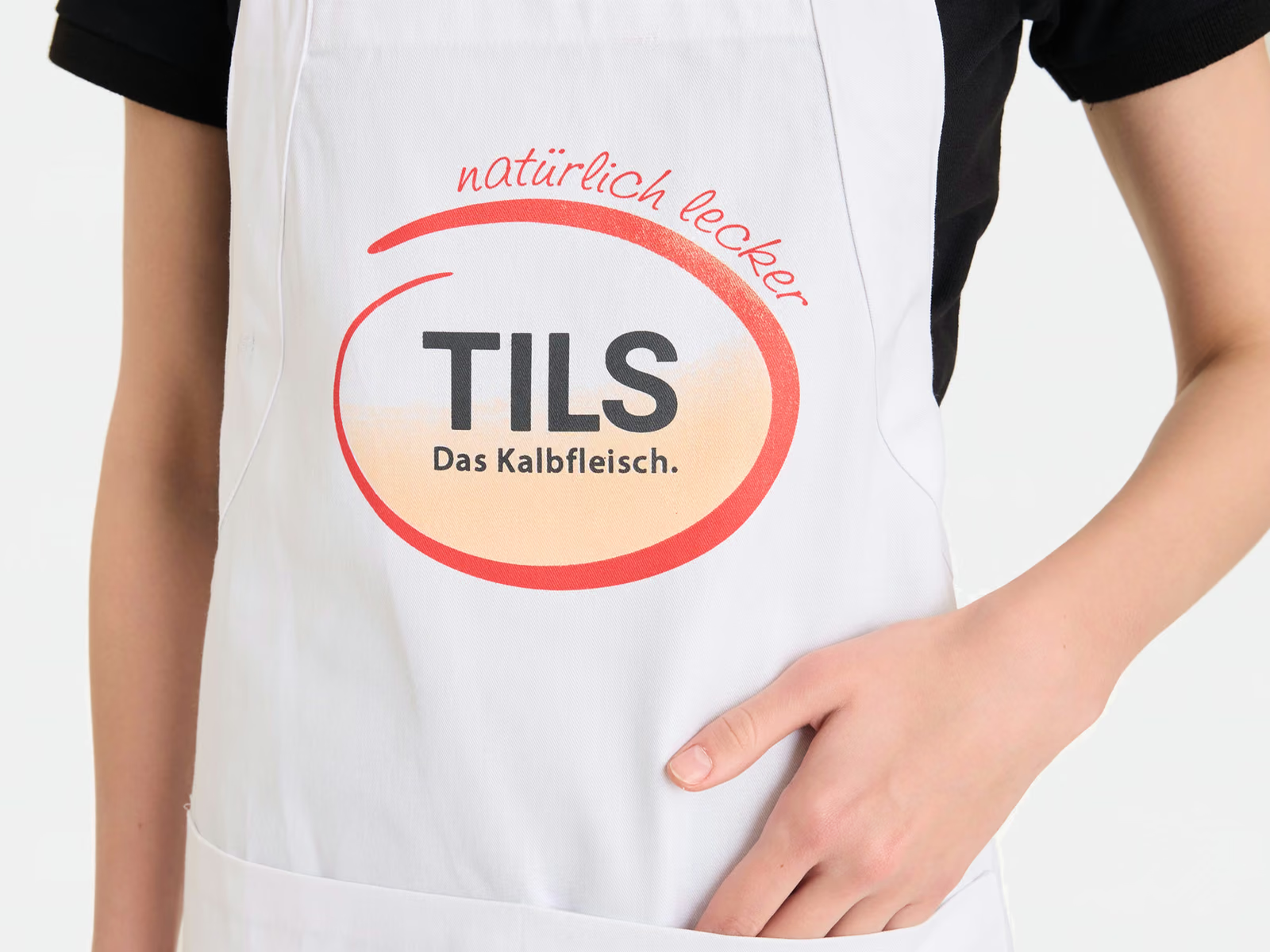
- Screen printing. Effective on canvas and twill for bold logos. The textured surface of heavy canvas softens fine detail, so simple artwork reproduces better than thin lines.
- Embroidery. Reads as premium and survives commercial laundering well. Worked on the flat body before assembly, with backing suited to the fabric weight.
- Transfer printing. Handles complex or photographic artwork, and small placements on finished aprons.
- Woven or leather-look patches. A distinctive option on canvas aprons, stitched onto the bib.
- Contrast straps and ties. Branding through construction, with no per-piece decoration cost.
Method selection against artwork and fabric is covered in the decoration comparison.
Laundering and shrinkage
Hospitality aprons are washed constantly, often industrially and often hot, and cotton canvas moves noticeably in the first wash. Two decisions follow. Specify whether the measurement chart applies before or after washing, and wash-test the sample at the temperature the aprons will actually face.
For dark colours, particularly black, specify colourfastness to washing and to rubbing. A black canvas apron that transfers colour onto a white shirt is a service problem rather than a cosmetic one.
Quality control: apron-specific checks
| Check | What it catches |
|---|---|
| Strap attachment strength, by pulling the anchor points | A common failure in service |
| Bartacks at every pocket corner | Pocket tearing under load |
| Tie length against specification | Ties too short to fasten at the front |
| Hem straightness and even width | An apron that hangs crooked |
| Pocket symmetry and division measurements | Layout drift on a long run |
| Hardware fitting and finish | Sliders that slip and rivets set poorly |
| Shrinkage after washing at the real temperature | Aprons that no longer reach after a month |
| Colourfastness on dark shades | Colour transfer onto staff clothing |
What to put in an apron tech pack
- Apron type: bib, cross-back, waist, short server or tabard.
- Fabric: composition, weave, weight in ounces or grams, and any finish with its evidence.
- Body dimensions: width and length, plus bib width and height for a bib apron.
- Neck strap: fixed or adjustable, width, length range, hardware.
- Ties: width and finished length, with the intended tying position stated.
- Pockets: number, dimensions, placement, divisions and reinforcement.
- Hem construction and width.
- Hardware: sliders, D-rings, rivets or grommets, with material and finish.
- Decoration: artwork, method, size and placement.
- Laundering regime and any required testing.
- Colours, plus contrast colours for straps or ties.
- Packing: folded, bagged, and how sets are marked.
Sampling
Have the sample worn and tied by someone who will use it, in the way they will use it. Tie length, pocket reach and neck comfort are all judged in wear and rarely on a table. Load the pockets with the items staff actually carry, then look at how the apron hangs.
Before you send an apron RFQ
- Apron type and body dimensions
- Fabric and weight, or the environment the apron works in
- Neck strap type: fixed, adjustable or cross-back
- Tie length and where staff will tie them
- Pocket layout with divisions
- Hardware preference and finish
- Decoration artwork, method and placement
- Laundering regime, including temperature
- Colours, including any contrast straps
- Quantity and any repeat-order plan
Apron references produced by Voyager Textile
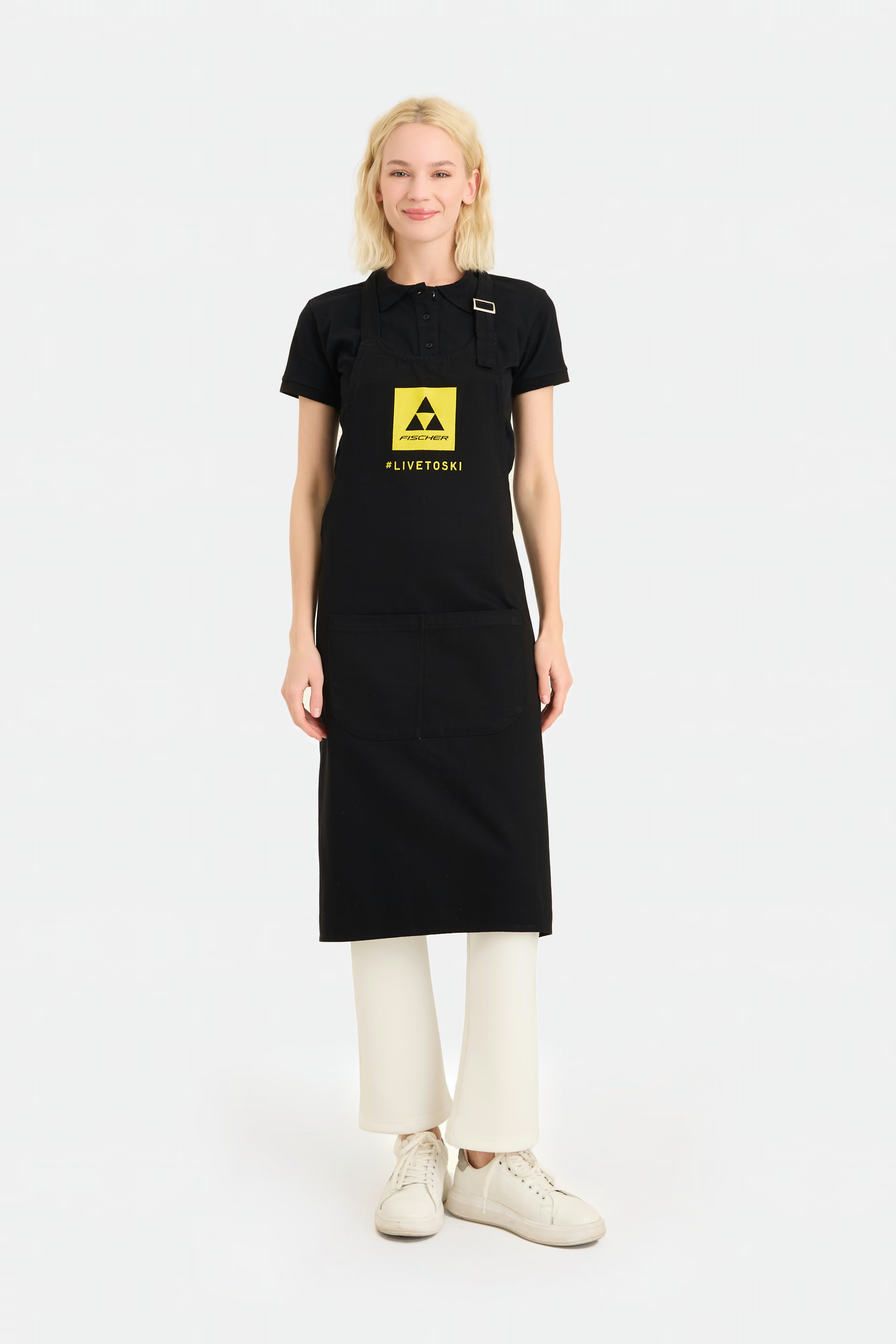
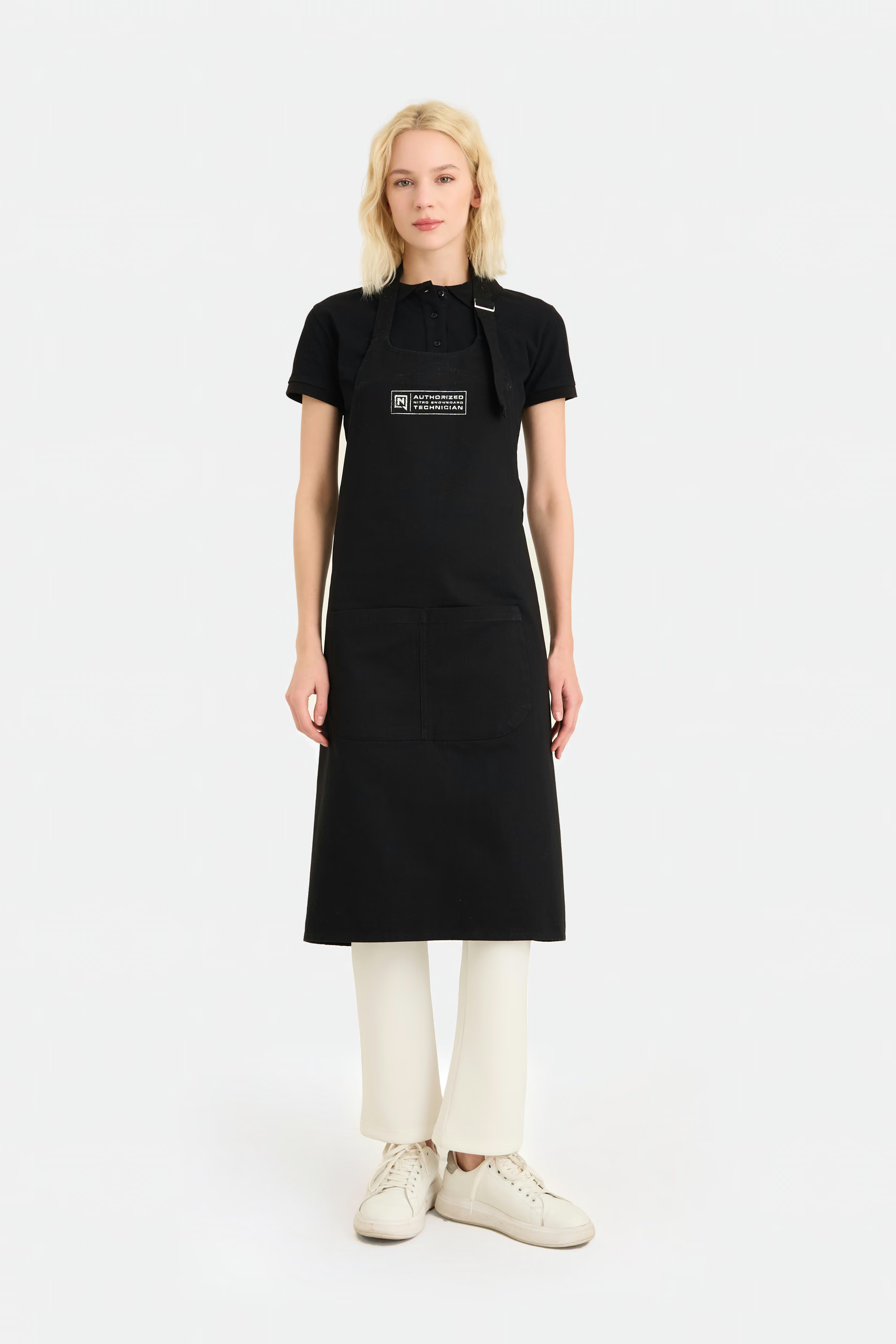
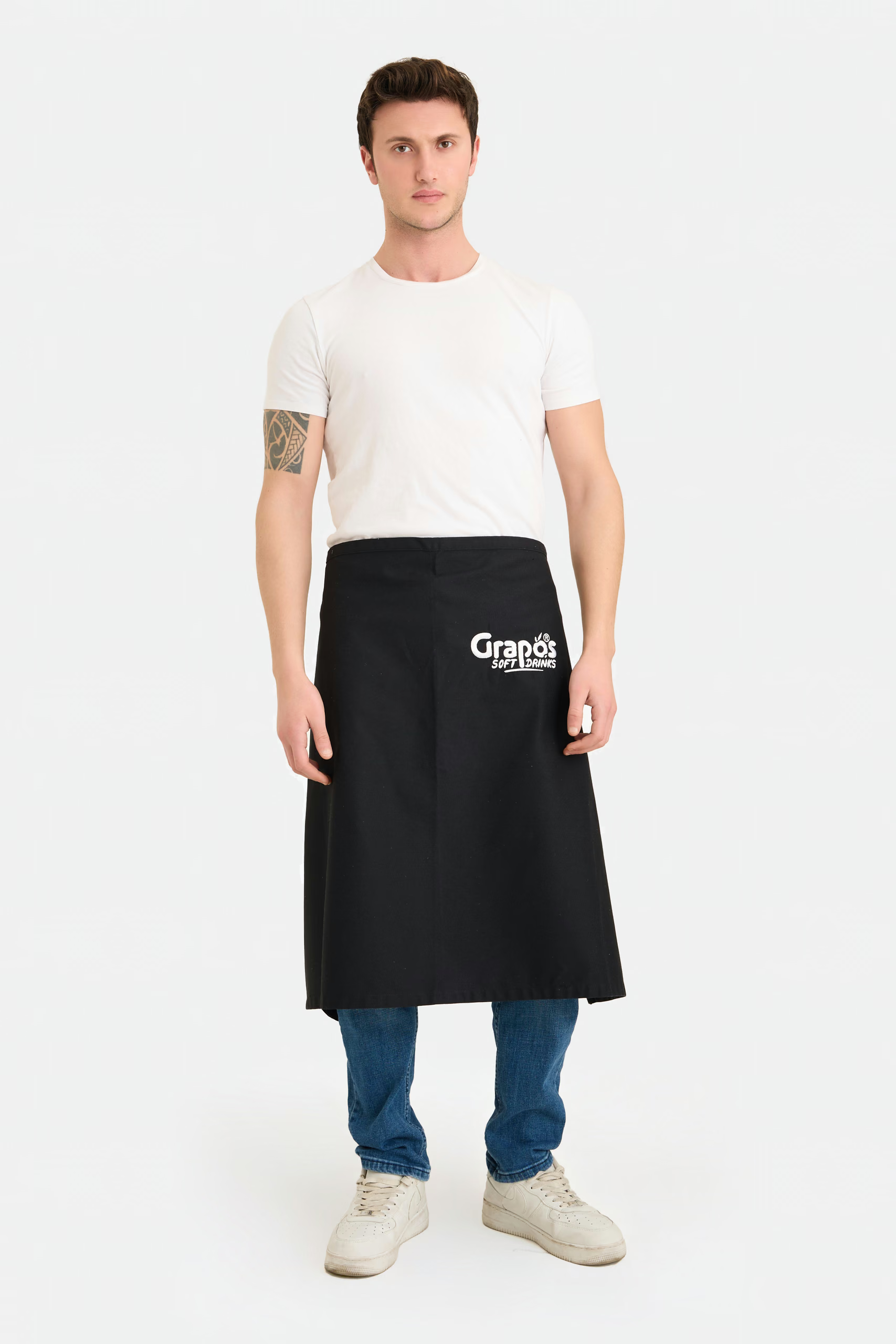
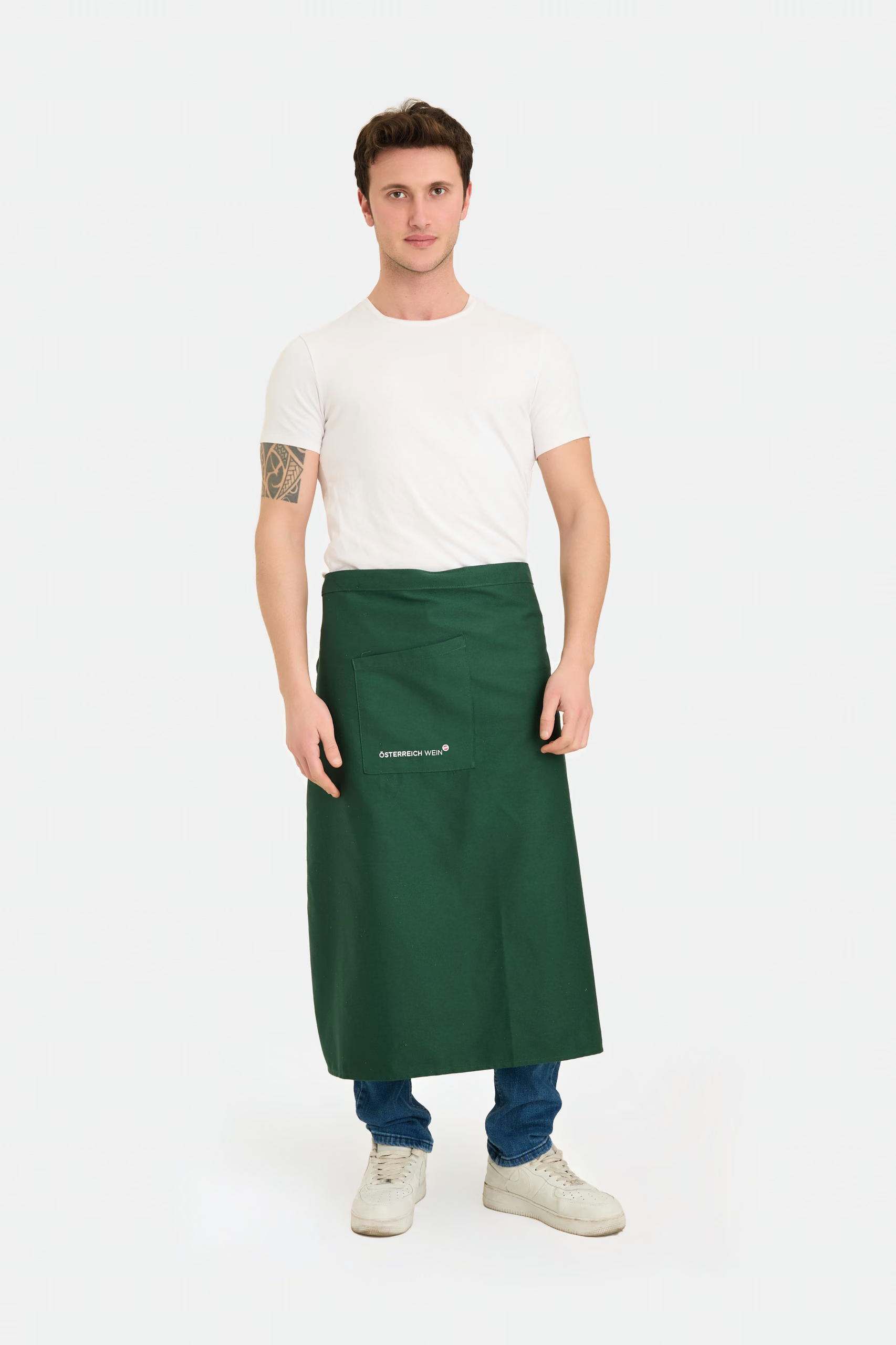
Bib and waist aprons produced to customer specification, with printed and embroidered branding.
Buyer questions
What fabric is best for aprons?
Cotton canvas or duck around 8 to 12 oz, roughly 270 to 410 g/m², for hard-wearing kitchen and workshop use; cotton twill around 240 to 300 g/m² for a softer front-of-house apron; and polyester-cotton twill where aprons face frequent hot or industrial washing, because it holds colour and dimensions better.
How long should apron ties be?
Longer than most specifications assume. Many staff prefer to bring the ties round and tie them at the front, which needs noticeably more length than tying at the back. Decide which you want, state the finished tie length in the tech pack, and check it on a worn sample.
Why do apron neck straps pull out?
Because the anchor point was stitched rather than reinforced. Every strap attachment should carry a bartack or a box stitch, since the neck strap carries the whole weight of the apron and everything in its pockets.
What is a cross-back apron and is it worth it?
One where the straps cross over the back and fasten at the waist rather than looping around the neck. It removes neck loading, which is a common comfort complaint on long shifts, and it need not cost more to produce. It does need its own pattern.
Should aprons be printed or embroidered?
Embroidery reads as more premium and survives commercial laundering very well. Screen printing is more economical for bold logos at volume, though heavy canvas texture softens fine detail. Both are normally applied to the flat body panel before the apron is assembled.
Do cotton aprons shrink?
Yes, noticeably in the first wash, and more at higher temperatures. Wash-test the sample at the temperature the aprons will face, and state whether the measurement chart applies before or after washing so inspection and service life agree.
Can aprons be made stain resistant?
Stain-release and water-repellent finishes can be specified on the fabric, but they are treatments with a service life rather than permanent properties. Ask for the finish to be named and evidenced, and confirm how many wash cycles it is expected to survive before making the claim to a client.
Do aprons need to be produced in several sizes?
Many programmes use one size with an adjustable neck strap, which covers a wide range of staff. Longer and shorter body lengths are worth offering where the role varies, for example a full-length kitchen apron alongside a short server apron.
Ordering this garment from Voyager Textile
- Every garment is made to order, to your own design.
- The minimum order is 300 pieces per colour and per style. Sizes can be split inside the 300, and a custom Pantone colour carries the same minimum of 300 pieces. Polyester-based fabrics are assessed separately.
- A sample takes 5–7 business days. Bulk production takes 4–5 weeks after sample approval; development, sampling and shipping are additional.
- Cutting, sewing, embroidery, transfer printing and sublimation printing are done in our own factory in Türkiye. Screen printing and garment washing are coordinated with partner facilities.
Quantities, timing and any open point are confirmed per project at the quotation stage, once we have your specification or tech pack.
Request a quoteProducing aprons for a hospitality programme?
Send the apron type, pocket layout and the laundering the aprons will face. We confirm fabric weight and strap construction, reinforce the anchor points properly and sample before bulk.
Send an apron brief