Uniform, medical and workwear
Food Industry Workwear Requirements: BRCGS, IFS, DIN 10524 and HACCP, and How the Garments Are Built
Food-industry workwear protects the food from the person wearing it. The rules come from the food business: EU hygiene law, its BRCGS or IFS certification, and its own risk assessment, with DIN 10524:2020-06 as the German guidance on the garments. None of these certify a garment or a garment maker. The manufacturer builds smocks, jackets, trousers and aprons to the site's specification.
Contents
- The legal baseline in the EU: Regulation (EC) No 852/2004
- BRCGS Food Safety Issue 9: clause 7.4.2
- IFS Food version 8: provision and laundering, not design
- DIN 10524:2020-06: work wear in food businesses
- HACCP: a food-safety system, not a clothing standard
- How food hygiene garments are built
- Detectable components as an option
- Laundering durability and the tests to specify
- Programmes, minimums and sampling
- Buyer questions
A food business decides what its staff wear in each area, and the garment has to make that rule easy to follow. A button that can fall into a product, a breast pocket that holds a pen over an open line, or a fabric that fades after twenty hot washes all turn into audit findings at the food site. This page separates what each standard actually says from what is simply common practice, and then shows how the garments are built.
Food hygiene workwear production sequence
The legal baseline in the EU: Regulation (EC) No 852/2004
EU food hygiene law requires suitable clothing but does not describe the garment. Regulation (EC) No 852/2004 on the hygiene of foodstuffs, Annex II, Chapter VIII, requires every person working in a food-handling area to maintain a high degree of personal cleanliness and to wear "suitable, clean and, where necessary, protective clothing". What counts as suitable is left to the food business and its hygiene system, which is where the private standards and DIN 10524 come in.
BRCGS Food Safety Issue 9: clause 7.4.2
BRCGS is the one standard in this group with a garment design rule. Clause 7.4.2 of the Global Standard Food Safety, Issue 9, requires protective clothing of suitable design to prevent product contamination, at a minimum with no external pockets above the waist and no sewn-on buttons. It also requires clothing in sufficient numbers for each employee and full containment of scalp hair.
The pocket and button wording is not new. BRCGS Position Statement 4 in F926 version 4, dated 27 April 2026 and effective from 10 August 2026, reprints clause 7.4.2 and adds suitable protective footwear, to align with the GFSI Benchmarking Requirements.
IFS Food version 8: provision and laundering, not design
IFS Food version 8 sets rules on how protective clothing is supplied and washed, and has no clause on pockets, buttons or press studs. Clause 3.2.9 requires adequate protective clothing in sufficient quantity for each employee. Clause 3.2.10 requires it to be laundered in-house, by approved contractors or by employees, as a documented, risk-based choice, with dirty and clean clothing segregated and water temperature and detergent dosage set. Clause 3.2.8 asks for gloves coloured differently from the product. The standard text is published on ifs-certification.com.
DIN 10524:2020-06: work wear in food businesses
DIN 10524 is the German standard for work clothing in food businesses. The current edition is DIN 10524:2020-06, "Food hygiene - Work wear in food business", which replaced the 2012-04 edition and the 2019-12 version. It gives guidance on the manufacture, selection, use and reprocessing of work wear, and it is addressed to workwear makers, food business operators and textile service companies.
- What changed in 2020. Revised clauses on maximum tensile and bursting strength (4.3.1.2.6), sleeve length (4.3.1.3.3) and aprons (4.3.1.4.4), a new clause on reprocessing (4.4.2), and a revised definition of good laundry practice.
- Microbial load after reprocessing. Annex A was corrected to a maximum of 5 CFU per 10 cm² of textile surface in 9 of 10 samples, which is a laundering requirement rather than a sewing one.
- Risk classes. Workwear makers describe three risk classes with rising hygiene requirements, with the garment chosen by risk, construction, function and fabric.
- Design details. Published summaries, most of them written for the older 2004 edition, describe concealed closures, inside pockets only at higher risk classes and long sleeves with press-stud cuffs. No source was found for a DIN 10524 rule on colours by hygiene zone.
Because the detailed clauses are only in the purchased text, the reliable route is for the food business to hold the standard and state in its specification which clauses and which risk class the garments must meet.
HACCP: a food-safety system, not a clothing standard
HACCP, Hazard Analysis and Critical Control Point, is a systematic approach to identifying, evaluating and controlling food safety hazards, built on seven principles from hazard analysis to record keeping. In the FDA's HACCP guidelines, personal hygiene is a prerequisite programme that supports HACCP rather than part of the plan itself. "HACCP clothing" is a trade label, mostly in German-speaking markets, for garments designed to DIN 10524; no HACCP document defines a garment.
| Source | Who it applies to | What it says about garments |
|---|---|---|
| Regulation (EC) No 852/2004 | Food business operators in the EU | Suitable, clean and, where necessary, protective clothing |
| BRCGS Food Safety Issue 9, 7.4.2 | Certified food sites | No external pockets above the waist, no sewn-on buttons, hair contained, footwear |
| IFS Food version 8, 3.2.8 to 3.2.10 | Certified food sites | Sufficient quantity, laundering rules, glove colour; no design rule |
| DIN 10524:2020-06 | Makers, food businesses, textile service companies | Guidance on manufacture, selection, use and reprocessing |
| HACCP | Food businesses | None; personal hygiene is a prerequisite programme |
How food hygiene garments are built
Hygiene workwear is built so nothing can come off the garment and nothing can be carried where it could fall into food. Each point below is a construction choice written into the buyer's specification.
- Closures. Press studs under a covered placket instead of sewn-on buttons. Press studs are set with a press and need the fabric behind them reinforced, as explained in zip and closure construction. Concealed coil zips are an alternative on some jackets.
- Pockets. No external pockets above the waist. Inside chest pockets, pockets below the waist, or no pockets at all, depending on the risk class the site sets.
- No loose parts. No epaulettes, decorative loops or trims that can detach. Drawcords are usually replaced by elastic, because a cord end can come loose.
- Sleeves. Long sleeves with press-stud cuffs or covered knitted cuffs where the site requires forearms covered; short sleeves only where its rules allow.
- Seams and threads. Enclosed seams such as felled seams, thread ends trimmed, and bartacks at stress points, so no loose thread or raw edge sheds into a product.
- Labels. Care and size labels sewn flat on the inside; brand identification embroidered rather than attached as a badge.
- Colour. White and light colours show soiling. Colour coding by area or role, or contrasting collars and cuffs, is a common site practice rather than a DIN 10524 requirement, and every shade needs an approved standard across reorders.
| Garment | Typical construction points |
|---|---|
| Smock or visitor coat | Knee-length, concealed press-stud front, inside pocket or pockets below the waist, press-stud or knitted cuffs |
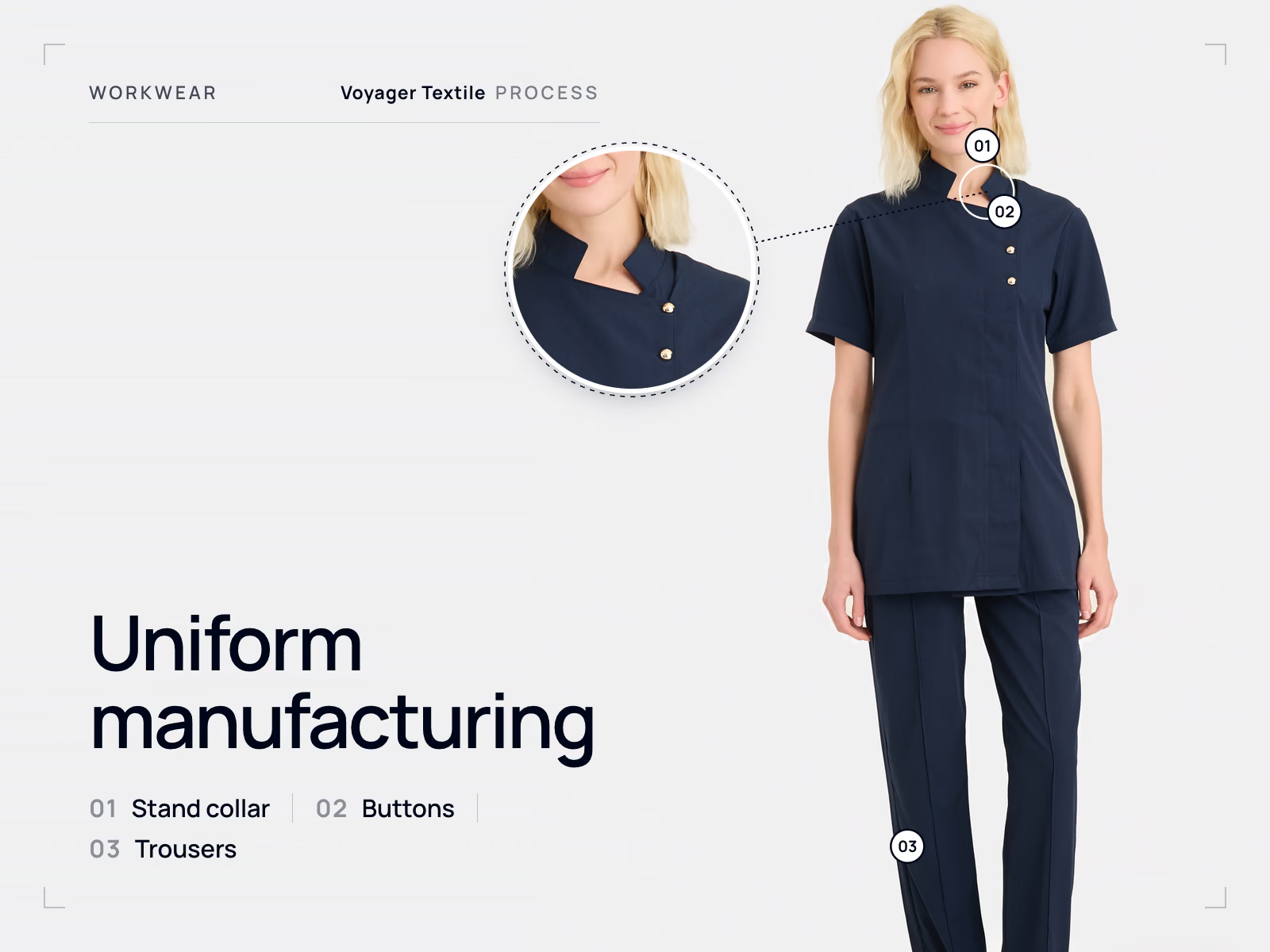
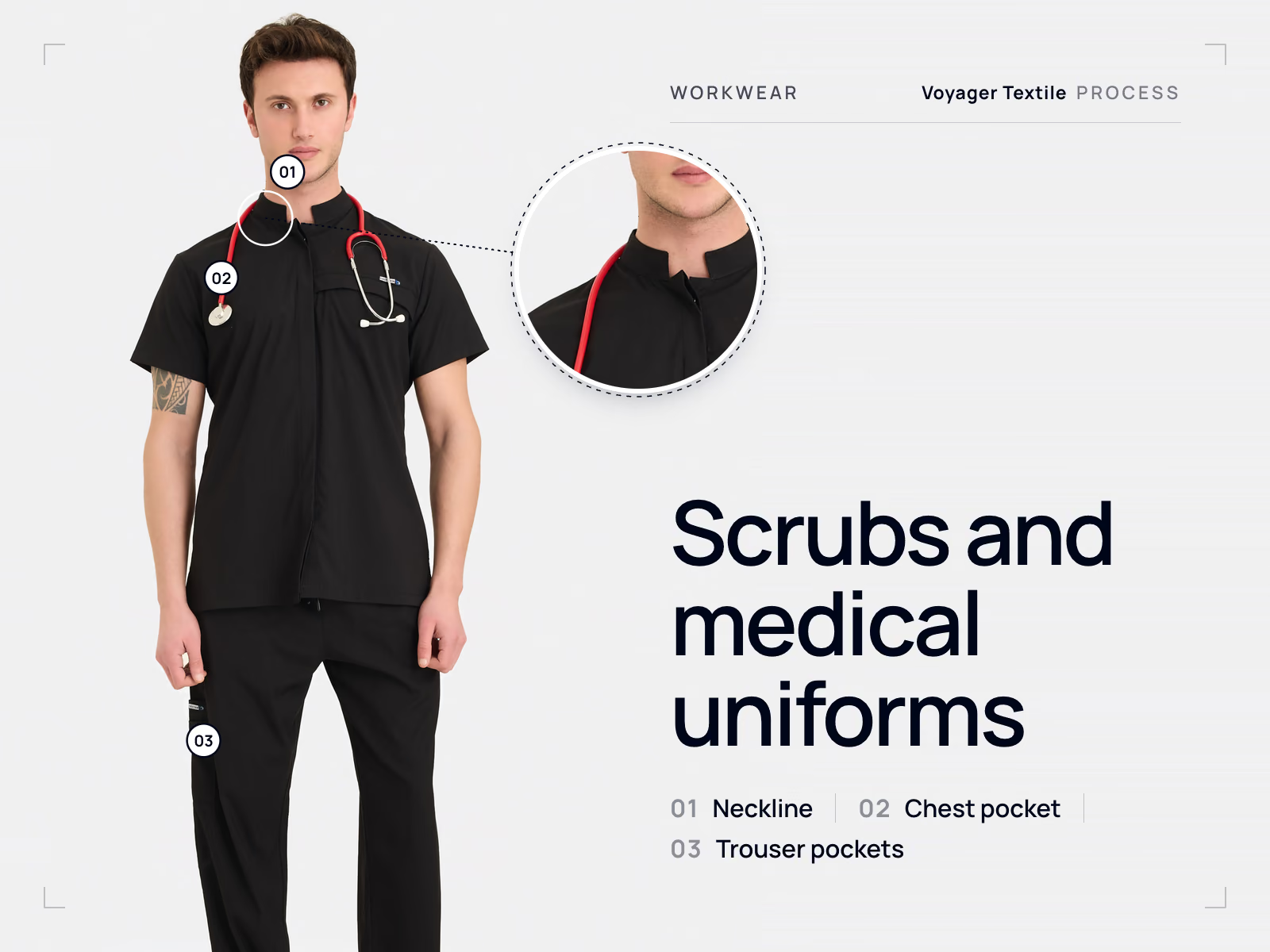
| Hygiene jacket | Hip-length, stand or small collar, covered press-stud placket, no chest pockets |
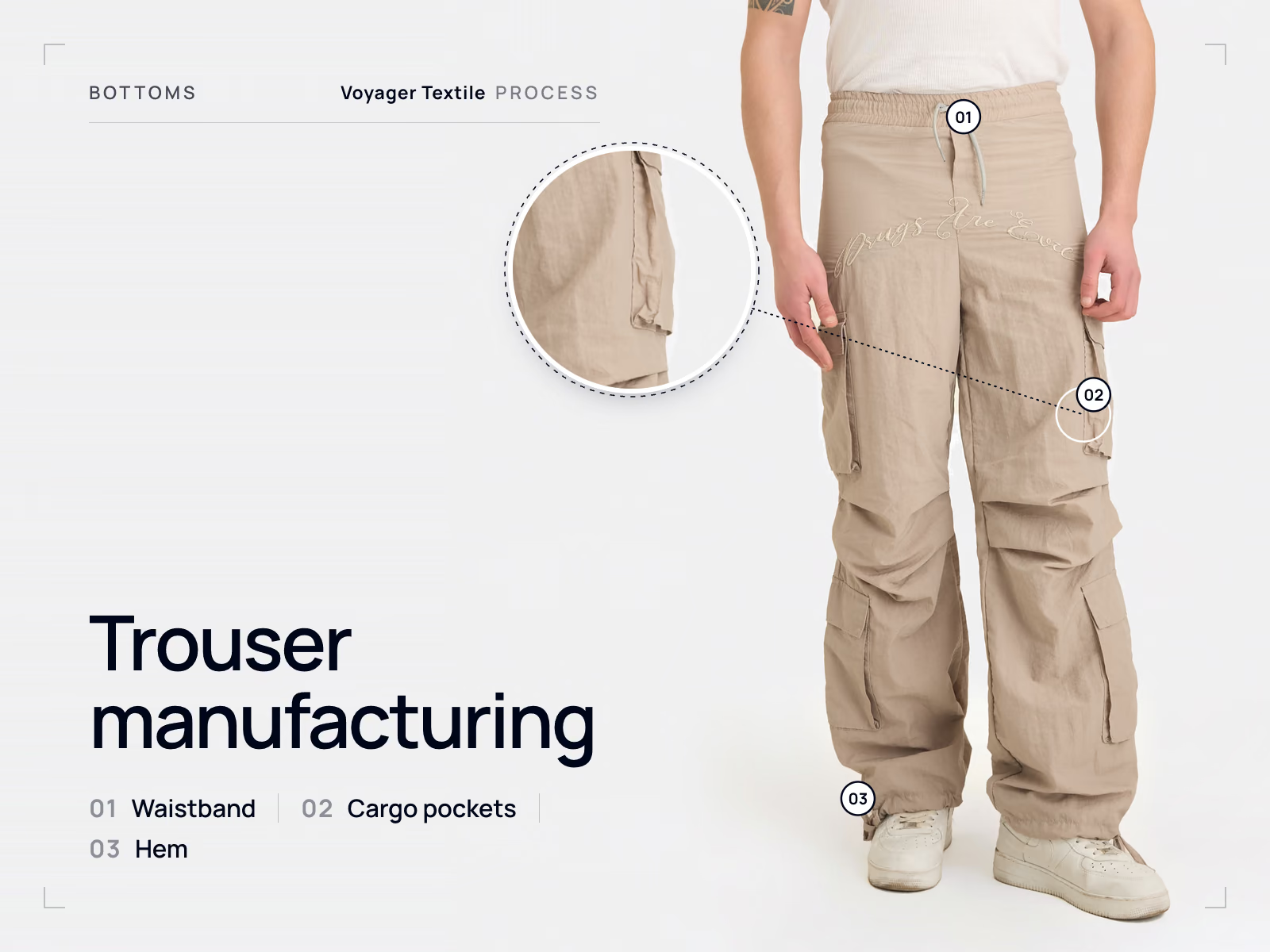
| Trousers | Elastic or partly elasticated waistband instead of a drawcord, side pockets below the waist, back pockets only where the site allows them |
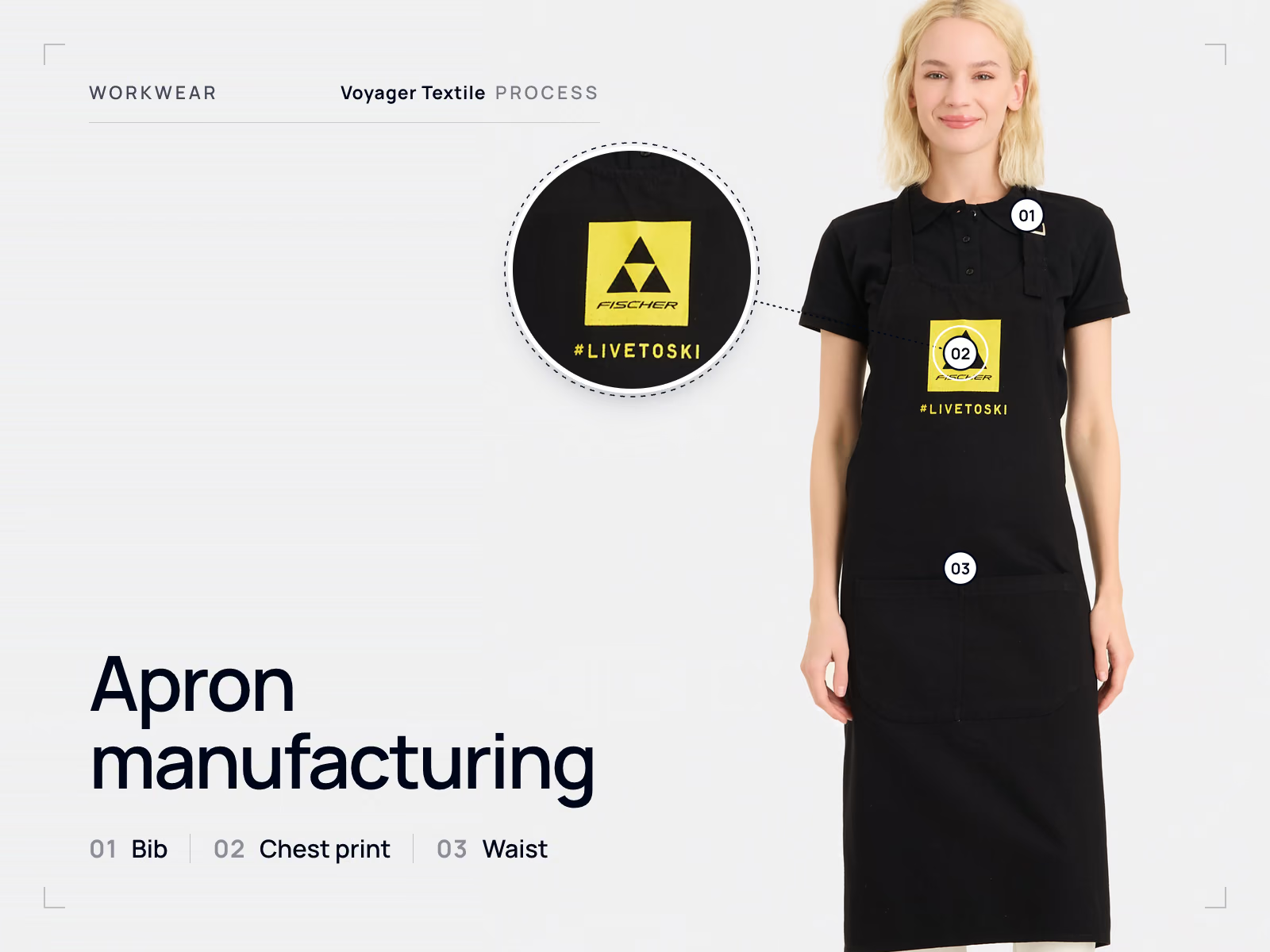
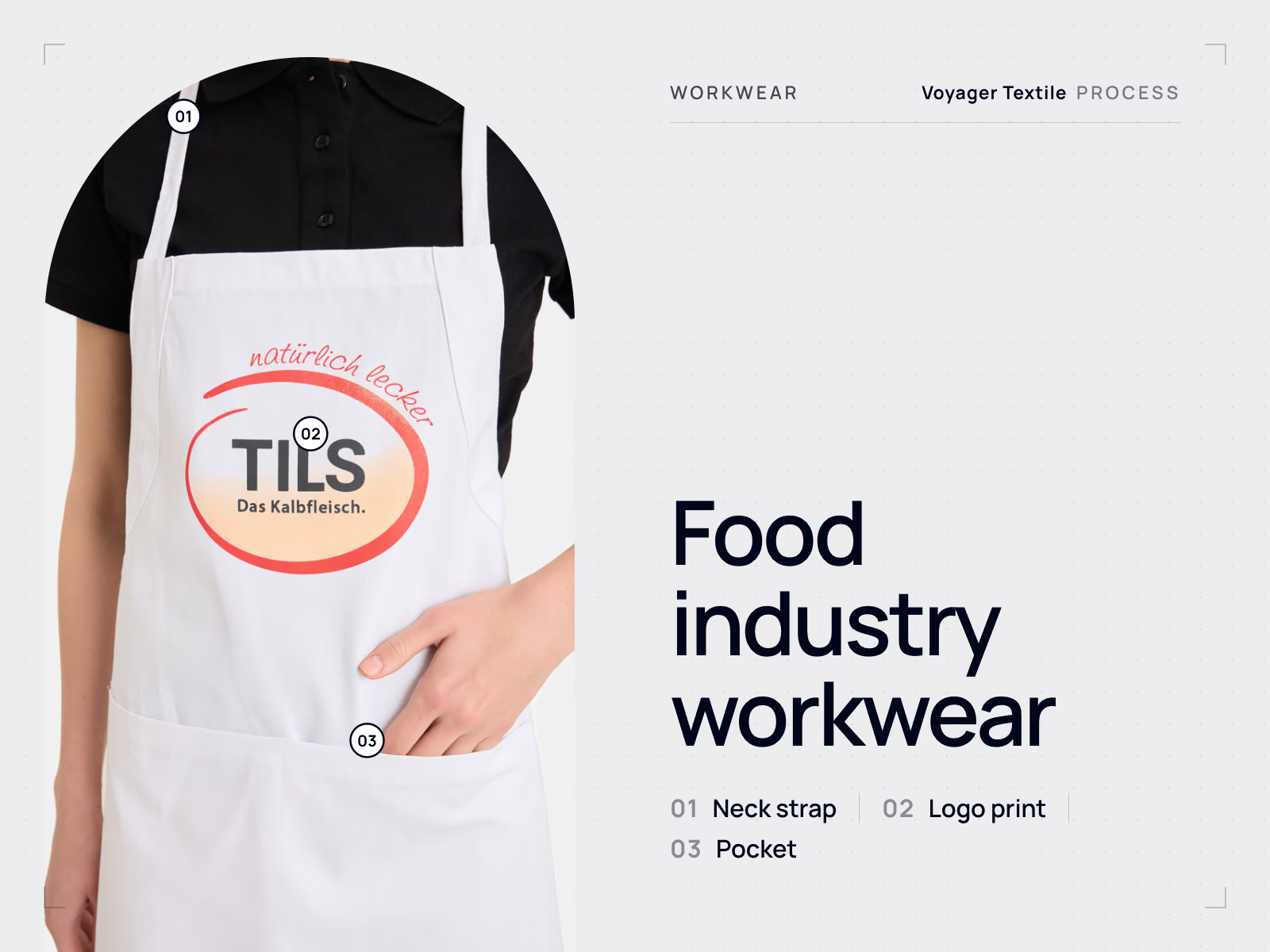
| Apron | Bib or waist apron in a washable woven; strap anchoring and reinforcement as in apron manufacturing |
| Chef jacket | Double-breasted, knot buttons or press studs; where the site bans sewn-on buttons, press studs or a concealed front |
Detectable components as an option
Some food sites ask for garment components that their metal detectors or X-ray systems can find if they fall into a product, such as metal-detectable press studs or detectable plastic parts. These are technical options in the trade, and whether a specific component is available for a style is confirmed per project at the quotation stage. The garment maker supplies the component; whether the site's equipment detects it is validated by the food business. How foreign-metal control works on the garment side is covered in needle control and metal detection.
Laundering durability and the tests to specify
Food hygiene garments are usually washed hot and often, many of them in industrial laundries, so the fabric and the closures are chosen for that regime. Polyester-cotton and polyester-rich twills are common because they hold size and colour; the fabric for each project is confirmed at the quotation stage. A buyer can name these tests in the order:
- ISO 15797 for workwear processed in industrial laundries. The 2017 edition is current and a revision has been in progress since 2025.
- ISO 6330 and ISO 5077 for dimensional change after washing, at the real wash temperature.
- ISO 105-C06 for colourfastness to washing, which matters where colour codes separate areas.
- Closure checks after repeated washing: press studs still seated, no corrosion, no fabric pull-through.
How to run these before bulk is described in wash testing before bulk production. Food hygiene clothing protects the product; clothing that protects the worker, such as cold-store or chemical protection, is personal protective equipment, as explained in EU PPE and protective clothing, and is not covered here.
Programmes, minimums and sampling
Food hygiene garments are usually one part of a wider programme with kitchen, service and warehouse clothing, managed as described in uniform manufacturing and on the private label workwear page. Every product is made to the buyer's design; there are no stock styles. The minimum is 300 pieces per colour and per style, with sizes split within the 300. A sample takes 5 to 7 business days, and bulk takes 4 to 5 weeks after sample approval.
Before you send a food hygiene workwear RFQ
- The site's hygiene rules for each area, and any BRCGS or IFS requirements it applies
- DIN 10524 clauses or risk class, if the site uses the standard
- Garments needed: smocks, jackets, trousers, aprons, chef jackets
- Closure type and whether any sewn-on buttons are allowed
- Pocket positions allowed, if any
- Sleeve length and cuff finish
- Colours and any colour coding by area or role
- Laundering regime: industrial or on site, temperature, required tests
- Detectable components, if the site requires them
- Size range, labelling and packing per site or per employee
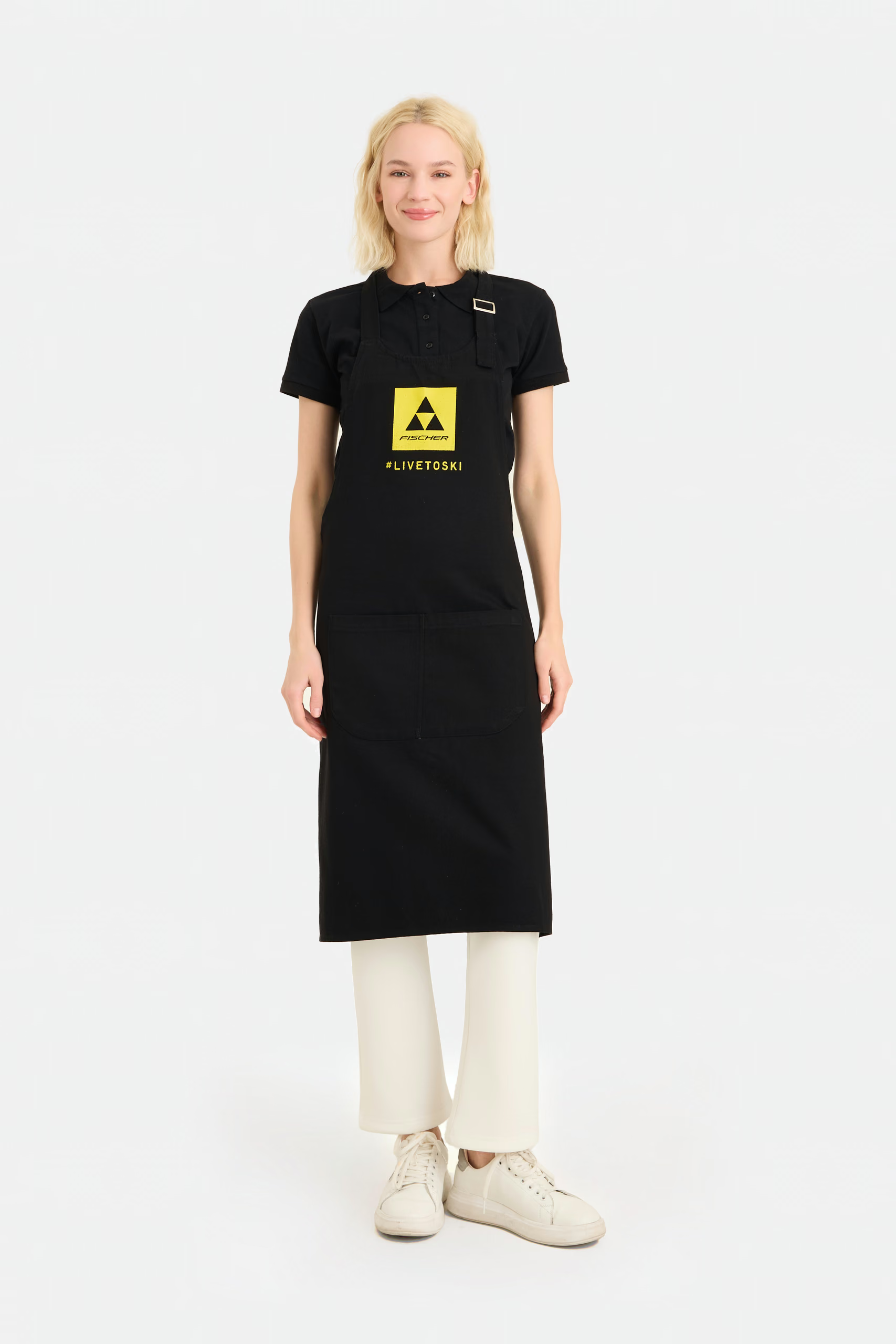
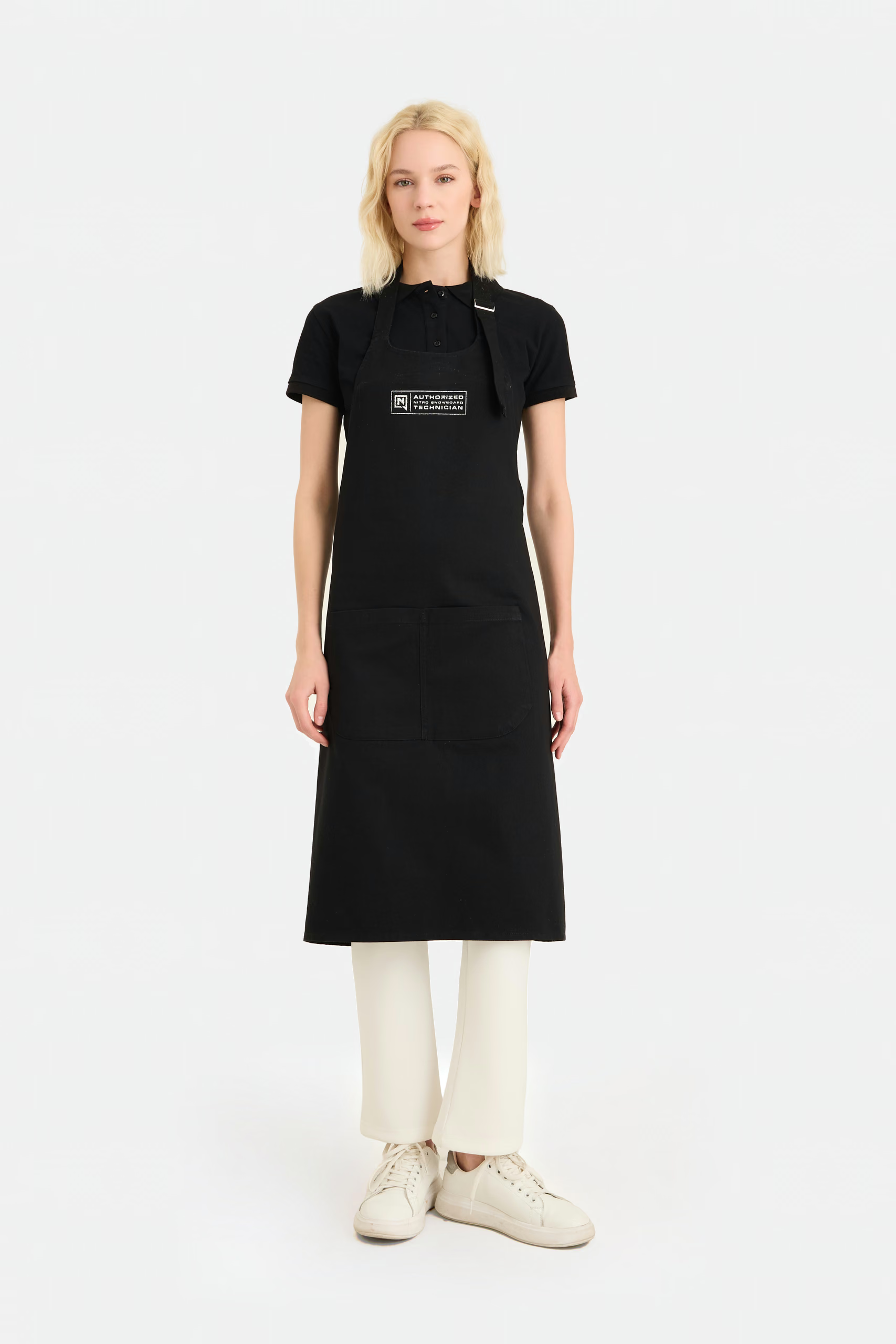
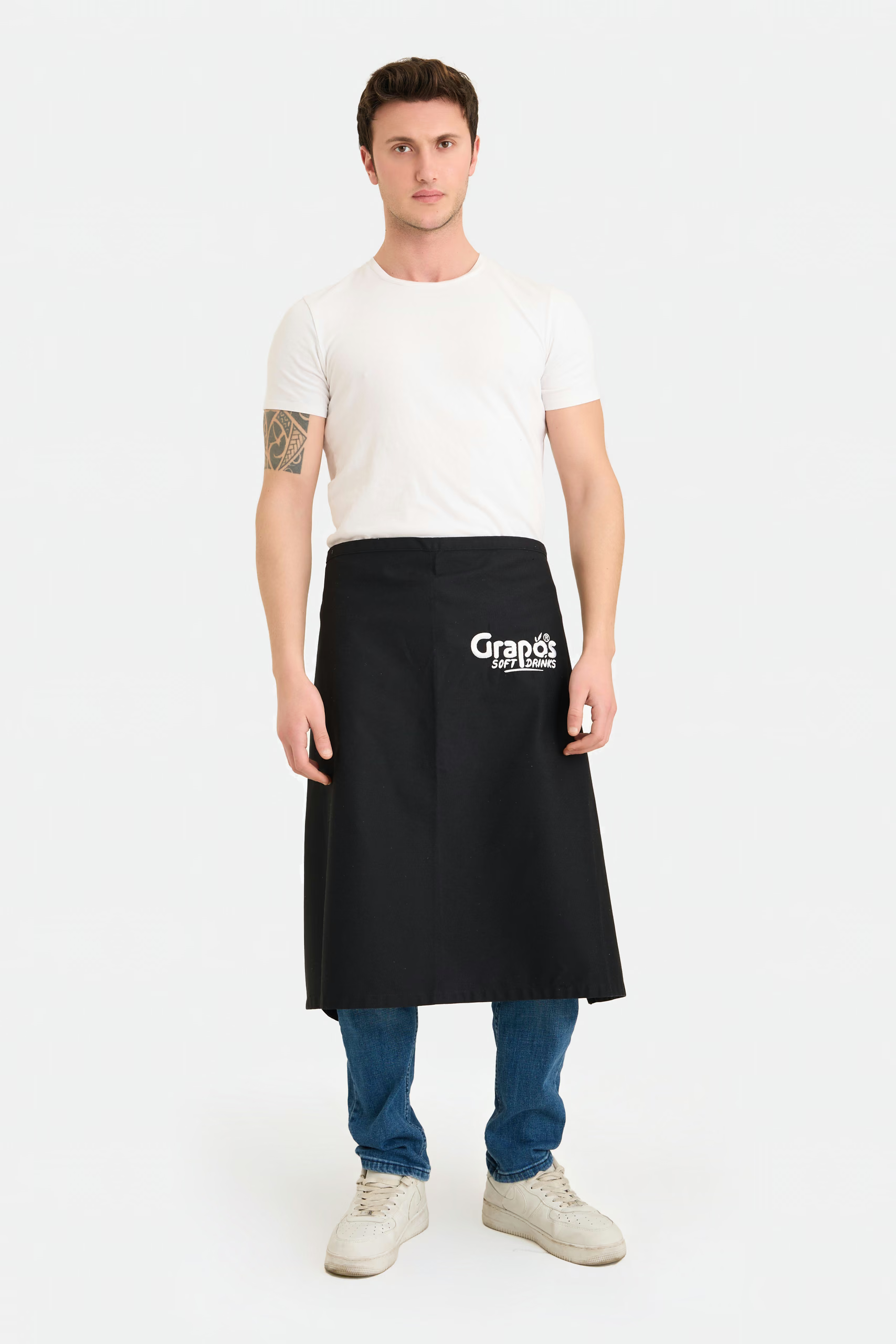
Workwear references produced by Voyager Textile
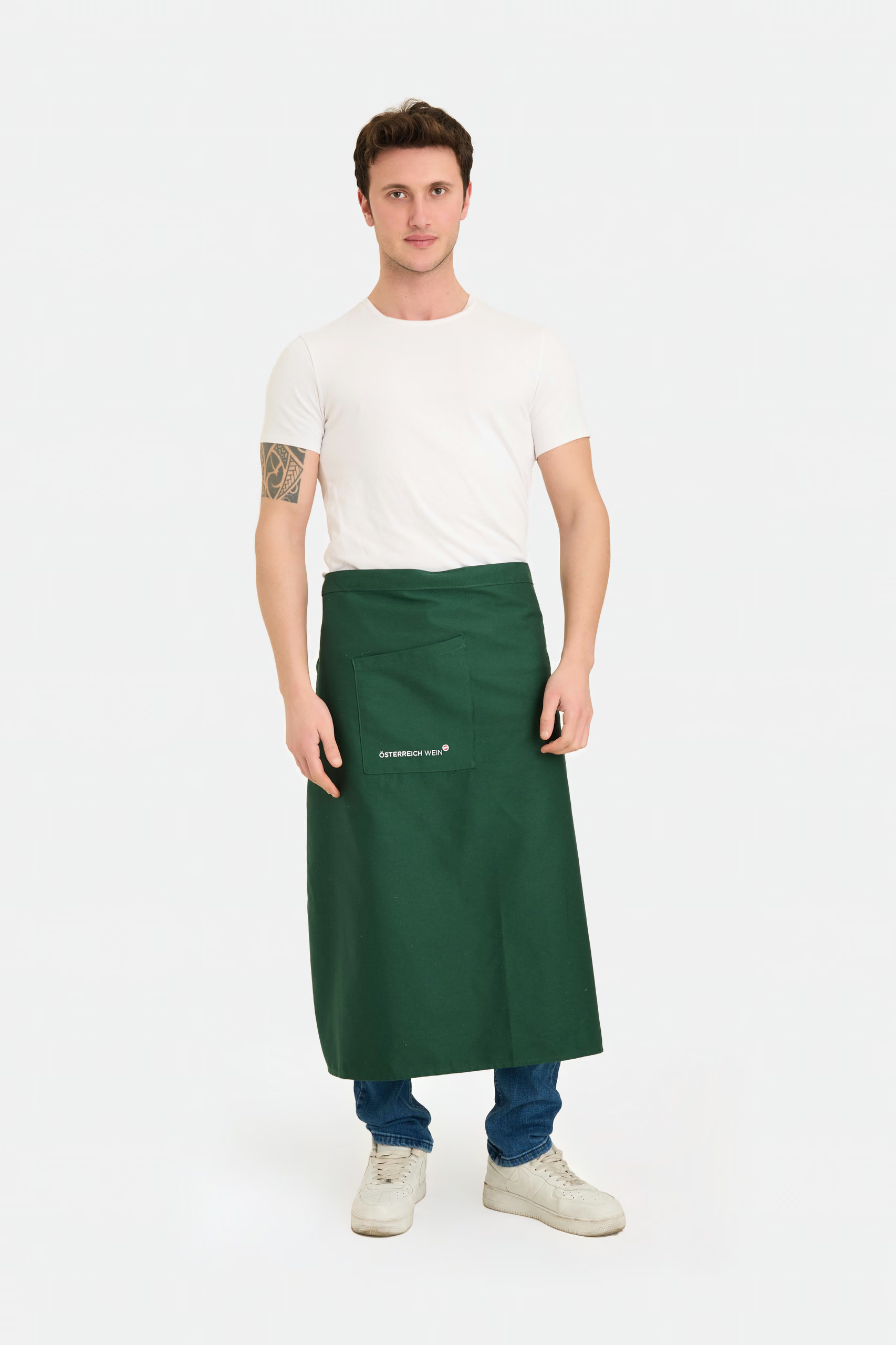
Aprons, coats, tunic sets and trousers previously produced to customer specification. Nothing shown is stock.
Buyer questions
What is DIN 10524?
DIN 10524 is the German standard for work wear in food businesses. The current edition, DIN 10524:2020-06, gives guidance on making, selecting, using and reprocessing such clothing, for workwear makers, food business operators and textile service companies.
What does BRCGS say about workwear pockets and buttons?
BRCGS Food Safety Issue 9, clause 7.4.2, requires protective clothing that at a minimum has no external pockets above the waist and no sewn-on buttons. It also requires enough clothing for each employee, full hair containment and, since August 2026, suitable footwear.
Is there HACCP-certified clothing?
There is no HACCP-certified clothing. HACCP is a food-safety system run by the food business, and no HACCP document defines a garment. "HACCP clothing" is a trade label, usually for garments designed to DIN 10524.
Can food industry workwear be BRCGS or IFS certified?
Food industry workwear cannot be BRCGS or IFS certified. BRCGS Food Safety and IFS Food certify food sites. The garment is built to the site's specification so the site can meet its own certification requirements.
What colours are used for food industry workwear?
Food industry workwear is usually white or light-coloured so soiling shows. Many sites add colour coding by area or role. That is site practice, not a DIN 10524 rule, so the colours and their approved standards belong in the specification.
What is the minimum order for food industry workwear?
The minimum order for food industry workwear at Voyager Textile is 300 pieces per colour and per style, with sizes split within the 300. A sample takes 5 to 7 business days; bulk takes 4 to 5 weeks after sample approval.
Ordering this garment from Voyager Textile
- Every garment is made to order, to your own design.
- The minimum order is 300 pieces per colour and per style. Sizes can be split inside the 300, and a custom Pantone colour carries the same minimum of 300 pieces. Polyester-based fabrics are assessed separately.
- A sample takes 5–7 business days. Bulk production takes 4–5 weeks after sample approval; development, sampling and shipping are additional.
- Cutting, sewing, embroidery, transfer printing and sublimation printing are done in our own factory in Türkiye. Screen printing and garment washing are coordinated with partner facilities.
Quantities, timing and any open point are confirmed per project at the quotation stage, once we have your specification or tech pack.
Request a quoteProducing hygiene workwear for a food site?
Send the site's clothing rules, the garments needed and the laundering regime. We build the specification with you, sample it, and keep the approved sample and colour standards on file for repeat orders.
Send a workwear brief