

Sports jersey artwork layout: crest, sponsors, numbers and names
A jersey carries many separate marks, several of them contractual, and they compete for the same surface. Laying them out is a production problem as much as a design one, because each mark has a different owner, a different tolerance and sometimes a different application method.
Contents
The direct answer first. Work outwards from the marks that cannot move: the number, which has to be legible at distance and sits in a defined area on the back, and any mark whose position is fixed by a contract or a competition requirement. Then place the remaining marks around them, checking each one against the panel seams and the size range.
This page is about layout. How a sublimated jersey is produced is covered in full sublimation jersey manufacturing, and how the artwork is mapped onto panels is covered in sublimation artwork preparation.
What a jersey typically carries
Front and back layout
Named zones rather than dimensions. Every competition and every sponsor agreement sets its own sizes, so nothing here is measured.
| Mark | Where it sits | Whose decision |
|---|---|---|
| Club or team crest | Left chest, or centre chest on some designs | The club |
| Main sponsor | Centre front, usually the largest mark on the garment | Sponsor agreement |
| Secondary sponsors | Upper back, sleeves, shoulders, shorts | Sponsor agreements |
| Manufacturer mark | Right chest, or a sleeve | Supply agreement |
| Player number | Centre back; on some sports also front or sleeve | Competition requirement |
| Player name | Above the number, across the shoulders | Competition requirement |
| Competition marks | Sleeve, usually applied as a badge | The competition |
The commercially awkward part is that several of these are contractual obligations with defined sizes, and they were negotiated separately by people who were not looking at the same garment. Reconciling them is the layout job, and it is worth doing before artwork is finalised rather than after a sponsor objects.
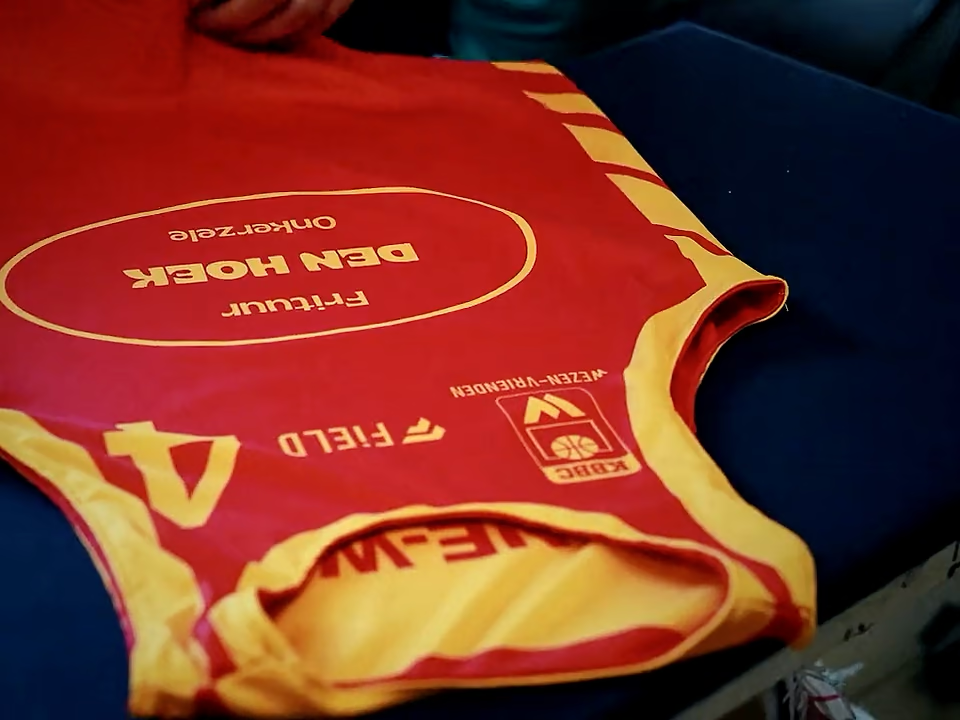
Readability decides the number
The number exists to be read from a distance, by an official, a spectator or a camera. That single requirement drives much of its specification and it overrides aesthetic preference.
A common practical failure is a number placed over a busy area of a sublimated design. The usual solution is to build a quieter field into the artwork behind the number area, or to reduce the background graphic's contrast there, both of which are artwork decisions taken at the panel stage rather than fixes applied afterwards.
Double-digit and triple-digit numbers occupy different widths, so the number area has to accommodate the widest number in the squad rather than a typical one. A layout designed around a single digit stops working at 88.
Names, and the space above the number
A player name sits in a horizontal band across the upper back, between the neckband and the number. It is a tight space on the garment and one that varies, because names vary in length far more than numbers do.
- Fix the band, then fit the name to it. The alternative, letting the band grow for long names, produces visibly inconsistent garments across a squad.
- Decide in advance how long names are handled: reduced letter height, condensed letterforms, or a shortened form agreed with the player.
- Check the longest name in the squad against the smallest garment size in the order, which is where the space runs out first.
- Say whether names are arched or set straight, because an arch changes both the space required and the production file.
Names and numbers are also the part of the order that is personalised, which has a production consequence: they cannot be produced in advance of the squad list. On a sublimated garment that means the panel artwork is finalised per player, and on a heat-applied system it means an operation after the garment is otherwise complete.
Sponsors
A sponsor mark has a specified size in an agreement, and that size is usually given as a width or an area. Two things regularly go wrong between the agreement and the garment.
The first is size variation. If a sponsor's mark is specified at a fixed width, it appears proportionally larger on a small garment than on an extra large, and on a youth range it can dominate the chest. If it is scaled with the garment, the smallest sizes may fall below the size the agreement requires. Neither is wrong; the choice has to be made and recorded, and it is exactly the scaling decision described on the artwork placement hub.
The second is panel seams. A wide centre-front sponsor on a garment with a panelled front can cross a seam, and a wordmark split across a seam does not reassemble convincingly. Either the mark moves, the panel line moves, or the sponsor accepts a smaller mark that fits within one panel.
| Position | Constraint |
|---|---|
| Centre front | Panel seams, and competition rules on maximum area |
| Upper back | Shares the space with the name, so the two have to be planned together |
| Sleeve | Narrow and curved; a wide mark has to be small enough to sit on the flat part |
| Shoulder | Crosses the shoulder seam on many constructions, so it suits compact marks only |
| Lower back or hem | Rarely used and often restricted; check before designing around it |
Sublimated or applied
Jerseys mix two fundamentally different approaches, and which one a mark uses changes when it is produced and what it costs.
| Printed into the design | Applied afterwards | |
|---|---|---|
| How | Part of the sublimated panel artwork | Heat-applied transfer, or an embroidered or woven badge |
| Feel | No hand feel at all; the mark is in the fabric | Sits on the surface and can be felt |
| When it is produced | Before the garment is cut | After the garment is otherwise complete |
| Suits | Everything known before production: crest, sponsors, competition graphics | Anything personalised or late: names, numbers, competition badges that change season to season |
| Watch for | Cannot be changed once panels are printed | Adhesion and durability on the fabric, confirmed on a washed sample |
The common arrangement is a sublimated base carrying everything fixed, with names and numbers applied afterwards so the garment can be produced before the squad list is final. That is a scheduling decision as much as a technical one, and it is worth taking early because it determines how much of the order can be made in advance.
Applied marks need a durability check on the actual fabric. Performance polyester knits are smooth and often have a finish, and adhesion should be confirmed on a washed sample rather than assumed, which is the same discipline described in print cracking.
Working through a layout
- List every mark with its owner, its required size and any position it is contractually tied to.
- Place the fixed marks first: the number, the name band, and anything a competition specifies.
- Place the main sponsor, checking it against the front panel seams.
- Place the crest and manufacturer mark, which usually take the chest positions left over.
- Place sleeve and shoulder marks, checking each against the curve and the seam.
- Repeat the whole check at the smallest and largest sizes in the range, not just the base size.
- Decide, mark by mark, whether it is fixed, position-adjusted or scaled across the range.
- Check every mark for legibility against the background artwork behind it.
- Record the result as a placement table with the marks referenced individually.
Two steps often skipped are the size range check and the legibility check against the background. Both are cheap at layout stage and expensive once panels are printed.
Jersey references
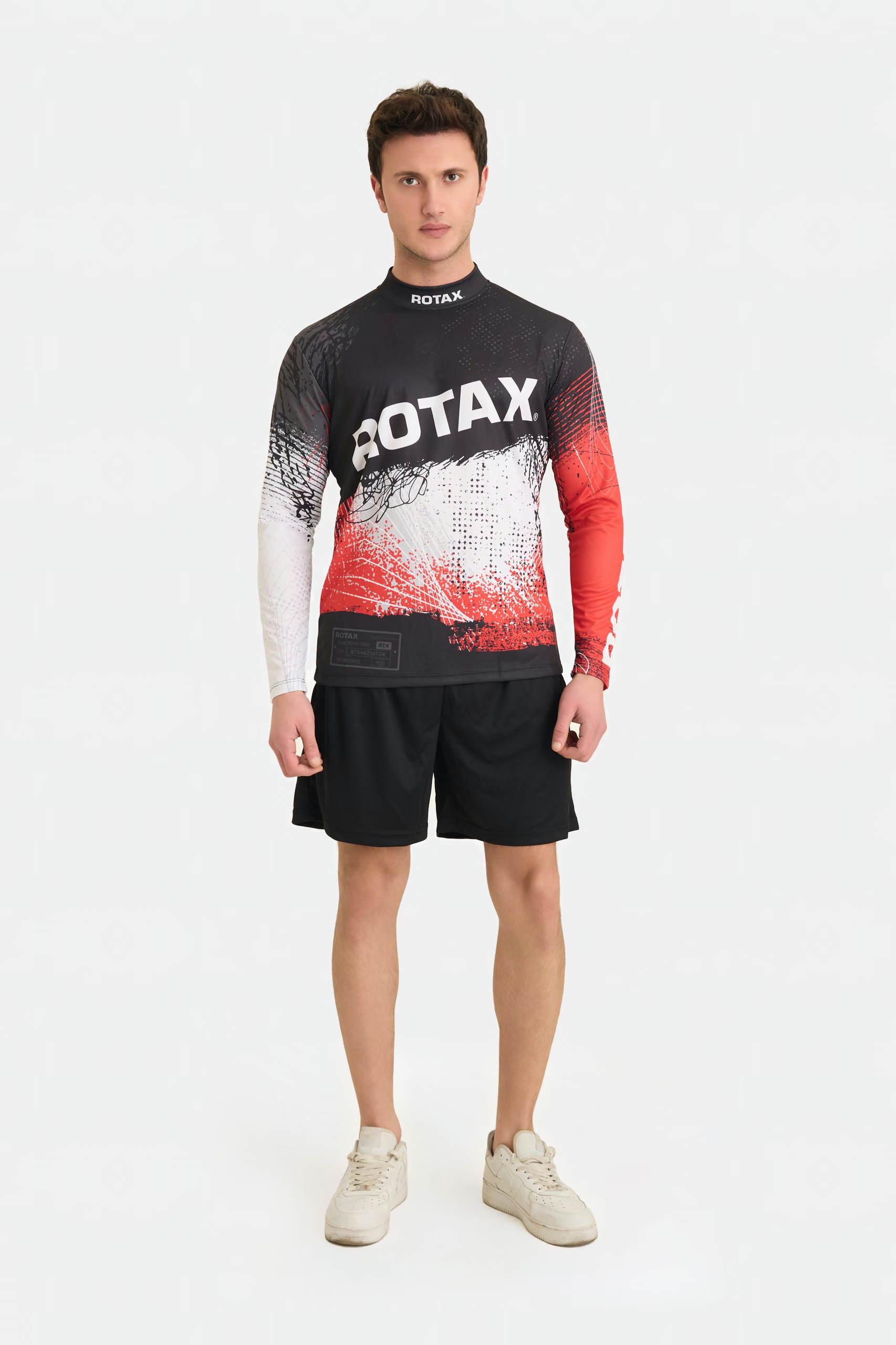
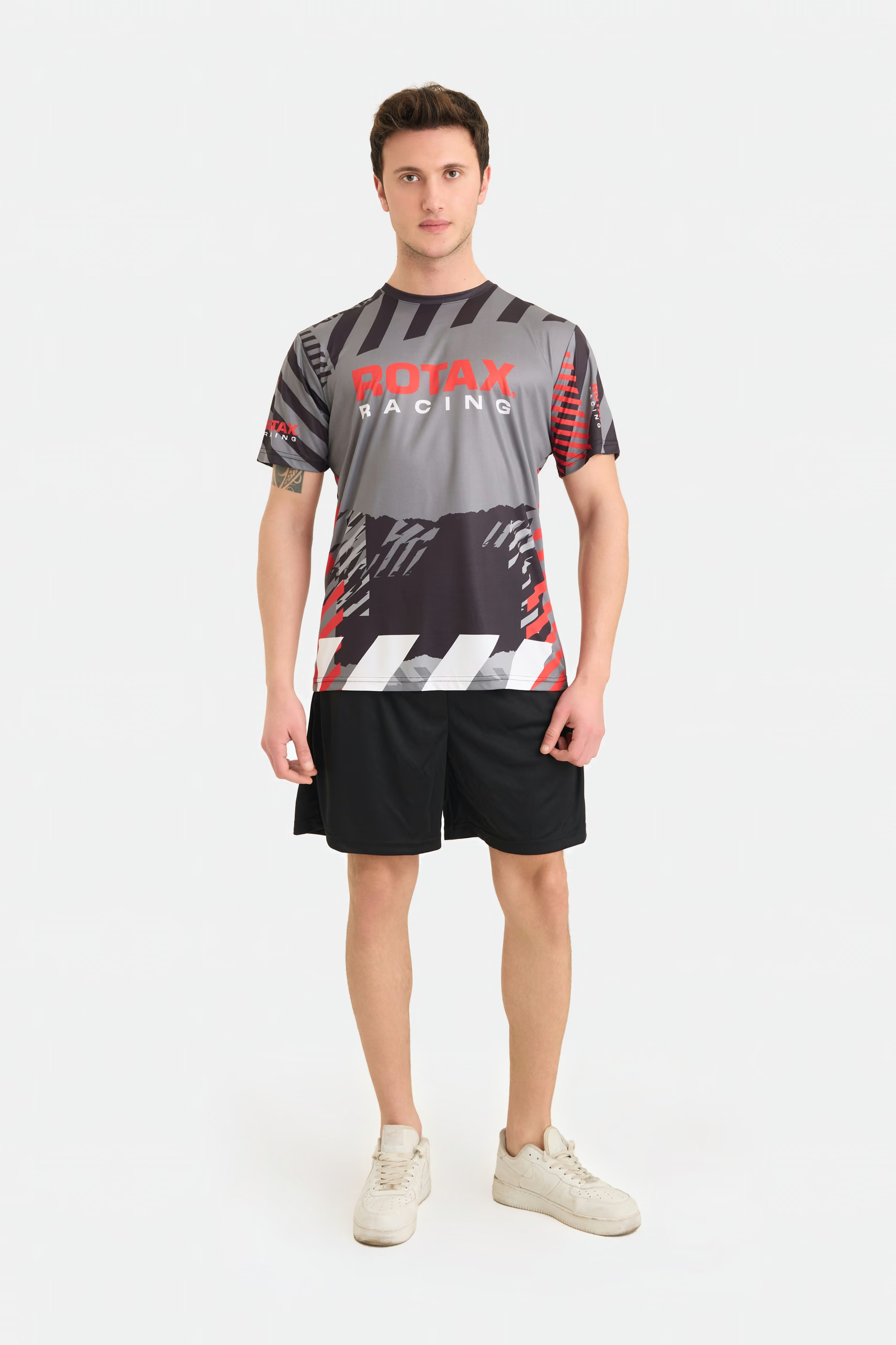
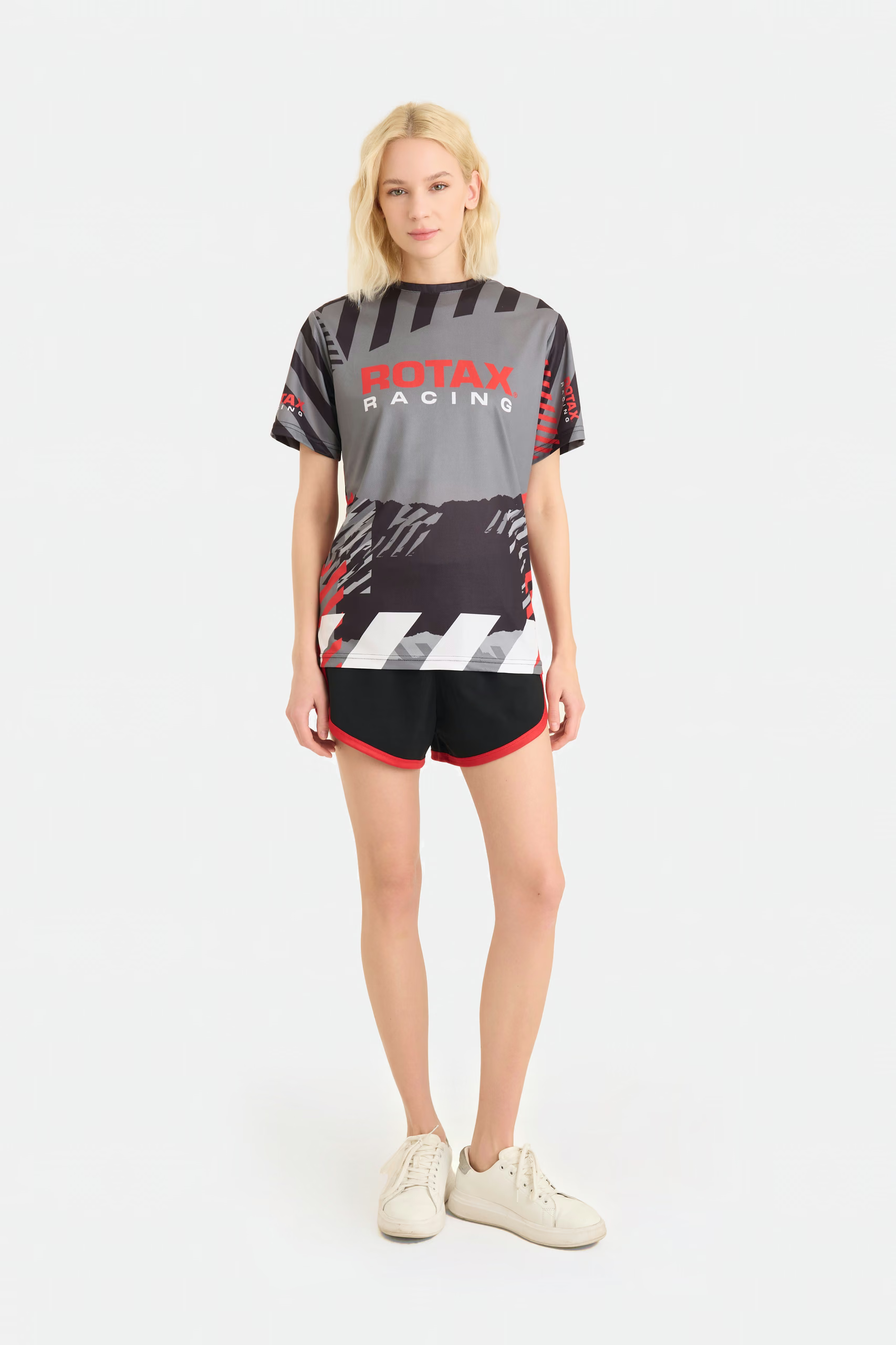
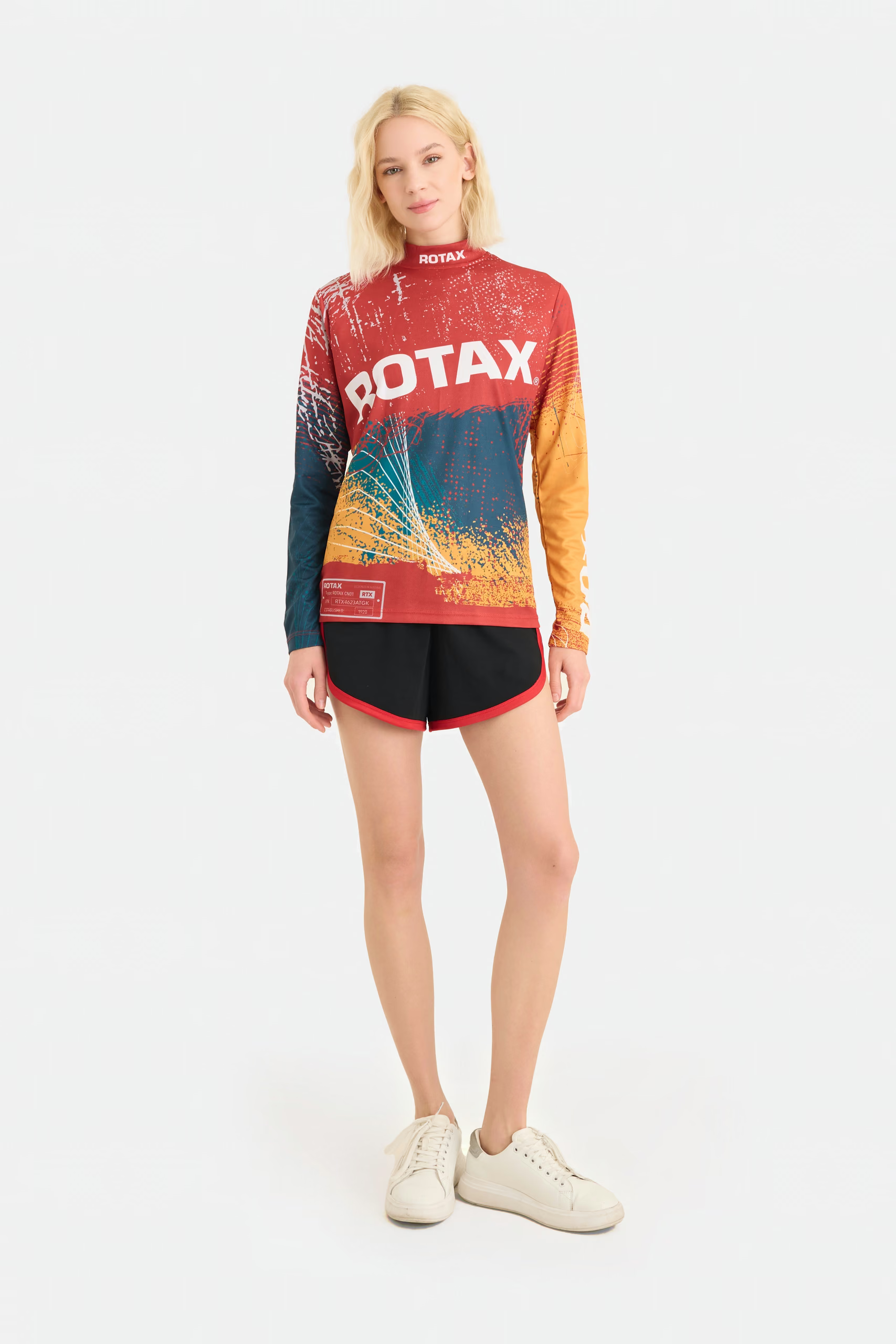
Sublimated jerseys and sports tops previously produced to customer specifications.
Questions this raises
How is a sponsor logo layout prepared for a jersey?
Start from the marks that cannot move, which are usually the number, the name band and anything a competition specifies. Place the main sponsor next, checking it against the front panel seams, then fit the crest, manufacturer mark and sleeve marks around them. Check the whole layout again at the smallest and largest sizes, and record each mark as its own row in a placement table.
Should sponsor marks be the same size on every jersey size?
It depends on the agreement. A fixed width keeps the mark compliant with a stated size but makes it look proportionally larger on small garments and on youth sizes. Scaling with the garment looks better and can take the smallest sizes below a required size. The decision has to be made deliberately and recorded, because leaving it open means it gets made in production.
Can names and numbers be sublimated into the design?
They can, and it gives a mark with no hand feel at all, but it means the panels cannot be printed until the squad list is final. The common alternative is a sublimated base with names and numbers heat applied afterwards, so most of the order can be produced in advance. Applied marks need adhesion confirmed on a washed sample of the actual fabric.
What if the number sits over a busy part of the design?
Build a quieter field into the artwork behind the number area, or reduce the background contrast there. Both are decisions taken when the panel artwork is laid out. Trying to solve it afterwards means either an illegible number or reprinting the panels.
How do I plan for long player names?
Fix the name band and fit the names to it rather than letting the band grow, or a squad ends up with visibly inconsistent garments. Decide in advance whether long names are handled by reducing letter height, using a condensed form, or agreeing a shortened name, and test the longest name in the squad against the smallest garment size in the order.
Send the marks and the squad size
Team programmes are easier to quote when every mark, its size and its owner are listed up front. Tell us what has to appear on the garment and we will propose a layout to approve before anything is printed.
Request a quotation