Quantities, cost and timing
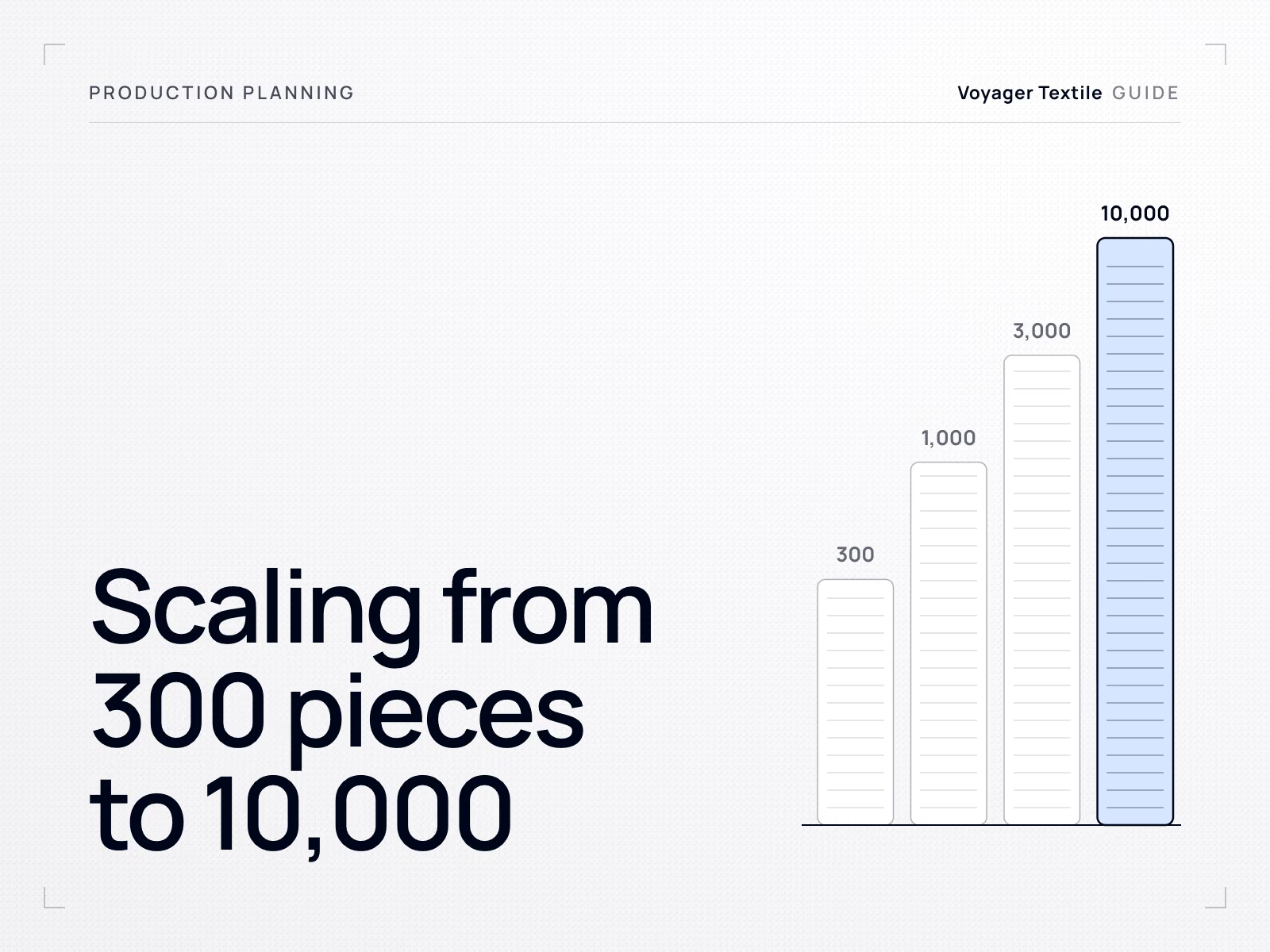
How to Scale Apparel Production from 300 Pieces to 10,000 and Beyond
Scaling apparel production is a planning problem rather than a manufacturing one. The garment does not change; what changes is that fabric must be booked ahead, capacity must be reserved, colour has to hold across dye lots, and quality control has to move from looking at everything to sampling properly.
Contents
The first order teaches you whether a product works. Growth breaks the informal habits that made that first order easy. At 300 pieces the factory can usually absorb a late decision. At 10,000 pieces across several colours, a late decision means fabric that has already been dyed, a line slot that has already been scheduled and a delivery date that can no longer move.
This guide covers what actually has to change as volumes grow, in the order that it normally bites.
What changes, and what does not
| First orders | At scale | |
|---|---|---|
| Fabric | Bought per order, often from available stock | Booked ahead for a programme, sometimes in one dye lot |
| Capacity | Fitted into the schedule | Reserved in advance as a production slot |
| Forecasting | Order what you think you will sell | Rolling forecast so the factory can plan materials and lines |
| Colour | One dyeing, so continuity is not an issue | Several dye lots that must stay within an agreed tolerance |
| Quality control | Effectively every piece is seen | A defined inspection standard and sampling plan |
| Packing | Simple bagging and cartons | Carton specification, labelling and warehouse requirements |
| Communication | Ad hoc messages | Version-controlled specification and a single approval trail |
What does not change is the specification itself. The garment that worked at 300 pieces should be the same garment at 10,000, which is precisely why the paperwork behind it has to become more disciplined.
Book fabric before you need it
Fabric is the first constraint growth exposes. At small volumes you buy what is available. At scale, availability becomes a planning input: a fabric can be out of stock, a mill can be committed, and a custom colour needs its own dyeing schedule.
The fix is to book fabric for a programme rather than for an order. If you expect to ship four deliveries over six months, agree the total fabric quantity up front. It protects your price, your delivery dates and, importantly, your colour: fabric dyed in one lot is consistent by definition. Speak to the factory about this before the second order, not after a stock-out.
Reserve capacity instead of requesting it
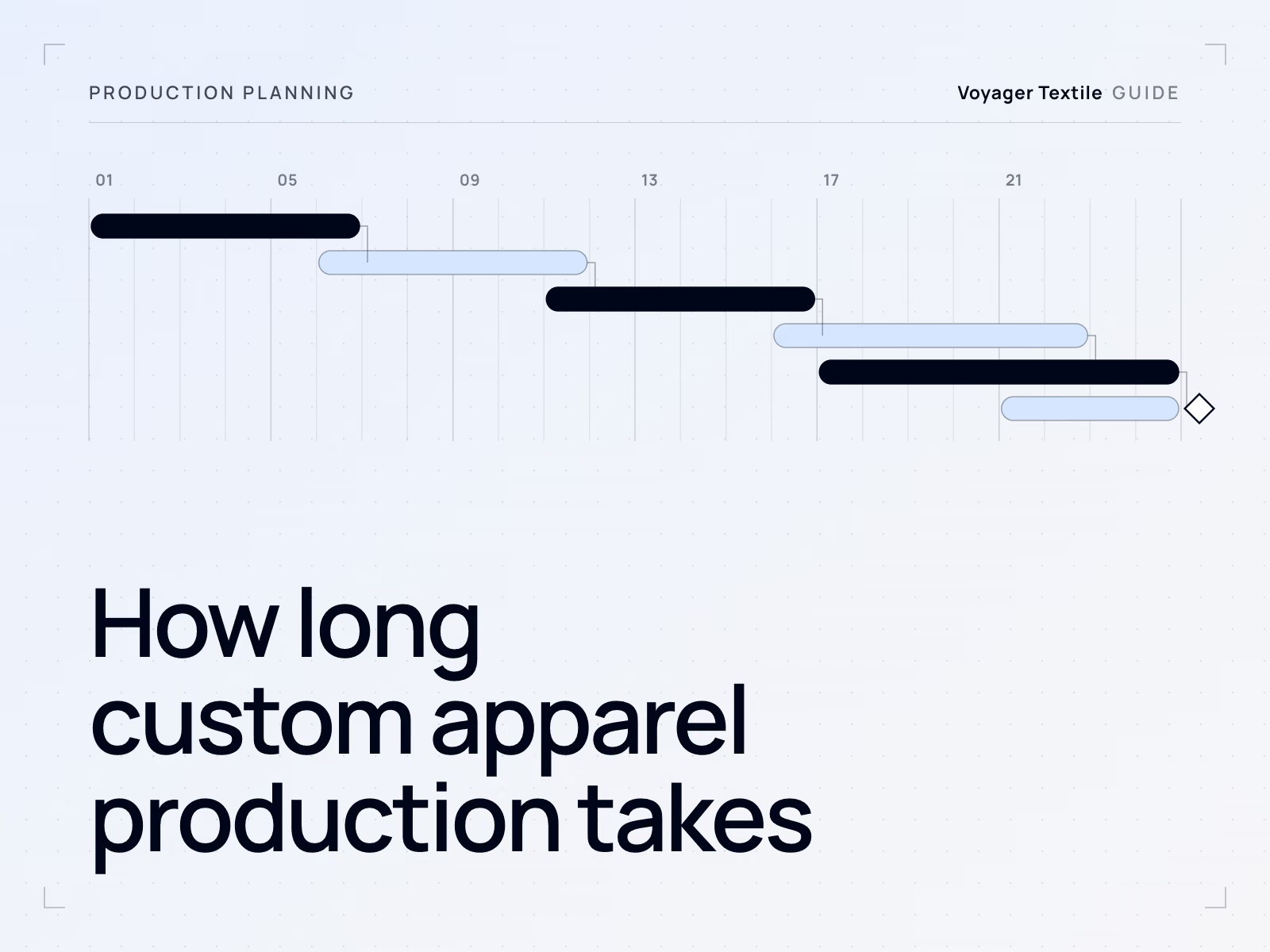
A production slot is a real resource. Once your order size approaches a meaningful share of a factory's monthly output, it has to be scheduled rather than accommodated. Voyager Textile's capacity is approximately 100,000 pieces per month, and bulk production typically takes 4 to 5 weeks after sample approval, but the relevant question for a growing programme is narrower: how many pieces of your specific product can be produced per month, and how much of that has already been committed for the period you need.
Ask that question every time your forecast changes materially. A factory that knows your plan can hold capacity. A factory that learns about a 10,000-piece order two weeks before you need it cannot.
Forecast roughly, but forecast
A forecast does not have to be accurate to be useful. A rolling three to six month view of what you expect to order, updated monthly, lets a factory buy yarn and fabric, plan lines and warn you early about pressure points. It also earns you priority when capacity tightens, because a planned customer is easier to serve than an unpredictable one.
Say clearly which part of the forecast is committed and which is indicative. Factories plan differently for the two, and being honest about the difference is more valuable than being optimistic.
Protect the product itself
Three things drift as volume grows, and each has a specific control.
- Fit. The graded pattern and the approved size set are the reference. Freeze them, version them, and treat any change as a new approval rather than a small adjustment. See pattern making and grading.
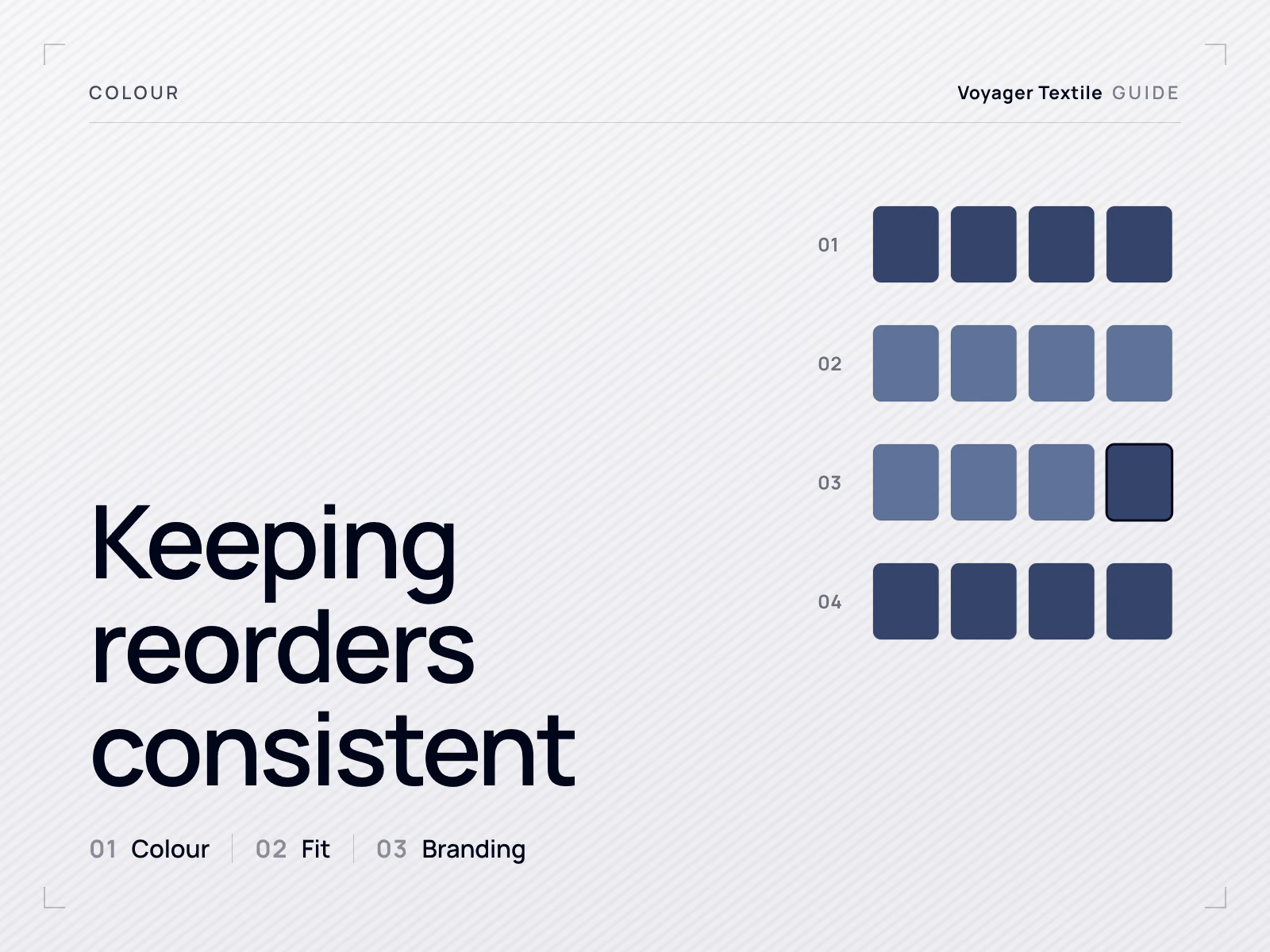
- Colour. Multiple dye lots mean colour continuity has to be managed against an approved standard and an agreed tolerance, not against memory. See Pantone colour matching.
- Branding. Labels, hangtags and print positions should be locked in a specification, because at volume they are ordered separately and often by different suppliers. See labels and packaging.
Together these form the reorder discipline described in the consistency guide, which becomes essential rather than useful once you are producing in thousands.
Change how quality is checked
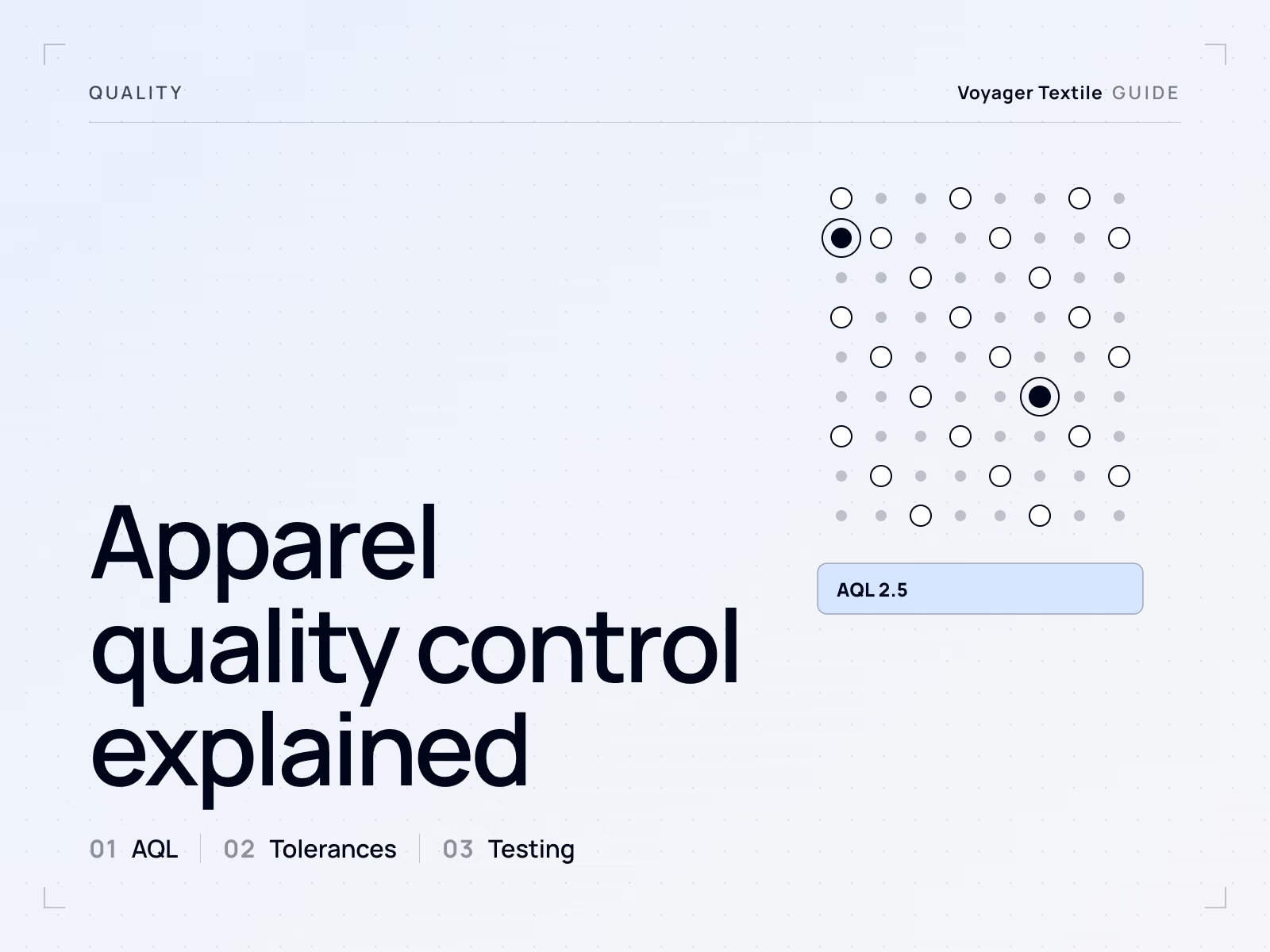
At 300 pieces, many defects are caught simply because everything passes through few hands. At 10,000 pieces that is no longer true, and quality has to become a defined system: an agreed measurement tolerance table, a stated inspection level, and a clear rule about what happens to goods that fail.
This is not a sign of distrust. It replaces judgement with a shared standard, which protects both sides in a dispute. The quality control guide explains inspection levels, tolerances and the tests worth specifying.
Plan deliveries, not one big drop
Large orders often work better as scheduled deliveries. Splitting 10,000 pieces into three shipments over a season reduces the warehouse space you need, spreads payment, and lets you correct the size split for later deliveries based on real sell-through. Fabric is still booked once, so the price advantage of the larger commitment stays.
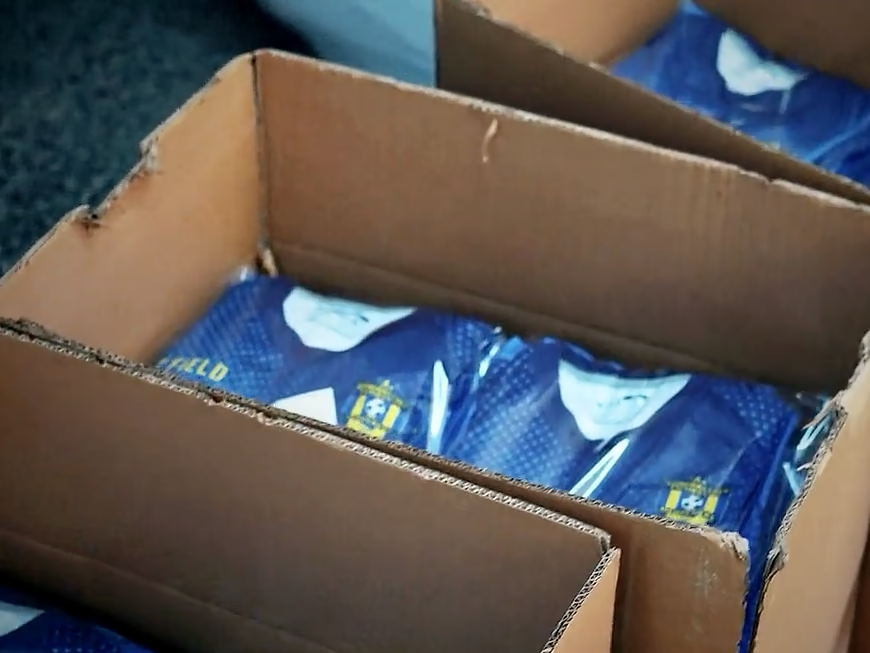
Agree the delivery schedule when the order is placed. Adding a split afterwards means re-planning production that has already been scheduled.
The commercial side of growth
- Cash. Bigger orders tie up more cash earlier, especially where materials are paid ahead of production. Model this before you commit to a volume step.
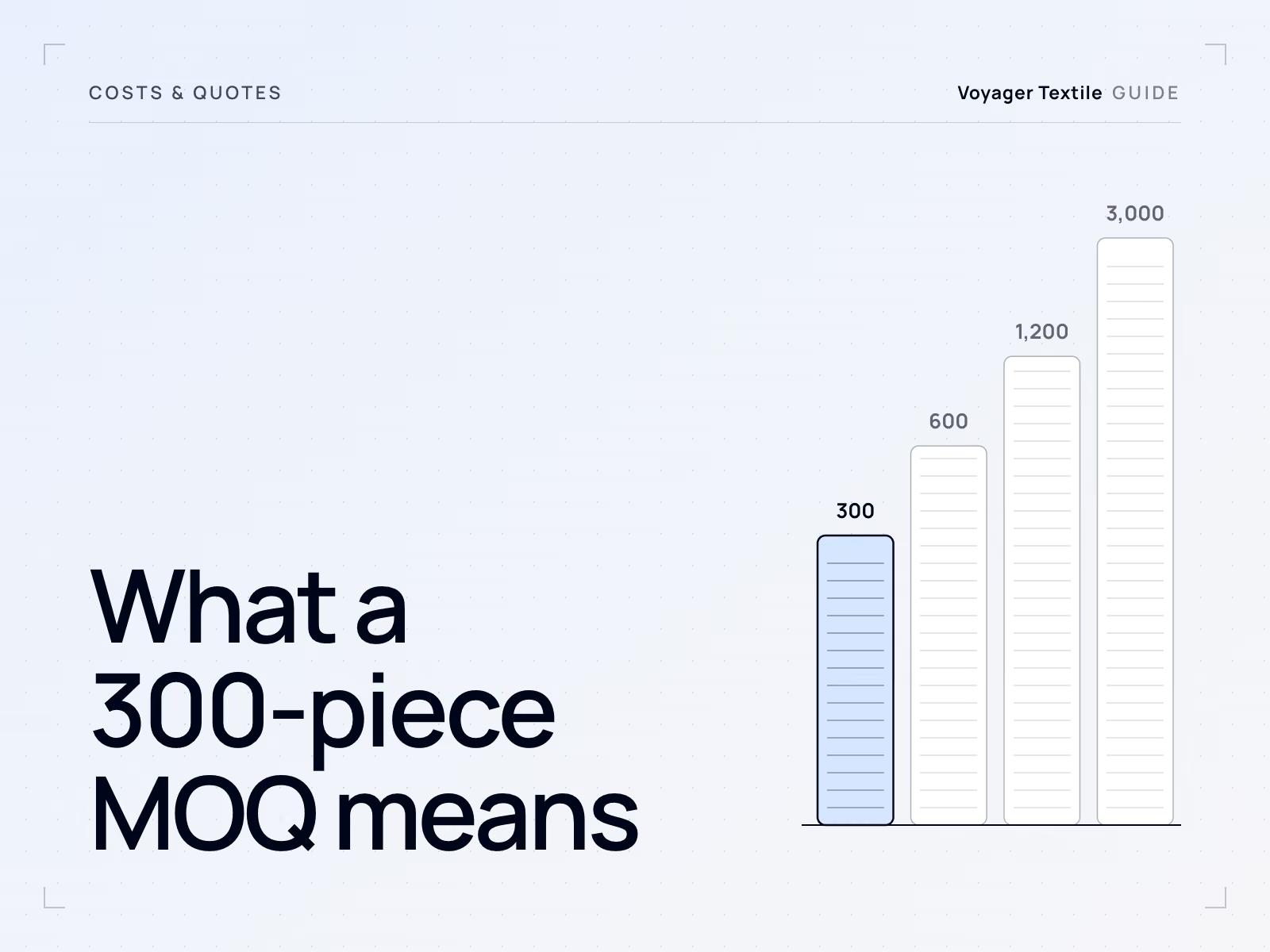
- Price. Expect the unit price to fall fastest just above the minimum and flatten thereafter. Larger savings then come from fabric buying and planning rather than from negotiation.
- Terms. Payment terms usually evolve with a track record. Ask what would need to be true to change them rather than asking once and accepting the first answer, and see payment terms for what sits behind the answer.
- Concentration. At some point a single factory becomes a single point of failure. Discuss it openly rather than quietly dual-sourcing, and agree who holds patterns and colour standards. Finding where the dependency actually sits, often a mill or a nominated trim rather than the factory, is covered in supplier risk management.
A practical growth path
- First order: prove the product and the supplier. Keep the specification simple and record everything you approve.
- Second order: fix the specification, tolerances and packing in writing. Correct the size curve using real sales data.
- Third order: introduce a rolling forecast and discuss booking fabric for a programme rather than an order.
- Growing: reserve capacity, agree an inspection standard, and move to scheduled deliveries.
- At volume: review construction and fabric with the factory for cost, since small efficiencies matter once they are multiplied by thousands.
Scaling well is mostly about telling the factory what is coming. Many scaling problems in apparel are problems of information arriving too late.
Questions buyers ask
What is the biggest obstacle when scaling apparel orders?
Fabric availability and lead time, followed by capacity booking. Both are solved by planning further ahead: booking fabric for a programme rather than an order, and telling the factory your forecast so a production slot can be reserved.
Will my unit price keep dropping as volumes grow?
It drops fastest just above the minimum order, where fixed set-up costs are spread over more pieces, then flattens. Further savings usually come from fabric buying, longer planning horizons and construction efficiencies rather than from volume alone.
How do I keep colour identical across a large programme?
Dye the fabric for the whole programme in one lot where possible. Where several dye lots are unavoidable, work against an approved colour standard with an agreed tolerance and assess continuity under controlled lighting. See Pantone colour matching.
Should I split a large order into several deliveries?
Usually yes. It reduces warehousing and spreads payment, and lets you adjust the size split for later deliveries based on actual sales. Agree the schedule when the order is placed so fabric and capacity are planned for the whole quantity.
When should I add a second factory?
When a single supplier's capacity or a single point of failure becomes a genuine business risk rather than a theoretical one. Discuss it openly with your existing factory, and agree who holds patterns, graded specifications and colour standards before you duplicate them elsewhere. Whether splitting the programme is the right answer, and what it costs in consistency, is set out in dual sourcing.
What capacity does Voyager Textile have?
Approximately 100,000 pieces per month. Capacity for a specific product is confirmed at quotation.
Plan the next volume step with the factory
Share what you expect to order over the next two or three seasons, even roughly. We will tell you what capacity is available, what fabric should be booked ahead, and what to fix in the specification before volumes grow.
Discuss a production plan