Choosing a manufacturer
Clothing Manufacturer Red Flags: How to Vet a Supplier Before You Pay a Deposit
Before paying anything, a buyer can check four things about a clothing manufacturer: whether the factory it describes can be seen, whether the sample is made the way bulk will be made, whether the quotation states what it prices, and whether questions get specific written answers. One signal proves nothing. Several unanswered ones are a reason to stop and ask.
Last reviewed:
Contents
Many problems with a new clothing manufacturer are visible before the first payment, in what the supplier can show, how it quotes and how it answers questions. The checks below cost nothing but time, and each one produces evidence you can compare across suppliers. None of them is an accusation. A small factory may be slow to send a video for ordinary reasons, and a trading company that presents itself honestly as a trading company is not a red flag. The signal is a gap between what is claimed and what can be shown, and whether that gap closes when you ask.
What a real factory can show you
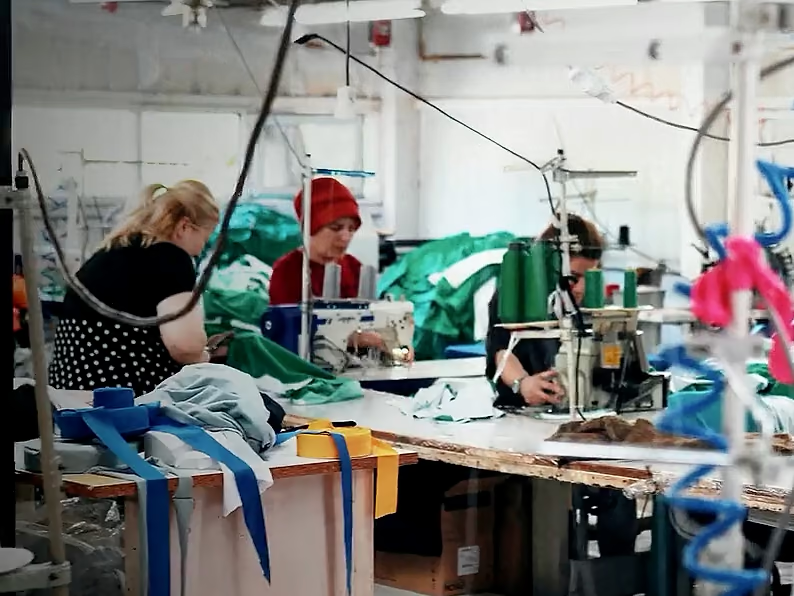
A manufacturer with its own production can show that production on request, usually by a live video call from the floor. Ask for the cutting table, the sewing lines, the pattern room and any decoration machines the supplier says it runs in-house, and ask to see work in progress rather than a finished showroom. Stock footage, a refusal of any live view or a video that never shows the process you are buying are signals worth writing down.
| Claim | Check you can run | Signal to note |
|---|---|---|
| "We have our own factory" | A live video call from the production floor at a time you propose; the city where the factory is | Only pre-recorded footage; the address changes between documents |
| "Everything is done in-house" | Ask which processes are subcontracted and to what kind of facility | No process is ever subcontracted, including washing, dyeing or knitting, which many sewing factories place with partners |
| "We can make any quantity" | Ask for the minimum per colour, per style and per size, and the capacity for your product type | One capacity figure for every product; a minimum stated without its unit |
| "We are certified" | Ask for the certificate, then check the holder, the site and the scope with the issuing body | A certificate issued to another company, another site or to a material supplier |
| "We make for well-known brands" | Ask what the supplier can show without breaching confidentiality, such as similar construction on its own samples | Brand names offered as proof, with nothing you can inspect |
Certificates deserve particular care, because a real certificate can be attached to the wrong claim. A material certificate such as OEKO-TEX, GOTS or GRS describes a material or a supply chain, not the sewing factory. An audit report describes what an auditor saw on one site on given days. How to read one is set out in reading a factory audit report, and what certified materials prove in certified apparel materials.
Working through an agent or trading company is a legitimate model with its own advantages. The question is only whether the supplier says which one it is. The differences are compared in manufacturer vs sourcing agent.
How the sample predicts bulk behaviour
The sample is the most reliable preview of bulk only when it is made where and how bulk will be made. Ask who sews the sample, on which site, in which fabric and with which trims. A sample sewn in a separate sample room from a substitute fabric proves the design, not the production. That can be acceptable, provided both sides agree in writing what the sample is meant to prove.
- Sealing: a supplier should agree to seal the approved sample, with one copy kept by each side. Reluctance to seal leaves bulk with no reference to be measured against.
- Comments: sample comments should be answered point by point. "We will correct it in bulk" is not an answer to a fit or measurement comment.
- Fabric: the sample fabric should carry the composition and weight in g/m² that the quotation states, or the difference should be named.
- Timing: the supplier should state how long a sample takes for your product and what starts the clock.
For reference, a sample at Voyager Textile takes 5-7 business days, and sampling always comes before bulk. What each sampling stage proves is set out in the sampling guide, and the common reasons bulk drifts from the sample in bulk differs from sample.
Quotation discipline
A disciplined quotation states what it prices, so a missing line tells you something. A price returned before the supplier has asked any question about fabric, sizes or decoration is a guess. That guess tends to move once the details are known, often after a sample has been approved and switching supplier has become expensive.
Lines a quotation should state before you pay anything
- Fabric composition, construction and weight in g/m², not "similar quality"
- The quantity basis: per style, per colour and in total
- The size split the price assumes
- Decoration method, size and position, and whether it is done in-house or by a partner
- Trims, labels and packing, each included or listed as excluded
- One-off costs such as sampling, screens or digitising, shown separately
- The Incoterm with its named place
- Sample time and bulk time, each with the event that starts it
- How long the price is valid
How to line two quotations up against one specification is covered in how to compare clothing manufacturer quotes, and what to send so the quotation can be complete in the RFQ guide.
How communication behaves
Communication before an order is a small-scale preview of communication during production. Note whether answers match the questions asked, whether numbers stay the same when a different person replies, and whether a technical question reaches someone who can answer it. Pressure to decide or pay by a deadline that has nothing to do with your order is worth noting too, as is a preference for phone calls over anything written.
| Behaviour | What it tends to mean in production |
|---|---|
| Specific written answers with numbers and units | Decisions will be traceable when something goes wrong |
| The same figure from every contact | Information is shared inside the supplier |
| Questions asked back about your specification | The supplier is reading the tech pack, not only the target price |
| Vague answers that change between messages | Production details may change the same way |
| No agreed route when bulk differs from the sample | The dispute will be settled after the goods are made |
Response time is also measurable. Voyager Textile usually replies within one business day. Whatever a supplier's normal pace is, it should be stated and then kept.
A checklist to run before paying anything
Before the first payment
Each item produces a record you can compare with the next supplier.
- Seen the production floor live, including the processes quoted as in-house
- Received a written list of which processes are subcontracted
- Checked any certificate's holder, site and scope with the issuing body
- Confirmed who makes the sample, where and in which fabric
- Agreed that the approved sample will be sealed, one copy each
- Received a quotation with every line in the checklist above
- Confirmed the minimum per colour, per style and per size
- Received sample and bulk lead times with their start events
- Agreed in writing what happens if bulk differs from the approved sample
- Named contacts for commercial and technical questions
What to do with a red flag
Ask about it once, in writing, with a specific question, and keep the answer. A clear answer usually resolves the point, and the way a supplier answers is itself evidence. Unanswered signals that accumulate across the four areas are a reason to pause before any payment and to compare with another supplier.
Once the basic checks pass, a structured process takes over. Supplier qualification decides what a supplier may make and on what evidence. A supplier quality agreement writes down change control, deviations and non-conforming goods. A supplier scorecard then tracks delivery and quality once orders run. Payment structures themselves are a separate subject, described in payment terms in apparel manufacturing.
Questions buyers ask
What are the red flags when choosing a clothing manufacturer?
Clothing manufacturer red flags include no live view of the production, a quotation without fabric weight or Incoterm, a minimum stated without its unit, reluctance to seal the approved sample, and answers that change between contacts. One signal proves little; several unanswered ones justify a pause.
How can I check that a clothing manufacturer owns its factory?
Ask for a live video call from the production floor at a time you propose, covering cutting, sewing and any decoration quoted as in-house. Ask which processes are subcontracted. A factory visit, where it can be arranged, settles the question.
Is it a red flag if a supplier is a trading company?
No, a trading company is not a red flag in itself. Agents and trading companies are a legitimate model. The red flag is a supplier that presents itself as a factory and cannot show one.
How do I check a supplier's certificate?
Check a supplier's certificate with the issuing body: confirm the holder's name, the site and the scope. A material certificate such as GOTS or OEKO-TEX describes a material or supply chain, not the sewing factory.
Why does a very fast quote matter?
A very fast quote returned before any question about fabric, sizes or decoration is based on assumptions. The price tends to move once the real specification is known, often after sample approval, when changing supplier costs the most time.
Does Voyager Textile hold a factory certification?
No, Voyager Textile holds no facility certification. Certified materials such as OEKO-TEX, GOTS or GRS can be sourced where specified, which does not make the factory or the garment certified.
Run these checks on us
Ask which processes run in our factory in Türkiye and which we coordinate with partner facilities, and ask for a quotation line by line. Factory visits can be arranged as part of project onboarding, and we usually reply within one business day.
Start an RFQ