Choosing a manufacturer
Best Country to Manufacture Clothing: A Decision Framework by Product, Volume and Market
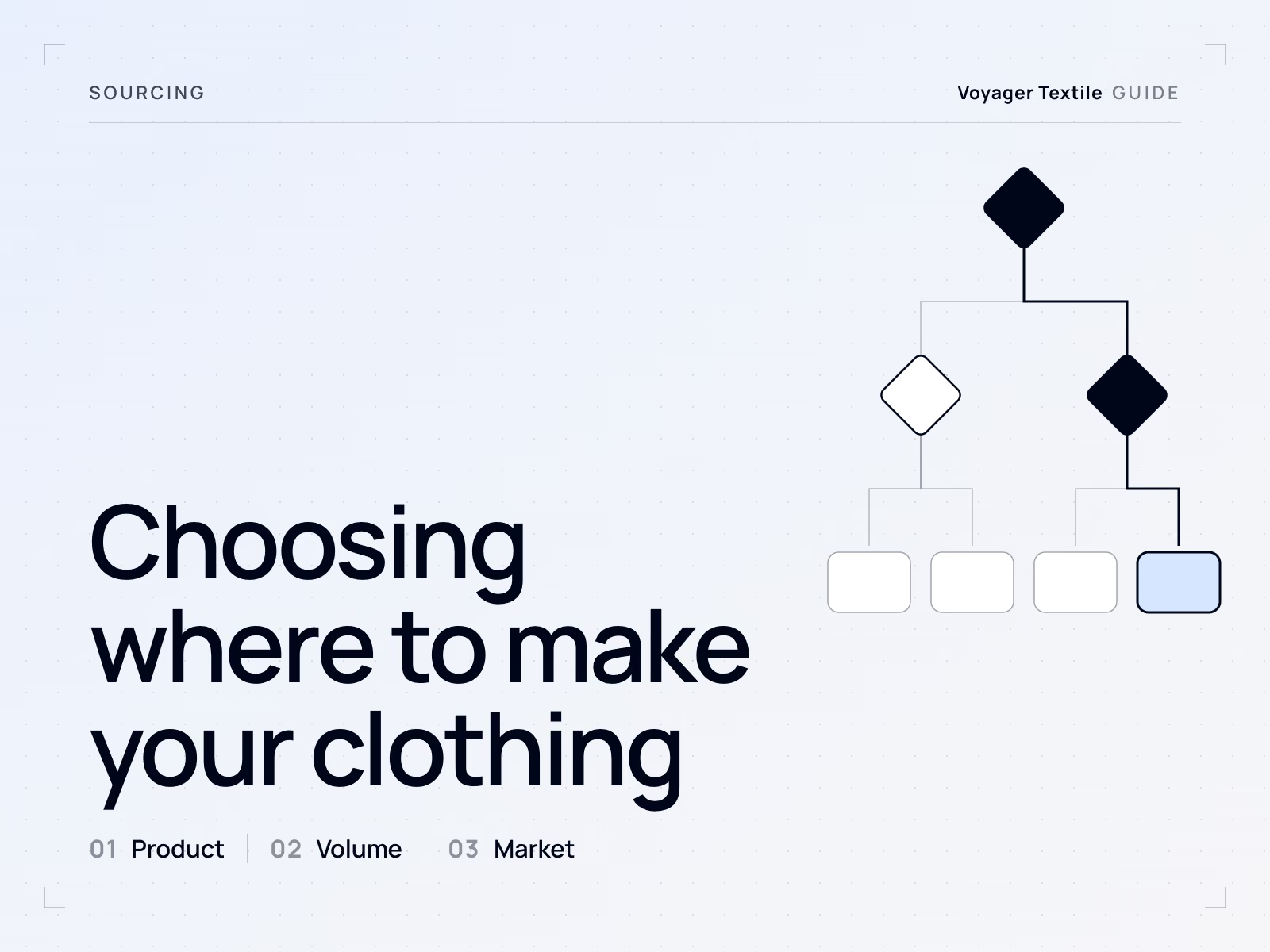
The best country to manufacture clothing is the one that fits your sales market, your product and your order size per style, in that order. The market decides the duty you pay, the product narrows the countries with the right fabric and skills, and the quantity per style and colour decides which factories will take the order at all. Lead time and compliance then separate the shortlist.
Last reviewed:
Contents
Country rankings answer a question no buyer actually has. A brand selling 500 hoodies per colour in Germany, a promotional distributor shipping 20,000 T-shirts to the United States and a workwear buyer replenishing coveralls every month need different countries. This guide works through the five decisions in the order that removes the most options first, and it names the trade agreements and tariff rules that set the duty at each step.
Step 1: Start with the market you sell in
The sales market comes first because it decides import duty, and duty on apparel is high enough to change the answer. The same garment can enter duty free from one country and at a double-digit rate from another. Many buyers sell into the EU, the United States or both, and the two markets treat the same origins very differently.
| Production region | Into the EU | Into the United States |
|---|---|---|
| EU member states (Portugal, Romania, Bulgaria, Poland and others) | No duty; goods move inside the single market | Normal US rate; under the current Section 301 measure the combined rate on EU goods is at least 10 percent |
| Türkiye | No duty for apparel in free circulation, under the EU-Türkiye customs union (Decision No 1/95) with an A.TR certificate | Normal US rate plus an additional 12.5 percent under the current Section 301 measure |
| Bangladesh | No duty under the Everything But Arms arrangement of Regulation (EU) No 978/2012, subject to the GSP rules of origin | Normal US rate plus an additional 10 percent under the current Section 301 measure |
| Vietnam | Preferential rate under the EU-Vietnam Free Trade Agreement for garments meeting its fabric origin rule; otherwise the normal EU rate | Normal US rate plus an additional 12.5 percent under the current Section 301 measure |
| CAFTA-DR countries (Guatemala, Honduras, El Salvador, Nicaragua, Dominican Republic, Costa Rica) | Normal EU rate unless another preference applies | Duty free for garments meeting the agreement's yarn-forward rule, and exempt from the Section 301 duty |
| Countries without a preference | Normal EU rate, for example 12 percent on cotton T-shirts (CN 6109 10 00) | Normal US rate plus any additional duty set for that country |
The normal US rates are high for apparel: 16.5 percent for cotton knitted T-shirts (HTSUS 6109.10.00) and 32 percent for T-shirts of man-made fibres (6109.90.10), for example. The Section 301 duties were imposed on 60 economies from 24 July 2026 and are being challenged before the US Court of International Trade, so check the rate for your origin and code close to shipping. The US side is worked through in where to make apparel for the US market.
Step 2: Match the product to the country's fabric base
A country is a good fit for a product when the fabric is made nearby and the factories sew that category every day. Fabric is usually the longest lead-time item and the one that carries its own minimum, so a country that has to import the fabric adds weeks and a second supplier to the order.
| Product question | Why it narrows the choice |
|---|---|
| Knitted or woven? | Jersey, fleece and rib come from knitting mills; shirts, trousers and jackets from weaving mills. Few regions are strong in both. See knitted vs woven garments. |
| Stock fabric or custom fabric and colour? | A custom knit or a Pantone colour needs a mill and dye house willing to run your quantity. The minimum then comes from the mill, as explained in apparel manufacturing MOQ. |
| Decoration? | Embroidery, screen printing, sublimation and garment washing need specialist capacity near the sewing factory, or add transport between sites. |
| Technical requirements? | Workwear, high-visibility and medical items add fabric tests and standards; the factory needs to have made the category before. |
Step 3: Check your quantity per style and per colour
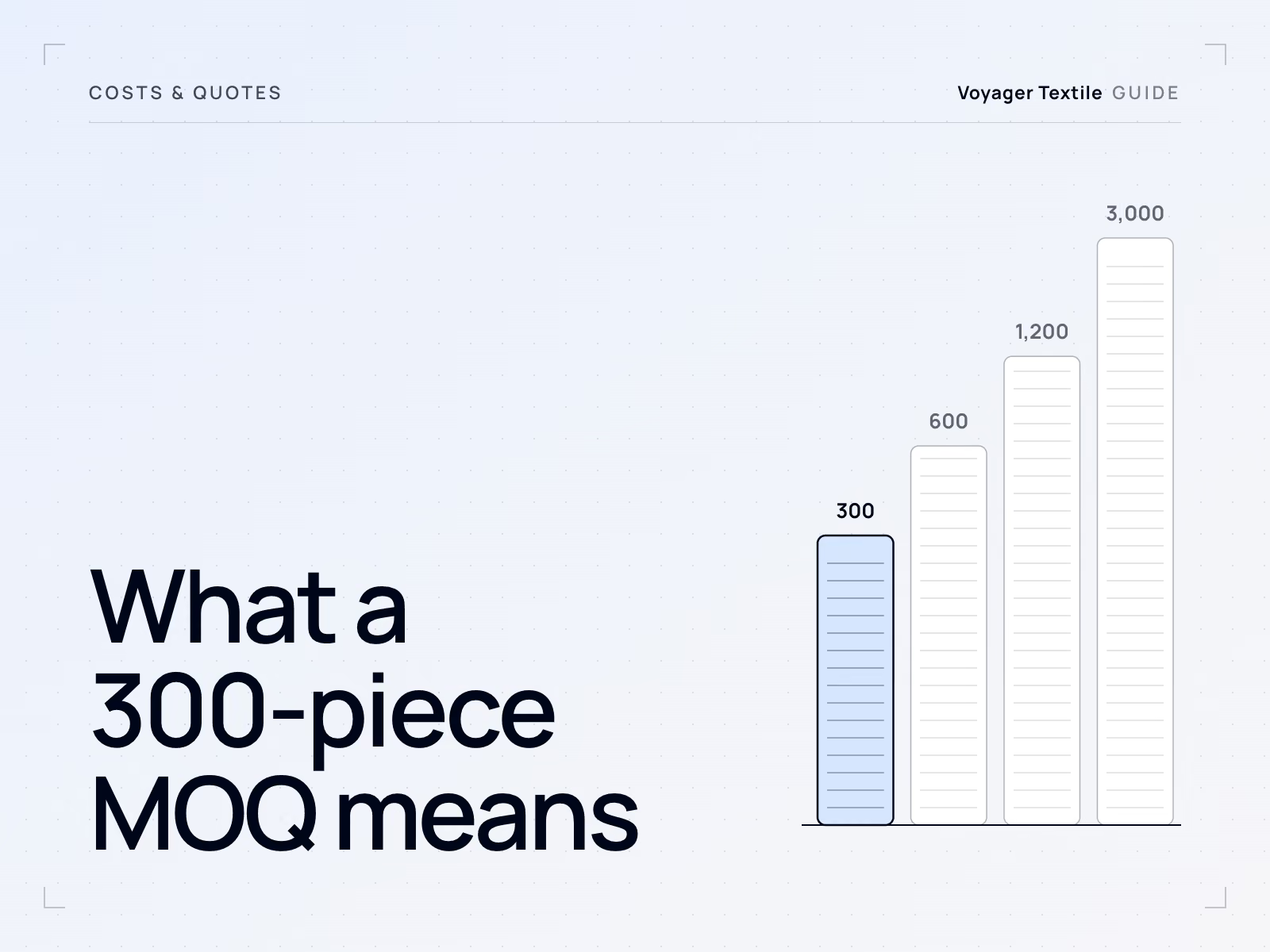
Quantity per style and per colour decides which factories will quote, and it matters more than the total order. Five styles in four colours at 400 pieces each is 8,000 pieces, but each production line sees only 400. Factories set minimums per colour and per style because each change means a new marker, a new dye lot and a new line set-up.
| Quantity per style and colour | Where it typically fits |
|---|---|
| Under 300 | Decorated blanks, or small workshops in the sales market. Custom fabric is rarely viable. Compare in custom apparel vs blanks. |
| 300 to 3,000 | Nearshore full-package factories, for example in Türkiye or Portugal, and cut-make-trim units in Eastern Europe. Large Asian export factories typically quote higher minimums, as covered in Turkey vs Bangladesh vs Vietnam. |
| 3,000 to 10,000 | Every major region quotes; the choice turns on duty, lead time and fabric. |
| Above 10,000, repeating | Large-scale exporters in South and South-East Asia are typically competitive on unit cost; nearshore is often kept for replenishment or fashion items. See dual sourcing. |
Step 4: Work out the lead time you can live with
Lead time is sampling plus fabric plus bulk production plus transit, and only the last part depends mainly on distance. Road freight from Türkiye or within Europe takes days; sea freight from Asia to Europe or the US East Coast typically takes several weeks, before port handling and inland delivery. A range that sells through quickly and needs in-season reorders favours a nearshore country; a stable basic with a forecast months ahead does not.
For comparison, Voyager Textile's own times are a sample in 5 to 7 business days and bulk in 4 to 5 calendar weeks after sample approval, with development and shipping on top. The full breakdown is in apparel production lead times.
Step 5: Check compliance and traceability
Compliance rules apply to the importer whatever the country, but some origins need more evidence than others. In the United States the importer of record answers for forced-labour risk in the supply chain, down to the fibre; the documents are set out in the US labelling and import guide. In the EU, Regulation (EU) 2024/3015 prohibits products made with forced labour from 14 December 2027, and fibre labelling and product safety rules apply to every garment, as covered in EU apparel labelling.
Preferential duty also depends on evidence. Duty-free entry under a trade agreement or preference scheme applies only when the garment meets that scheme's origin rule and the paperwork proves it; a garment sewn in a preference country from non-qualifying fabric may pay the full rate. Apparel country of origin explains how origin is decided.
Putting the five steps together
Once the country is chosen, the factory still has to be qualified. Apparel supplier qualification covers what to check, and the Turkey vs China comparison shows how to compare landed cost fairly.
Questions buyers ask
What is the best country to manufacture clothing?
The best country to manufacture clothing depends on your sales market, product and quantity per style. Market sets the duty, product narrows the countries with the right fabric, and quantity per style and colour decides which factories will take the order.
Which country is best to manufacture clothing for Europe?
For Europe, apparel from EU countries and from Türkiye enters without customs duty, Türkiye under the customs union. Bangladesh and Vietnam have EU preferences subject to origin rules. At 300 to 3,000 pieces per style, nearshore production usually fits better.
Which country is best to manufacture clothing for the USA?
For the USA, CAFTA-DR garments meeting the yarn-forward rule enter duty free and are exempt from the current Section 301 duty. Other origins pay the normal rate plus any additional duty, so compare landed cost for your exact tariff code.
What quantity do I need for clothing manufacturing abroad?
Clothing manufacturing abroad typically starts at a few hundred pieces per style and colour with nearshore factories, and in the thousands with large Asian exporters. Voyager Textile works from 300 pieces per colour and per style.
Does the country of manufacture affect clothing compliance?
The country of manufacture does not change the labelling and safety rules of the sales market, but it changes the evidence needed for preferential duty and for forced-labour due diligence. The importer carries both.
Test Türkiye against your shortlist
Send the specification, target quantity per colour and style, and your sales market. We will quote it and tell you whether Türkiye is the right fit for that product and market, or where another region would serve you better.
Request a quote